
Skip to content

Milk pitchers for coffee & latte art

Milk pitchers for espresso, milk foam, and latte art

A good milk pitcher makes it easier to steam milk, create fine microfoam, and pour with control for cappuccino, caffe latte, flat white, and cortado.

At Brændeholm Risteri, you will find milk pitchers for both the home barista and the more experienced coffee enthusiast. The assortment includes various sizes, shapes, and designs from, among others, Barista Space, Motta, Rhino Coffee Gear, and Fellow.

When choosing a milk pitcher, it is especially worth looking at size, shape, spout, and how the pitcher feels in your hand.

The right size depends primarily on how much milk you usually steam at a time.

If you want to continue working on patterns and pouring techniques, you can also see our latte art accessories.

What is a barista milk pitcher?

A barista milk pitcher is a pitcher intended for steaming, texturing, and pouring milk for espresso-based coffee drinks.

Milk pitchers for barista use are often made of stainless steel and have a shape that makes it possible to create rotation in the milk during steaming.

The rotation helps work the small air bubbles into the milk so that the goal becomes a smooth and cohesive texture rather than a layer of coarse foam on top of hot milk.

A milk pitcher is therefore used for both:

  • Heating milk
  • Texturing
  • Microfoam
  • Latte art
  • Controlled pouring and serving

Which size milk pitcher should I choose?

Milk pitchers come in many sizes.

Among the most common in our assortment are approximately:

350 ml
450 ml
600 ml

There are also models between these sizes.

It can be tempting to just choose the largest pitcher, but bigger is not necessarily better.

A large milk pitcher can be more difficult to work with if you only steam a small amount of milk for one cappuccino.

350 ml milk pitcher

A milk pitcher around 350 ml is suitable for smaller amounts of milk.

It is especially practical for one smaller milk drink such as:

  • Cappuccino
  • Cortado
  • Flat white

The compact size makes it easier to work with a smaller amount of milk without having a large, almost empty pitcher.

It can also provide good control during latte art.

450 ml milk pitcher

A milk pitcher around 450 ml is a versatile choice.

It provides more room than a 350 ml pitcher but is still compact enough for many common milk drinks.

This makes the size interesting if you make different types of coffee and would like one pitcher that can cover several needs.

At Brændeholm Risteri, you will find, among other things, many Barista Space milk pitchers around this size.

600 ml milk pitcher

A milk pitcher around 600 ml provides room for a larger amount of milk.

It is practical if you:

  • Make larger caffe lattes
  • Make several milk drinks one after another
  • Need more room during steaming
  • Prefer to work with a larger pitcher

If you almost always make one small cappuccino or cortado, a smaller pitcher will often be easier to work with, however.

How much milk should be in the milk pitcher?

Do not fill the milk pitcher all the way up.

The milk expands when air is added, and there must also be room to create rotation during steaming.

A practical starting point is to fill to a level around the lower part of the spout or a suitable distance below the rim.

The precise amount depends on both the pitcher's shape, the steam wand, and the drink you are making.

If the pitcher is too full, the milk may run over.

Conversely, if there is very little milk in a large pitcher, it can be more difficult to position the steam wand and create a stable rotation.

Therefore, it is often better to choose the size of the pitcher based on the amount of milk you actually use.

Which milk pitcher is best for latte art?

For latte art, three things are especially important:

The texture of the milk
The pitcher's spout
Your control over the pour

The milk pitcher can help you with control, but it cannot replace correctly textured milk.

If the milk contains large air bubbles or very stiff foam, even an expensive latte art pitcher will be difficult to work with.

When the microfoam is working, the pitcher's size, balance, and spout become more significant.

The spout and latte art

The shape of the spout affects how the milk leaves the pitcher.

A more precise spout can make it easier to control the stream of milk for more detailed latte art.

A wider spout can be comfortable for larger and simpler shapes.

Therefore, there is not one spout that is best for everyone.

If you are new to latte art, it is more important first to learn how to make stable microfoam and control the pour than to focus too much on small differences between various spout designs.

Round or pointed spout?

Different milk pitchers have different spout shapes.

Rounder spout

A rounder or wider spout can provide a wider milk flow and work well for classic latte art patterns.

More pointed spout

A more pointed spout can provide greater control if you are working with thinner lines and more detailed patterns.

Both can work well.

Your technique and the texture of the milk are at least as important as the shape of the spout itself.

Why is the shape of the milk pitcher important?

The shape of the pitcher matters during steaming.

When steam is sent into the milk, one usually tries to create a rotating movement.

This rotation helps work the added air into the rest of the milk.

The result should be a smooth and glossy texture where milk and foam do not lie as clearly separated layers.

A pitcher that works well with your espresso machine's steam wand and your technique is therefore more important than just choosing by brand or price.

Milk pitchers in stainless steel

Stainless steel is a very common material for barista milk pitchers.

It is, among other things:

  • Robust
  • Suitable for repeated use
  • Easy to clean
  • Suitable for gauging the temperature through the side of the pitcher
  • Available in many sizes and shapes

The thickness and construction vary between models.

Therefore, there is not necessarily one type of steel pitcher that suits everyone best.

How hot should the milk be?

For many milk-based coffee drinks, around 55–65 °C is a useful range to work around.

The desired temperature depends, however, among other things on:

  • Milk type
  • Personal preference
  • Coffee drink
  • Recipe

If you are learning to steam milk, a milk thermometer can make it easier to work more consistently.

With experience, many also learn to use the sensation of the temperature through the side of the milk pitcher as a benchmark.

Do I need a milk thermometer?

Not necessarily.

A thermometer is especially useful if you:

  • Are learning milk steaming
  • Often get the milk too hot
  • Would like to repeat the same temperature
  • Work with different types of milk or plant-based drinks

You can use a separate milk thermometer together with your milk pitcher.

When you become more experienced, you can assess for yourself whether the thermometer still adds value to your workflow.

How to steam milk in a milk pitcher

Start with cold milk.

  1. Pour the desired amount of milk into the pitcher.
  2. Purge the steam wand briefly to remove any condensation.
  3. Place the tip of the steam wand just below the surface of the milk.
  4. Start the steam.
  5. Add air in a controlled manner at the start.
  6. Then position the steam wand so the milk begins to rotate.
  7. Continue heating to the desired temperature.
  8. Stop the steam.
  9. Wipe the steam wand off immediately and purge it again.
  10. Swirl the milk pitcher so the milk and microfoam remain combined.

If single larger bubbles are on the surface, you can tap the pitcher lightly against the table and swirl again.

What is microfoam?

Microfoam is textured milk with very small air bubbles distributed evenly through the milk.

Good microfoam should appear:

  • Smooth
  • Glossy
  • Creamy
  • Uniform

It should not look like a layer of coarse foam with large visible bubbles.

The microfoam is important both for the texture of the drink and for the possibility of working with latte art.

Milk pitcher for cappuccino

For one standard cappuccino, a pitcher around 350–450 ml can be a good starting point.

It provides room to work with the milk without having to steam a very small amount in a large pitcher.

If you have a larger cappuccino cup or make several drinks in a row, a larger pitcher may be more practical.

Milk pitcher for caffe latte

Caffe latte usually contains more milk than, for example, a cortado and smaller cappuccinos.

Therefore, a pitcher around 450–600 ml can be practical.

But do not choose solely by the name of the drink.

The most important thing is the actual amount of milk you use in the cup you are serving in.

Milk pitcher for flat white

Flat white is usually served with fine and relatively thin microfoam.

A pitcher around 350–450 ml can therefore be a good starting point for one flat white.

Here, the control of the air intake is particularly important, because the goal is not a thick layer of foam, but a smooth milk that can be integrated with the espresso.

Milk pitcher for cortado

Cortado uses a relatively small amount of milk.

Therefore, a smaller milk pitcher will often be easier to work with.

If you try to steam very little milk in a large 600 ml pitcher, it can be difficult to position the steam wand optimally.

A size around 350 ml can therefore be practical for smaller milk drinks.

Can I steam oat drink in the same milk pitcher?

Yes.

The same milk pitcher can be used for both cow's milk and various plant-based alternatives.

The different products do not necessarily react the same way to heat and air, however.

Therefore, the steaming technique might need to be adjusted slightly if you switch between different types of milk and plant-based drinks.

You do not need a special milk pitcher just for oat drink.

Barista Space milk pitchers

Barista Space makes up a large part of our assortment and comes in several sizes, colors, and surfaces.

You will find, among others, models around:

350 ml
450 ml
600 ml

This makes it possible to choose based on both the amount of milk you usually steam and the design you prefer.

Size, balance, and spout should, however, be more important for your choice than color alone.

Motta milk pitchers

Motta produces a series of different tools for espresso and barista work, including milk pitchers.

Motta milk pitchers can be interesting if you want a more classic stainless steel pitcher for steaming and serving.

Always check the specific product page for information on size, shape, and construction.

Rhino Coffee Gear milk pitchers

Rhino Coffee Gear also produces milk pitchers for steaming and latte art.

In our assortment, you will find, among others, compact models that can be practical for smaller amounts of milk.

If you primarily make one smaller milk drink at a time, a smaller pitcher can be a simple and affordable place to start.

Fellow Eddy Milk Pitcher

Fellow Eddy is yet another alternative in the assortment and is developed with a focus on milk steaming and controlled pouring.

If you compare it with other milk pitchers, you should first look at size, shape, and spout rather than choosing solely based on the brand.

The most important thing is whether the pitcher fits the amount of milk and the pouring technique you usually work with.

Milk pitcher or milk frother?

A milk pitcher and a milk frother solve different tasks.

Milk pitcher

A milk pitcher is used together with the steam wand on an espresso machine.

Here, you control, among other things:

  • Air intake
  • Rotation
  • Temperature
  • The texture of the milk

Milk frother

An electric milk frother typically heats and froths the milk more automatically.

It can be practical if you do not have an espresso machine with a steam wand.

If you want to work actively with steaming and classic latte art, a milk pitcher and steam wand provide more direct control.

If you primarily want hot frothed milk with limited effort, an automatic milk frother can be more practical.

Milk pitcher with or without handle?

Most classic milk pitchers have a handle.

This provides a firm grip during both steaming and pouring.

There are also handleless milk pitchers without a traditional handle.

They provide the opportunity to hold directly around the pitcher and change the grip more freely.

On the other hand, the side of the pitcher becomes hot during steaming.

The choice is therefore largely personal.

If you are new to milk steaming, a classic model with a handle is a simple place to begin.

Does the color matter?

Not for the milk foam itself.

Color and surface are primarily about design.

Milk pitchers come in, among other things:

  • Polished steel
  • Black
  • Blue
  • Copper-colored
  • Gold-colored
  • Rainbow-colored
  • Various patterns and surfaces

Shape, size, and spout have a much greater impact on use.

But a milk pitcher is also a tool that often stands out at the coffee station, so you are naturally welcome to choose a model you also think looks good.

How to make latte art?

Latte art requires, first and foremost, correctly textured milk.

When espresso and milk are ready:

  1. Swirl the milk pitcher.
  2. Start by pouring a little higher above the cup.
  3. Let the milk and espresso mix.
  4. Then bring the spout closer to the surface.
  5. Let the microfoam emerge on the surface of the coffee.
  6. Move the pitcher to create the pattern.
  7. Finish the pour in a controlled manner.

A simple heart is a good first pattern to work with.

When you can repeat it reasonably stably, you can move on to, for example, tulip and rosetta.

Also see our latte art accessories.

Why can I not make latte art?

The problem is not necessarily the milk pitcher.

Typical causes are:

Too much air
The milk becomes too thick to pour in a controlled manner.

Too little air
There is insufficient microfoam to create a clear pattern.

Large air bubbles
The milk has not become sufficiently uniform.

The milk has stood for too long
Milk and foam begin to separate.

Incorrect pouring height
The pitcher comes too close to the surface of the coffee too early or too late.

A different milk pitcher can in some cases make the pour easier, but technique and the texture of the milk are more important than buying new equipment.

How to clean a milk pitcher?

Rinse the milk pitcher quickly after use so milk residue is not allowed to dry on.

Wash it thoroughly as needed.

Whether the specific milk pitcher can be washed in a dishwasher depends on the material and surface treatment, so always follow the manufacturer's instructions.

Let the pitcher dry properly before the next use.

How many milk pitchers do I need?

For home use, one good milk pitcher can easily be enough.

If you almost always make the same coffee drink, choose a size that fits it.

It may make sense to have several sizes if you often switch between, for example:

  • A small cortado
  • A cappuccino
  • A large latte
  • Several milk drinks in a row

But you do not need to buy several different milk pitchers to get started.

Which milk pitcher should I choose as a beginner?

If you usually make one milk drink at a time, a pitcher around 350–450 ml will be a good place to begin.

Look especially for:

  • Stainless steel
  • A comfortable grip
  • A clear spout
  • A size that fits your cups and your amount of milk

If temperature control is difficult, a milk thermometer can be a useful supplement.

If you almost always make large lattes or several milk drinks at a time, 600 ml might be more practical.

Milk Pitchers at Brændeholm Risteri

At Brændeholm Risteri, you will find a wide selection of milk pitchers for espresso, steaming, and latte art.

You can choose between different:

  • Sizes
  • Spouts
  • Colors
  • Finishes
  • Designs
  • Manufacturers

If you want to build the rest of your coffee setup, you can also see our selection of espresso equipment, milk frothers, milk thermometers and latte art accessories.

For the coffee itself, you will also find our selection of coffee beans for espresso.

Frequently asked questions about milk pitchers

Which size milk pitcher should I choose?

Around 350–450 ml is a good starting point for one standard milk-based drink. 600 ml is practical for larger quantities or multiple drinks. Choose based on the amount of milk you usually steam.

Which milk pitcher is best for latte art?

Choose a pitcher that feels comfortable in your hand and has a spout you can control. However, proper microfoam and pouring technique are more important than the brand alone.

What is a milk pitcher used for?

For steaming, texturing, and pouring milk for coffee drinks such as cappuccino, caffe latte, flat white, and cortado.

What does "milk pitcher" mean?

"Milk pitcher" is the English term for a jug used for steaming and latte art.

How hot should the milk be?

Around 55–65 °C is a useful range for many milk-based drinks, but the desired temperature also depends on the milk, the drink, and personal preference.

Should I choose 350 or 600 ml?

350 ml is practical for smaller single servings. 600 ml provides more room for larger drinks and multiple servings.

Can I steam oat drink in a regular milk pitcher?

Yes. You do not need a special pitcher for oat drink, but different plant-based drinks may require different steaming techniques.

Do I need a milk thermometer?

No, but it can make it easier to learn how to hit a consistent temperature.

Can I do latte art without a special latte art pitcher?

Yes. Good microfoam and pouring technique are most important. However, a pitcher with a controllable spout can make the job easier.

Is an expensive milk pitcher better?

Not necessarily. Size, shape, spout, and how the pitcher suits your technique are more important than price alone.

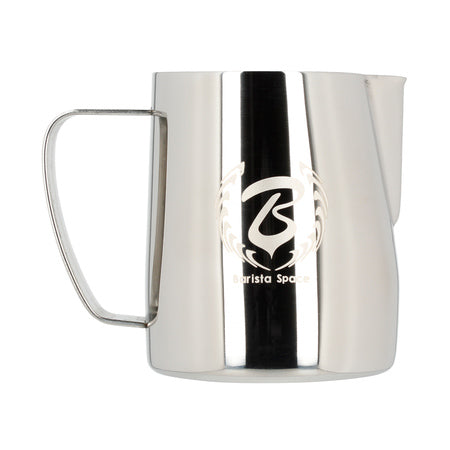
Barista Space - 350 ml 'Polished Silver' Milk Pitcher

Original price 299,95 kr - Original price 299,95 kr
Original price
299,95 kr
299,95 kr - 299,95 kr
Current price 299,95 kr

Barista Space - 350 ml 'Polished Silver' Milk PitcherProfessional milk pitcher from Barista Space in a beautiful Polished Silver designThe milk pit...

View full details

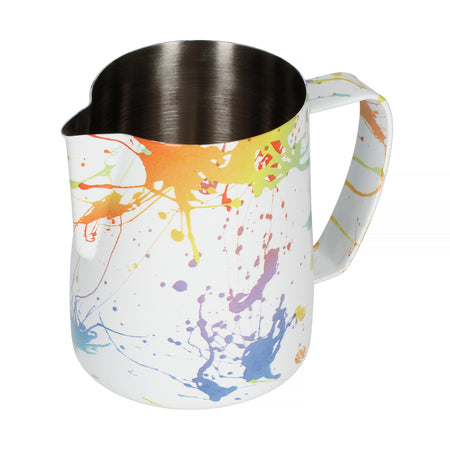
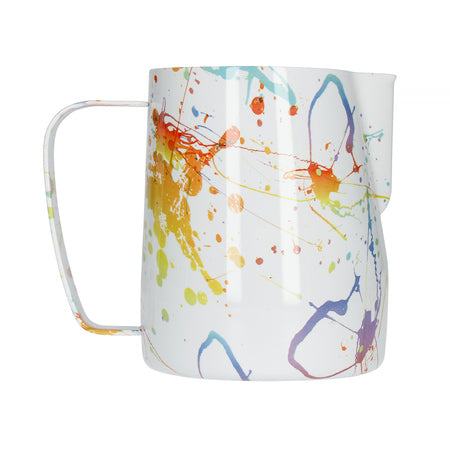
Barista Space - 350 ml Splash Milk Pitcher

Original price 299,95 kr - Original price 299,95 kr
Original price
299,95 kr
299,95 kr - 299,95 kr
Current price 299,95 kr

Barista Space - 350 ml Splash Milk PitcherProfessional milk pitcher from Barista Space in the stylish Splash designThe milk pitcher features a prof...

View full details

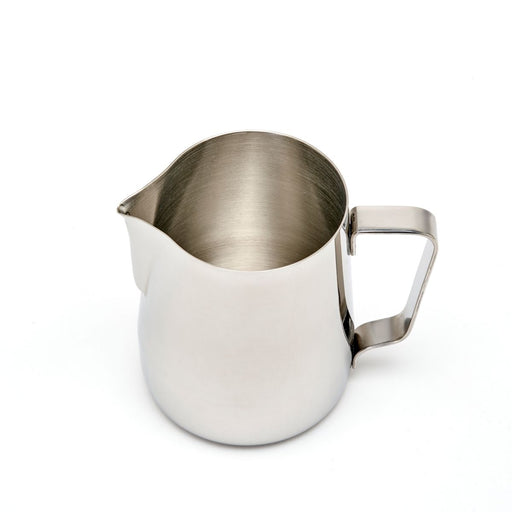
Rhino Coffee Gear Barista Milk Pitcher 360ml - Steel

Original price 129,00 kr - Original price 129,00 kr
Original price
129,00 kr
129,00 kr - 129,00 kr
Current price 129,00 kr

Rhino Coffee Gear Barista Milk Pitcher 360ml - Steel Professional milk pitcher from the Australian company Rhino Coffee Gear (Rhinowares). The pitc...

View full details

Barista Space - 450 ml Titanium Sandy Multicolor Milk Pitcher

Original price 299,95 kr - Original price 299,95 kr
Original price
299,95 kr
299,95 kr - 299,95 kr
Current price 299,95 kr

Barista Space - 450 ml Milk Pitcher Professional milk pitcher from Barista Space. The milk pitcher features a contoured pouring spout, a lightweigh...

View full details

Barista Space - 450 ml Titanium Sandy Black Milk Pitcher

Original price 299,95 kr - Original price 299,95 kr
Original price
299,95 kr
299,95 kr - 299,95 kr
Current price 299,95 kr

Barista Space - 450 ml Milk Pitcher Professional milk pitcher from Barista Space. The milk pitcher features a contoured pouring spout, low weight, ...

View full details

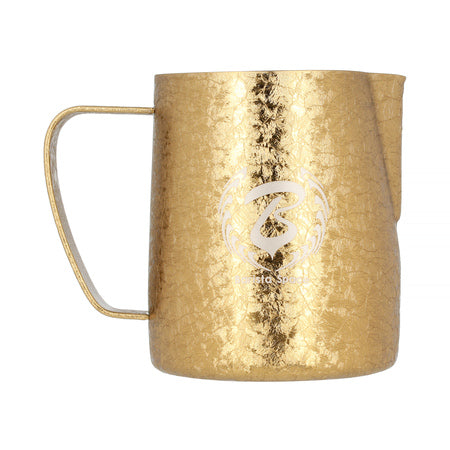
Barista Space - 450 ml Gold Milk Pitcher

Original price 299,95 kr - Original price 299,95 kr
Original price
299,95 kr
299,95 kr - 299,95 kr
Current price 299,95 kr

Barista Space - 450 ml Milk Pitcher Professional milk pitcher from Barista Space. The milk pitcher features a profiled pouring spout, low weight, a...

View full details

Barista Space - 450ml Star Night Black 2.0 Milk Pitcher

Original price 369,00 kr - Original price 369,00 kr
Original price
369,00 kr
369,00 kr - 369,00 kr
Current price 369,00 kr

Barista Space - 450 ml Milk Pitcher Professional milk pitcher from Barista Space. The milk pitcher features a profiled pouring spout, low weight, a...

View full details

Barista Space - 600 ml Blue Rainbow Milk Pitcher

Original price 299,95 kr - Original price 299,95 kr
Original price
299,95 kr
299,95 kr - 299,95 kr
Current price 299,95 kr

Barista Space - 600 ml Milk Pitcher Professional milk pitcher from Barista Space. The milk pitcher features a profiled spout, low weight, and a com...

View full details

Barista Space - 600 ml Gold Milk Pitcher

Original price 299,95 kr - Original price 299,95 kr
Original price
299,95 kr
299,95 kr - 299,95 kr
Current price 299,95 kr

Barista Space - 600 ml Milk Pitcher Professional milk pitcher from Barista Space. The milk pitcher features a profiled spout, low weight, and a com...

View full details

Barista Space - 600 ml Ice Grain Black Milk Pitcher

Original price 299,95 kr - Original price 299,95 kr
Original price
299,95 kr
299,95 kr - 299,95 kr
Current price 299,95 kr

Barista Space - 600 ml Milk Pitcher Professional milk pitcher from Barista Space. The milk pitcher features a profiled spout, low weight, and a com...

View full details

Barista Space - 600 ml Ice Grain Blue Milk Pitcher

Original price 299,95 kr - Original price 299,95 kr
Original price
299,95 kr
299,95 kr - 299,95 kr
Current price 299,95 kr

Barista Space - 600 ml Milk Pitcher Professional milk pitcher from Barista Space. The milk pitcher features a profiled spout, low weight, and a com...

View full details

Barista Space - 600 ml Ice Grain Rainbow Milk Pitcher

Original price 299,95 kr - Original price 299,95 kr
Original price
299,95 kr
299,95 kr - 299,95 kr
Current price 299,95 kr

Barista Space - 600 ml Milk Pitcher Professional milk pitcher from Barista Space. The milk pitcher features a profiled spout, low weight, and a com...

View full details

Barista Space - 600 ml Rose Gold Milk Pitcher

Original price 299,95 kr - Original price 299,95 kr
Original price
299,95 kr
299,95 kr - 299,95 kr
Current price 299,95 kr

Barista Space - 600 ml Milk Pitcher Professional milk pitcher from Barista Space. The milk pitcher features a profiled spout, low weight, and a com...

View full details

Fellow Eddy Milk Pitcher 530 ml – Graphite

Original price 329,00 kr - Original price 329,00 kr
Original price
329,00 kr
329,00 kr - 329,00 kr
Current price 329,00 kr

Fellow Eddy Milk Pitcher 530 ml – Graphite Get better control over milk frothing and latte art with the Fellow Eddy Milk Pitcher 530 ml in Graphite...

View full details

Barista Space - 600 ml Rainbow Milk Pitcher

Original price 299,95 kr - Original price 299,95 kr
Original price
299,95 kr
299,95 kr - 299,95 kr
Current price 299,95 kr

Barista Space - 600 ml Milk Pitcher Professional milk pitcher from Barista Space. The milk pitcher features a profiled spout, low weight, and a com...

View full details

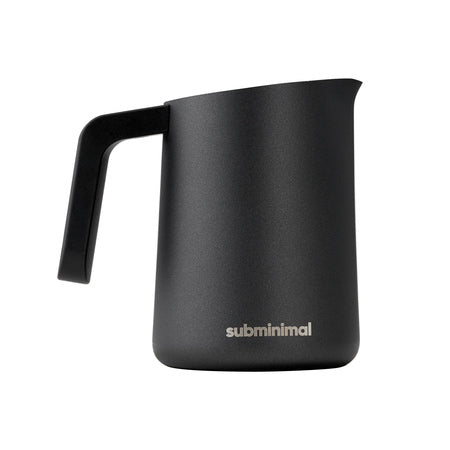
Subminimal Flowtip Milk Pitcher

Original price 399,00 kr - Original price 399,00 kr
Original price
399,00 kr
399,00 kr - 399,00 kr
Current price 399,00 kr

Perfect milk foam every time with the Subminimal FlowTip milk pitcherExperience a professional milk pitcher designed for precision, control, and ea...

View full details

Barista Space - 450 ml Titanium Half Blue Milk Pitcher

Original price 299,95 kr - Original price 299,95 kr
Original price
299,95 kr
299,95 kr - 299,95 kr
Current price 299,95 kr

Professional milk pitcher from Barista SpaceThe milk pitcher features a profiled pouring spout, low weight, and a comfortable handle, which makes i...

View full details

Barista Space - 350 ml Ice Grain Gold Milk Pitcher

Original price 299,95 kr - Original price 299,95 kr
Original price
299,95 kr
299,95 kr - 299,95 kr
Current price 299,95 kr

Barista Space - 350 ml Ice Grain Gold Milk Pitcher / Frothing Pitcher Professional milk pitcher from Barista Space in a beautiful design. The milk ...

View full details

Barista Space - 600 ml Splash Milk Pitcher

Original price 349,00 kr - Original price 349,00 kr
Original price
349,00 kr
349,00 kr - 349,00 kr
Current price 349,00 kr

Barista Space - 600 ml Splash Milk PitcherProfessional milk pitcher from Barista Space in the stylish Splash designThe milk pitcher features a prof...

View full details

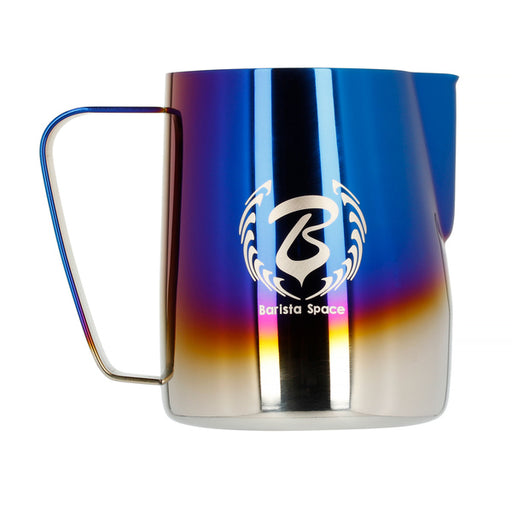
Barista Space - 600 ml Titanium Half Blue Milk Pitcher

Original price 299,95 kr - Original price 299,95 kr
Original price
299,95 kr
299,95 kr - 299,95 kr
Current price 299,95 kr

Barista Space - 600 ml Titanium Half Blue Milk PitcherProfessional milk pitcher from Barista Space in a beautiful blue color.The milk pitcher featu...

View full details

Motta Aurora Milk Pitcher - 1L

Original price 239,00 kr - Original price 239,00 kr
Original price
239,00 kr
239,00 kr - 239,00 kr
Current price 239,00 kr

Motta Aurora Milk PitcherThe Motta Aurora Milk Pitcher is an elegant and functional milk pitcher designed to meet the demands of both professional ...

View full details

Motta Aurora Milk Pitcher - 500 ml

Original price 225,00 kr - Original price 225,00 kr
Original price
225,00 kr
225,00 kr - 225,00 kr
Current price 225,00 kr

Motta Aurora Milk PitcherThe Motta Aurora Milk Pitcher is an elegant and functional milk pitcher designed to meet the demands of both professional ...

View full details

Barista Space - 350 ml Sandy Rainbow Milk Pitcher

Original price 299,95 kr - Original price 299,95 kr
Original price
299,95 kr
299,95 kr - 299,95 kr
Current price 299,95 kr

Barista Space - 350 ml Milk Pitcher Professional milk pitcher from Barista Space with a stylish design. The milk pitcher features a profiled pourin...

View full details

Barista Space - 600 ml Sandy Black Milk Pitcher

Original price 299,95 kr - Original price 299,95 kr
Original price
299,95 kr
299,95 kr - 299,95 kr
Current price 299,95 kr

Barista Space - 600 ml Milk Pitcher Professional milk pitcher from Barista Space. The milk pitcher features a profiled spout, low weight, and a com...

View full details

Milk pitchers for espresso, milk foam, and latte art

A good milk pitcher makes it easier to steam milk, create fine microfoam, and pour with control for cappuccino, caffe latte, flat white, and cortado.

At Brændeholm Risteri, you will find milk pitchers for both the home barista and the more experienced coffee enthusiast. The assortment includes various sizes, shapes, and designs from, among others, Barista Space, Motta, Rhino Coffee Gear, and Fellow.

When choosing a milk pitcher, it is especially worth looking at size, shape, spout, and how the pitcher feels in your hand.

The right size depends primarily on how much milk you usually steam at a time.

If you want to continue working on patterns and pouring techniques, you can also see our latte art accessories.

What is a barista milk pitcher?

A barista milk pitcher is a pitcher intended for steaming, texturing, and pouring milk for espresso-based coffee drinks.

Milk pitchers for barista use are often made of stainless steel and have a shape that makes it possible to create rotation in the milk during steaming.

The rotation helps work the small air bubbles into the milk so that the goal becomes a smooth and cohesive texture rather than a layer of coarse foam on top of hot milk.

A milk pitcher is therefore used for both:

  • Heating milk
  • Texturing
  • Microfoam
  • Latte art
  • Controlled pouring and serving

Which size milk pitcher should I choose?

Milk pitchers come in many sizes.

Among the most common in our assortment are approximately:

350 ml
450 ml
600 ml

There are also models between these sizes.

It can be tempting to just choose the largest pitcher, but bigger is not necessarily better.

A large milk pitcher can be more difficult to work with if you only steam a small amount of milk for one cappuccino.

350 ml milk pitcher

A milk pitcher around 350 ml is suitable for smaller amounts of milk.

It is especially practical for one smaller milk drink such as:

  • Cappuccino
  • Cortado
  • Flat white

The compact size makes it easier to work with a smaller amount of milk without having a large, almost empty pitcher.

It can also provide good control during latte art.

450 ml milk pitcher

A milk pitcher around 450 ml is a versatile choice.

It provides more room than a 350 ml pitcher but is still compact enough for many common milk drinks.

This makes the size interesting if you make different types of coffee and would like one pitcher that can cover several needs.

At Brændeholm Risteri, you will find, among other things, many Barista Space milk pitchers around this size.

600 ml milk pitcher

A milk pitcher around 600 ml provides room for a larger amount of milk.

It is practical if you:

  • Make larger caffe lattes
  • Make several milk drinks one after another
  • Need more room during steaming
  • Prefer to work with a larger pitcher

If you almost always make one small cappuccino or cortado, a smaller pitcher will often be easier to work with, however.

How much milk should be in the milk pitcher?

Do not fill the milk pitcher all the way up.

The milk expands when air is added, and there must also be room to create rotation during steaming.

A practical starting point is to fill to a level around the lower part of the spout or a suitable distance below the rim.

The precise amount depends on both the pitcher's shape, the steam wand, and the drink you are making.

If the pitcher is too full, the milk may run over.

Conversely, if there is very little milk in a large pitcher, it can be more difficult to position the steam wand and create a stable rotation.

Therefore, it is often better to choose the size of the pitcher based on the amount of milk you actually use.

Which milk pitcher is best for latte art?

For latte art, three things are especially important:

The texture of the milk
The pitcher's spout
Your control over the pour

The milk pitcher can help you with control, but it cannot replace correctly textured milk.

If the milk contains large air bubbles or very stiff foam, even an expensive latte art pitcher will be difficult to work with.

When the microfoam is working, the pitcher's size, balance, and spout become more significant.

The spout and latte art

The shape of the spout affects how the milk leaves the pitcher.

A more precise spout can make it easier to control the stream of milk for more detailed latte art.

A wider spout can be comfortable for larger and simpler shapes.

Therefore, there is not one spout that is best for everyone.

If you are new to latte art, it is more important first to learn how to make stable microfoam and control the pour than to focus too much on small differences between various spout designs.

Round or pointed spout?

Different milk pitchers have different spout shapes.

Rounder spout

A rounder or wider spout can provide a wider milk flow and work well for classic latte art patterns.

More pointed spout

A more pointed spout can provide greater control if you are working with thinner lines and more detailed patterns.

Both can work well.

Your technique and the texture of the milk are at least as important as the shape of the spout itself.

Why is the shape of the milk pitcher important?

The shape of the pitcher matters during steaming.

When steam is sent into the milk, one usually tries to create a rotating movement.

This rotation helps work the added air into the rest of the milk.

The result should be a smooth and glossy texture where milk and foam do not lie as clearly separated layers.

A pitcher that works well with your espresso machine's steam wand and your technique is therefore more important than just choosing by brand or price.

Milk pitchers in stainless steel

Stainless steel is a very common material for barista milk pitchers.

It is, among other things:

  • Robust
  • Suitable for repeated use
  • Easy to clean
  • Suitable for gauging the temperature through the side of the pitcher
  • Available in many sizes and shapes

The thickness and construction vary between models.

Therefore, there is not necessarily one type of steel pitcher that suits everyone best.

How hot should the milk be?

For many milk-based coffee drinks, around 55–65 °C is a useful range to work around.

The desired temperature depends, however, among other things on:

  • Milk type
  • Personal preference
  • Coffee drink
  • Recipe

If you are learning to steam milk, a milk thermometer can make it easier to work more consistently.

With experience, many also learn to use the sensation of the temperature through the side of the milk pitcher as a benchmark.

Do I need a milk thermometer?

Not necessarily.

A thermometer is especially useful if you:

  • Are learning milk steaming
  • Often get the milk too hot
  • Would like to repeat the same temperature
  • Work with different types of milk or plant-based drinks

You can use a separate milk thermometer together with your milk pitcher.

When you become more experienced, you can assess for yourself whether the thermometer still adds value to your workflow.

How to steam milk in a milk pitcher

Start with cold milk.

  1. Pour the desired amount of milk into the pitcher.
  2. Purge the steam wand briefly to remove any condensation.
  3. Place the tip of the steam wand just below the surface of the milk.
  4. Start the steam.
  5. Add air in a controlled manner at the start.
  6. Then position the steam wand so the milk begins to rotate.
  7. Continue heating to the desired temperature.
  8. Stop the steam.
  9. Wipe the steam wand off immediately and purge it again.
  10. Swirl the milk pitcher so the milk and microfoam remain combined.

If single larger bubbles are on the surface, you can tap the pitcher lightly against the table and swirl again.

What is microfoam?

Microfoam is textured milk with very small air bubbles distributed evenly through the milk.

Good microfoam should appear:

  • Smooth
  • Glossy
  • Creamy
  • Uniform

It should not look like a layer of coarse foam with large visible bubbles.

The microfoam is important both for the texture of the drink and for the possibility of working with latte art.

Milk pitcher for cappuccino

For one standard cappuccino, a pitcher around 350–450 ml can be a good starting point.

It provides room to work with the milk without having to steam a very small amount in a large pitcher.

If you have a larger cappuccino cup or make several drinks in a row, a larger pitcher may be more practical.

Milk pitcher for caffe latte

Caffe latte usually contains more milk than, for example, a cortado and smaller cappuccinos.

Therefore, a pitcher around 450–600 ml can be practical.

But do not choose solely by the name of the drink.

The most important thing is the actual amount of milk you use in the cup you are serving in.

Milk pitcher for flat white

Flat white is usually served with fine and relatively thin microfoam.

A pitcher around 350–450 ml can therefore be a good starting point for one flat white.

Here, the control of the air intake is particularly important, because the goal is not a thick layer of foam, but a smooth milk that can be integrated with the espresso.

Milk pitcher for cortado

Cortado uses a relatively small amount of milk.

Therefore, a smaller milk pitcher will often be easier to work with.

If you try to steam very little milk in a large 600 ml pitcher, it can be difficult to position the steam wand optimally.

A size around 350 ml can therefore be practical for smaller milk drinks.

Can I steam oat drink in the same milk pitcher?

Yes.

The same milk pitcher can be used for both cow's milk and various plant-based alternatives.

The different products do not necessarily react the same way to heat and air, however.

Therefore, the steaming technique might need to be adjusted slightly if you switch between different types of milk and plant-based drinks.

You do not need a special milk pitcher just for oat drink.

Barista Space milk pitchers

Barista Space makes up a large part of our assortment and comes in several sizes, colors, and surfaces.

You will find, among others, models around:

350 ml
450 ml
600 ml

This makes it possible to choose based on both the amount of milk you usually steam and the design you prefer.

Size, balance, and spout should, however, be more important for your choice than color alone.

Motta milk pitchers

Motta produces a series of different tools for espresso and barista work, including milk pitchers.

Motta milk pitchers can be interesting if you want a more classic stainless steel pitcher for steaming and serving.

Always check the specific product page for information on size, shape, and construction.

Rhino Coffee Gear milk pitchers

Rhino Coffee Gear also produces milk pitchers for steaming and latte art.

In our assortment, you will find, among others, compact models that can be practical for smaller amounts of milk.

If you primarily make one smaller milk drink at a time, a smaller pitcher can be a simple and affordable place to start.

Fellow Eddy Milk Pitcher

Fellow Eddy is yet another alternative in the assortment and is developed with a focus on milk steaming and controlled pouring.

If you compare it with other milk pitchers, you should first look at size, shape, and spout rather than choosing solely based on the brand.

The most important thing is whether the pitcher fits the amount of milk and the pouring technique you usually work with.

Milk pitcher or milk frother?

A milk pitcher and a milk frother solve different tasks.

Milk pitcher

A milk pitcher is used together with the steam wand on an espresso machine.

Here, you control, among other things:

  • Air intake
  • Rotation
  • Temperature
  • The texture of the milk

Milk frother

An electric milk frother typically heats and froths the milk more automatically.

It can be practical if you do not have an espresso machine with a steam wand.

If you want to work actively with steaming and classic latte art, a milk pitcher and steam wand provide more direct control.

If you primarily want hot frothed milk with limited effort, an automatic milk frother can be more practical.

Milk pitcher with or without handle?

Most classic milk pitchers have a handle.

This provides a firm grip during both steaming and pouring.

There are also handleless milk pitchers without a traditional handle.

They provide the opportunity to hold directly around the pitcher and change the grip more freely.

On the other hand, the side of the pitcher becomes hot during steaming.

The choice is therefore largely personal.

If you are new to milk steaming, a classic model with a handle is a simple place to begin.

Does the color matter?

Not for the milk foam itself.

Color and surface are primarily about design.

Milk pitchers come in, among other things:

  • Polished steel
  • Black
  • Blue
  • Copper-colored
  • Gold-colored
  • Rainbow-colored
  • Various patterns and surfaces

Shape, size, and spout have a much greater impact on use.

But a milk pitcher is also a tool that often stands out at the coffee station, so you are naturally welcome to choose a model you also think looks good.

How to make latte art?

Latte art requires, first and foremost, correctly textured milk.

When espresso and milk are ready:

  1. Swirl the milk pitcher.
  2. Start by pouring a little higher above the cup.
  3. Let the milk and espresso mix.
  4. Then bring the spout closer to the surface.
  5. Let the microfoam emerge on the surface of the coffee.
  6. Move the pitcher to create the pattern.
  7. Finish the pour in a controlled manner.

A simple heart is a good first pattern to work with.

When you can repeat it reasonably stably, you can move on to, for example, tulip and rosetta.

Also see our latte art accessories.

Why can I not make latte art?

The problem is not necessarily the milk pitcher.

Typical causes are:

Too much air
The milk becomes too thick to pour in a controlled manner.

Too little air
There is insufficient microfoam to create a clear pattern.

Large air bubbles
The milk has not become sufficiently uniform.

The milk has stood for too long
Milk and foam begin to separate.

Incorrect pouring height
The pitcher comes too close to the surface of the coffee too early or too late.

A different milk pitcher can in some cases make the pour easier, but technique and the texture of the milk are more important than buying new equipment.

How to clean a milk pitcher?

Rinse the milk pitcher quickly after use so milk residue is not allowed to dry on.

Wash it thoroughly as needed.

Whether the specific milk pitcher can be washed in a dishwasher depends on the material and surface treatment, so always follow the manufacturer's instructions.

Let the pitcher dry properly before the next use.

How many milk pitchers do I need?

For home use, one good milk pitcher can easily be enough.

If you almost always make the same coffee drink, choose a size that fits it.

It may make sense to have several sizes if you often switch between, for example:

  • A small cortado
  • A cappuccino
  • A large latte
  • Several milk drinks in a row

But you do not need to buy several different milk pitchers to get started.

Which milk pitcher should I choose as a beginner?

If you usually make one milk drink at a time, a pitcher around 350–450 ml will be a good place to begin.

Look especially for:

  • Stainless steel
  • A comfortable grip
  • A clear spout
  • A size that fits your cups and your amount of milk

If temperature control is difficult, a milk thermometer can be a useful supplement.

If you almost always make large lattes or several milk drinks at a time, 600 ml might be more practical.

Milk Pitchers at Brændeholm Risteri

At Brændeholm Risteri, you will find a wide selection of milk pitchers for espresso, steaming, and latte art.

You can choose between different:

  • Sizes
  • Spouts
  • Colors
  • Finishes
  • Designs
  • Manufacturers

If you want to build the rest of your coffee setup, you can also see our selection of espresso equipment, milk frothers, milk thermometers and latte art accessories.

For the coffee itself, you will also find our selection of coffee beans for espresso.

Frequently asked questions about milk pitchers

Which size milk pitcher should I choose?

Around 350–450 ml is a good starting point for one standard milk-based drink. 600 ml is practical for larger quantities or multiple drinks. Choose based on the amount of milk you usually steam.

Which milk pitcher is best for latte art?

Choose a pitcher that feels comfortable in your hand and has a spout you can control. However, proper microfoam and pouring technique are more important than the brand alone.

What is a milk pitcher used for?

For steaming, texturing, and pouring milk for coffee drinks such as cappuccino, caffe latte, flat white, and cortado.

What does "milk pitcher" mean?

"Milk pitcher" is the English term for a jug used for steaming and latte art.

How hot should the milk be?

Around 55–65 °C is a useful range for many milk-based drinks, but the desired temperature also depends on the milk, the drink, and personal preference.

Should I choose 350 or 600 ml?

350 ml is practical for smaller single servings. 600 ml provides more room for larger drinks and multiple servings.

Can I steam oat drink in a regular milk pitcher?

Yes. You do not need a special pitcher for oat drink, but different plant-based drinks may require different steaming techniques.

Do I need a milk thermometer?

No, but it can make it easier to learn how to hit a consistent temperature.

Can I do latte art without a special latte art pitcher?

Yes. Good microfoam and pouring technique are most important. However, a pitcher with a controllable spout can make the job easier.

Is an expensive milk pitcher better?

Not necessarily. Size, shape, spout, and how the pitcher suits your technique are more important than price alone.