
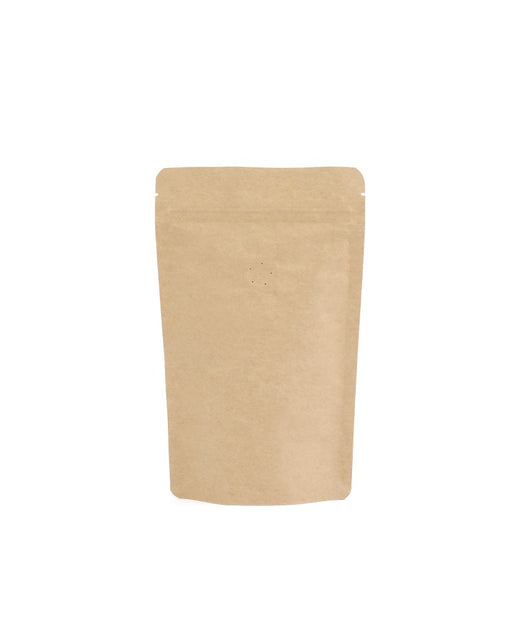
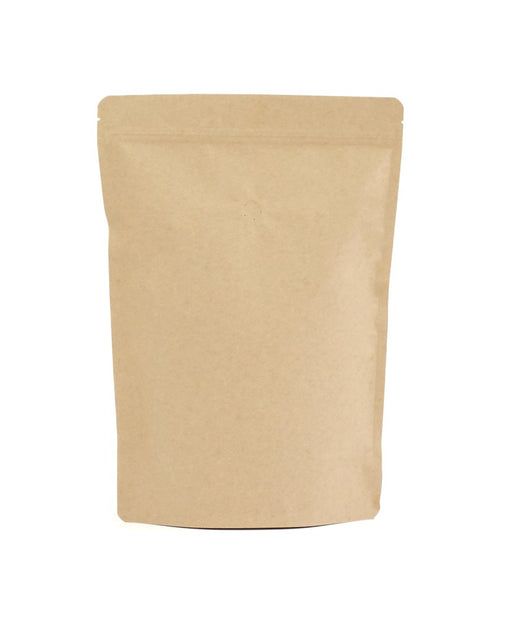
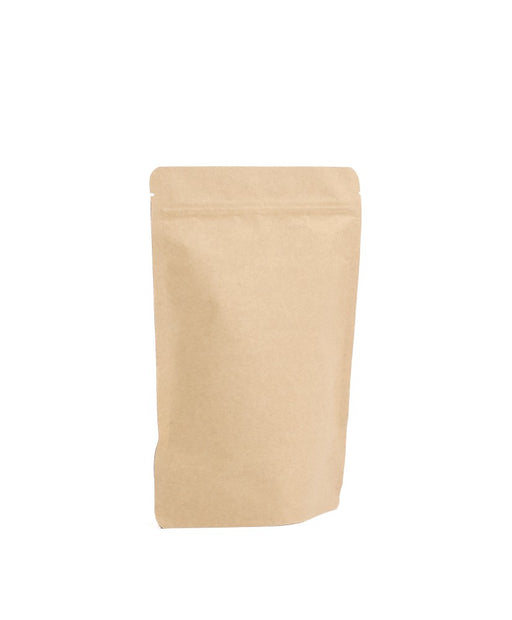
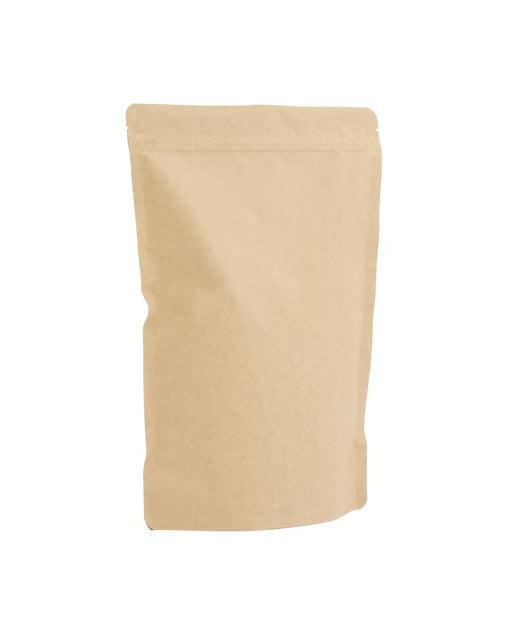
Valve bags for freshly roasted coffee beans
Valve bags for coffee are designed for the storage and packaging of roasted coffee beans.
After roasting, coffee beans release carbon dioxide. A coffee bag with a one-way valve allows this gas to escape from the bag without the need for the bag to remain open. This is one of the reasons why valve bags are widely used for packaging freshly roasted coffee.
At Brændeholm Risteri, you will find reclosable valve bags in several sizes, suitable for home use, home roasting, and smaller coffee roasteries.
Choose the size based on the amount of coffee you wish to pack.
What is a valve bag for coffee?
A valve bag is a coffee bag equipped with a one-way valve.
The valve is designed so that gas from the coffee can move out of the bag, while the movement of air in the opposite direction is restricted.
This is particularly relevant for freshly roasted coffee beans, because the coffee continues to release carbon dioxide after roasting.
A valve bag therefore combines several practical functions:
Packaging for the coffee
Possibility for degassing
Reclosability after opening
Protection during storage
This makes it suitable both for those who roast coffee at home and for those who need to pack coffee for others.
Why do coffee bags have a valve?
Freshly roasted coffee contains gas, which gradually leaves the coffee bean after roasting.
Part of this gas is carbon dioxide.
If very fresh coffee is packed in airtight packaging without the possibility of degassing, the gas can accumulate inside the packaging.
A one-way valve provides a controlled way out of the bag.
This means that the coffee bag can be kept closed while the coffee degasses.
What does the one-way valve do?
The primary function of the valve is to manage the coffee's degassing.
It is important to distinguish between this and saying that the valve alone "keeps all oxygen out."
The overall protection of the coffee also depends on:
the bag material
the bag's barrier properties
the seal
how the bag is used
and how often it is opened.
A valve bag should therefore be seen as an overall packaging system – not just as a valve.
What is coffee degassing?
When coffee beans are roasted, various gases are formed and released.
After roasting, some of the gas continues to gradually leave the coffee bean.
This process is called degassing.
The process does not stop after a specific set number of hours.
How quickly the coffee degasses depends on, among other things:
• Roast degree
• Roast profile
• The coffee bean
• Storage
• Whether the coffee is whole or ground
Ground coffee degasses faster than whole coffee beans because grinding provides a much larger surface area.
Does freshly roasted coffee need air?
No – not in the sense that the coffee bag should be left open.
The coffee needs the ability to release the gas that develops after roasting.
This is different from actively supplying fresh air to the coffee.
A one-way valve is practical precisely because the gas can get out without you needing to leave the bag open.
Why is oxygen relevant to coffee?
When roasted coffee is stored, it changes gradually.
The availability of oxygen plays a role in oxidation processes, while volatile aromatic compounds are simultaneously lost over time.
Good coffee packaging is therefore about both managing the coffee's own degassing and limiting unnecessary influence from the environment.
This does not mean that a valve bag can stop the coffee's aging.
It simply provides better conditions for storage than, for example, leaving coffee beans out in a bowl or a bag that cannot be closed.
Valve bags with reclosure
The valve bags in our range feature a reclosure mechanism.
This is practical if the bag needs to be opened multiple times.
Once you have taken out coffee beans, the bag can be closed again rather than staying open between brews. The current products in the collection are specifically labeled as bags with valve and reclosure.
This makes them relevant both as packaging and as the bag the coffee is stored in after opening.
Should the coffee remain in the valve bag?
It can easily remain in the valve bag.
If the bag can be closed properly and stored correctly, there is no requirement that the coffee beans must be transferred to a coffee canister.
At the same time, the coffee can certainly be moved to a suitable coffee container.
Both a good valve bag and a good coffee container can therefore be sensible solutions. Choose based on how you prefer to store and use coffee in everyday life.
Valve bag or coffee container?
They address slightly different needs.
Valve bag
Is particularly practical for:
• Packing freshly roasted coffee
• Shipping
• Home roasting
• Gifts
• Storage directly in the original packaging
• Coffee that is still degassing
Coffee container
Is particularly practical if you want:
• A fixed container on the kitchen counter
• A more robust solution
• A container that is used again and again
• The possibility for systems such as Airscape or MiiR
You do not need both.
If the coffee is already well-placed in a reclosable valve bag, it can certainly stay there.
Valve bags for home roasting
If you roast coffee yourself, valve bags are particularly useful.
For example, you can:
roast the coffee
let it cool down properly
weigh out the desired amount
and pack it in a suitable valve bag.
The bag then allows the coffee to continue its degassing through the valve.
This is a much more practical solution than leaving freshly roasted coffee beans in an open container.
Valve bags for coffee roasteries
Valve bags are also relevant for smaller professional roasteries.
If the coffee is to be sold, given as a sample, or sent to a customer, the packaging is an important part of the product.
With several bag sizes, you can pack different amounts of coffee without using the same large bag for everything.
In our range, you will find bags in several sizes, so they can be used for both standard retail portions and larger amounts.
Valve bags for 250 grams of coffee
250 grams is a classic size for coffee beans.
It works well if you:
• Sell or give away smaller portions of coffee
• Want to divide larger amounts of coffee
• Roast small batches at home
• Like to have several different coffees open at the same time
A smaller bag also makes it possible to open one portion at a time rather than having a large amount of coffee in use.
Valve bags for 500 grams of coffee
500 grams is a good medium format.
It is relevant for you who use more coffee but still want a manageable bag.
For example, it can be used for:
• Home roasting
• Private coffee storage
• Smaller businesses
• Gifts
• Dividing larger batches
Valve bags for 1 kg of coffee
1000 grams is suitable when you want to pack approximately one kilo of coffee.
It can be practical for:
• Larger private consumption
• Offices
• Business customers
• Coffee roasteries
• Larger batches from the home roaster
If the bag needs to be opened many times over a long period, it may also be worth considering dividing the coffee into several smaller bags.
That way, the entire amount does not have to be exposed every time you take coffee.
Valve bags for 3 kg of coffee
The large 3000-gram valve bag is intended for significantly larger quantities.
It is particularly relevant for:
• Coffee roasteries
• Businesses
• Larger production batches
• Storage and transport of larger amounts of roasted coffee beans
Whether 3 kg is the right size naturally depends on your consumption.
For an ordinary private household, smaller bags will usually be more practical.
The collection currently features sizes 250, 500, 1000, and 3000 grams.
Which valve bag size should I choose?
First and foremost, choose based on the amount of coffee you want to pack.
As a simple rule of thumb:
250 g → smaller retail portions and home use
500 g → medium-sized portions
1000 g → larger private consumption and business use
3000 g → larger batches and professional use
Avoid choosing an unnecessarily large bag for a very small amount of coffee.
A bag that fits the content reasonably well is more practical to handle.
Can you use valve bags for ground coffee?
Yes, if the specific bag is suitable for food and coffee.
However, ground coffee behaves differently than whole coffee beans.
When the beans are ground, the surface area becomes much larger, and both degassing and changes in aroma happen faster.
If the customer has the ability to grind the coffee themselves, we therefore normally prefer to store it as whole coffee beans until brewing.
But valve bags can also be used for ground coffee.
Whole coffee beans or ground coffee?
For the best flexibility, we would choose whole coffee beans.
That way, the coffee can be ground only when it is to be used.
At the same time, you can choose different grinding degrees for:
Espresso
V60
Chemex
AeroPress
Filter coffee
French press
This makes whole beans more versatile than coffee that is already ground for one specific brewing method.
How should valve bags be stored?
Store the filled bag:
• Dry
• Away from direct sunlight
• Away from strong heat sources
• Properly closed
A kitchen cupboard is often a fine place for the coffee you use regularly.
You do not need a special temperature-controlled room for ordinary coffee storage.
The most important thing is to avoid unnecessary exposure to heat, moisture, and air.
Should valve bags be kept in the refrigerator?
For the coffee you use daily, it is usually more practical to store it closed at a stable room temperature.
The refrigerator is therefore not necessary.
If coffee needs to be stored for a very long time, freezing is another topic – but then the coffee should be portioned and packaged with long-term storage in mind.
Valve bags for daily coffee and freezing therefore do not quite solve the same problem.
Can you smell coffee through the valve?
In some cases, you may notice coffee aroma around the valve, especially when the bag is degassing.
This does not necessarily mean that the bag is open.
The function of the valve is precisely to allow gas to move out.
This is also why one can sometimes press gently on a bag of coffee and experience the coffee scent at the valve.
However, you should not use this as a test of the coffee's quality.
When should coffee be packed after roasting?
There is no one specific time that suits all roasteries and all packaging systems.
It depends on, among other things:
• The coffee
• The roast degree
• The roast profile
• The packaging
• The production process
The advantage of a bag with a one-way valve is precisely that the coffee can continue to release CO₂ after packaging.
This does not mean, however, that hot coffee should be poured directly from the roaster into the bag.
The coffee must be handled and cooled correctly as part of the roasting process.
How long does coffee degas?
Coffee degasses most intensely after roasting, but the process continues gradually.
It therefore makes no sense to say that all coffee is finished degassing after exactly, for example, 24 hours or three days.
Ground coffee beans release gas much faster than whole beans.
The degree of roast also affects the process.
Therefore, we do not use one fixed degassing time as a universal rule.
Does the valve bag keep the coffee fresh forever?
No.
The valve does not stop the coffee's natural development.
Roasted coffee will still change over time, including through the loss of volatile aromatic compounds and oxidation processes.
A valve bag should therefore be seen as good packaging for coffee – not as a method to pause the coffee's natural aging.
Can valve bags be reused?
If you as an individual reuse a bag to store your own coffee, it must naturally be clean, dry, and in good condition.
For professional food packaging, however, you should follow the requirements and instructions that apply to the specific bag and your food system.
A damaged valve, zipper, or barrier means that the bag does not necessarily function as intended anymore.
Valve bags as gift packaging for coffee
If you roast coffee for friends or family, smaller valve bags are a practical way to pack the coffee.
You can, for example, pack:
250 grams of freshly roasted coffee beans
and put a label on it with:
the origin of the coffee
roast date
roast degree
tasting notes
and possibly brewing recommendations.
This gives the recipient both a practical bag and information about the coffee.
Valve bags for green coffee beans?
The special function of the one-way valve is most relevant for roasted coffee because roasted coffee beans degas.
Green coffee beans have different storage needs and do not produce the same post-roast degassing.
If you only have raw green coffee beans, a coffee valve is therefore not necessarily a function you need.
This category is primarily intended for roasted coffee beans.
Valve bags as part of coffee storage
There is no one storage solution that suits everyone.
With us, you can therefore choose between several types of coffee storage.
Valve bags are particularly suitable for packing and storing freshly roasted coffee.
Airscape coffee canisters have a moving inner lid which reduces the air volume above the coffee.
The MiiR coffee container also uses an adjustable internal system.
Which solution fits best depends on whether you need to pack coffee, send it, sell it, or just store your daily coffee on the kitchen counter.
Valve bags for coffee at Brændeholm Risteri
We ourselves use packaging as a natural part of working with freshly roasted coffee.
At Brændeholm Risteri, we roast coffee several times a week at our own coffee roastery on Funen.
In this collection, you will find reclosable valve bags in different sizes, so you can choose according to your needs.
The current sizes in the collection are:
250 grams
500 grams
1000 grams
3000 grams
They are relevant for both the home barista, the home roaster, and those who work with larger amounts of coffee.
Frequently asked questions about valve bags for coffee
What is a valve bag for coffee?
It is a coffee bag with a one-way valve that allows gas from roasted coffee beans to escape the bag.
Why do coffee bags have a valve?
Roasted coffee beans release carbon dioxide after roasting. The valve gives the gas a way out without the bag needing to be left open.
Should freshly roasted coffee be left open?
No. A valve bag allows the coffee to degas while the bag is closed.
Can you store coffee in the valve bag?
Yes. A reclosable valve bag can easily be used as the coffee's daily packaging.
Is a coffee canister better than a valve bag?
Not necessarily. They have different advantages. The valve bag is practical for packing and degassing, while a coffee container may be more robust for daily use.
Can valve bags be used for ground coffee?
Yes, but ground coffee changes faster than whole coffee beans because the surface area is larger.
How long do coffee beans degas?
There is no one fixed time that applies to all coffees. Degassing depends on, among other things, the coffee, the roast, the grind level, and storage.
What sizes do the valve bags come in?
In the collection, you will find valve bags for 250, 500, 1000, and 3000 grams of coffee.
Are valve bags only for professional coffee roasteries?
No. They are also practical for home roasting, coffee storage, and coffee intended as a gift.
Does a valve bag keep coffee fresh forever?
No. Coffee continues to evolve after roasting. The packaging can provide better storage conditions, but it cannot stop the coffee from aging.


