
Skip to content

Manual coffee grinders

Manual coffee grinders – manual coffee grinder for freshly ground coffee

A manual coffee grinder is a simple way to grind coffee beans immediately before brewing. It requires no electricity, typically takes up less space than an electric coffee grinder, and is easy to take with you to the summer house, camping, or on trips.

At Brændeholm Risteri, you will find manual coffee grinders for various brewing methods and needs. Some models are particularly suitable for filter coffee and pour over, while others have finer adjustment options and can also be used for espresso.

The right manual coffee grinder therefore depends primarily on how you brew coffee, how much you grind at a time, and how precisely you wish to be able to adjust the grind size.

Why choose a manual coffee grinder?

A manual coffee grinder is especially interesting if you want freshly ground coffee without investing in a larger electric grinder.

You only grind the amount of coffee beans you need and can adjust the grind size according to the brewing method.

At the same time, a manual coffee grinder is compact and quiet, and requires neither a power outlet nor charging.

This makes hand grinders popular for both daily home brewing and coffee on the go.

Manual coffee grinder or electric coffee grinder?

Both types can make very good coffee.

A manual coffee grinder is typically smaller, more portable, and cheaper than an electric grinder with a similar focus on burr set and adjustment options.

On the other hand, you have to turn the handle yourself.

An electric coffee grinder is therefore more practical if you often grind large amounts of coffee or make many brews in succession.

For espresso, an electric espresso grinder can also be more convenient because espresso requires very fine grinding, and the coffee amount can take longer to grind manually.

The choice is therefore not about one type automatically producing better coffee than the other.

The most important thing is the quality of the grinder, how uniformly the coffee is ground, and whether you can adjust the grind to your brewing method.

Which manual coffee grinder should I choose?

Start with the coffee you usually brew.

If you primarily brew V60, AeroPress, filter coffee, or French press, you do not necessarily need a hand grinder with extremely fine adjustment steps.

For espresso, the requirements are higher.

Here, very small changes in grind size can significantly change the espresso's extraction time. Therefore, you should choose a manual coffee grinder that is specifically suitable for espresso if that is your primary purpose.

You should also consider capacity, weight, size, and how fast the grinder works.

Manual coffee grinder for filter coffee

Filter coffee typically requires a medium grind size.

This makes filter coffee relatively uncomplicated for a good manual coffee grinder.

If you brew on a standard coffee machine, you can, for example, start with about 60 grams of coffee per liter of water and adjust the grind according to taste.

A hand grinder is especially practical if you only brew one or a few portions at a time.

Grind the coffee beans shortly before brewing so you get the most out of the coffee's aroma.

Manual coffee grinder for Hario V60

For Hario V60, a manual coffee grinder is a really good match.

V60 typically requires a medium to medium-fine grind size, and small adjustments can be used to control the flow.

If the water runs through the coffee bed very quickly and the coffee tastes thin or sharp, you can try grinding finer.

If the brewing takes a very long time and the coffee becomes bitter or dry, you can try a slightly coarser setting.

A uniform grind makes it easier to adjust the V60 recipe systematically.

Manual coffee grinder for AeroPress

AeroPress can be brewed with many different grind sizes, which makes it well-suited for use with a manual coffee grinder.

Medium-fine is a good starting point for many recipes.

Because AeroPress is compact and does not require electricity, it is also often combined with a manual coffee grinder as a travel setup.

Then you only need a brewer, grinder, coffee, and hot water.

Manual coffee grinder for French press

For French press coffee, a medium-coarse to coarse grind size is usually used.

This does not place the same demands on very small adjustment steps as espresso.

Therefore, even relatively simple manual coffee grinders can work well for French press.

If the coffee becomes very bitter or muddy, you can try grinding a little coarser. If it tastes thin or lacks sweetness, you can experiment with a slightly finer setting or a longer brewing time.

Can a manual coffee grinder be used for espresso?

Yes – but not all manual coffee grinders are equally suitable.

Espresso requires both fine grinding and the possibility of very small adjustments.

If, for example, the espresso runs too fast, the coffee usually needs to be ground finer. If it runs too slowly, it should be ground coarser.

If the distance between two steps on the hand grinder is too large, one setting may be too coarse, while the next becomes too fine.

For espresso, you should therefore choose a model where the manufacturer has specifically had espresso and fine-tuning in mind.

A model like the Timemore C3 ESP PRO, for example, is designed with finer adjustment options than more general filter-oriented hand grinders.

Burr set in a manual coffee grinder

A coffee grinder should use an actual burr set rather than rotating blades.

The burr set crushes the coffee beans between two surfaces and makes it possible to control the particle size by changing the distance between them.

In manual coffee grinders, you will find, among other things, ceramic and stainless steel burrs.

The material alone, however, does not tell you how good the grinder is.

The geometry of the burrs, stability, bearings, shaft, and adjustment mechanism also affect both workflow and result.

Therefore, you should evaluate the entire construction of the grinder rather than just choosing based on whether the burrs are ceramic or steel.

Burr set in a manual coffee grinder

A good manual coffee grinder uses an actual burr set rather than rotating blades.

The coffee beans are ground between the two burr surfaces, and the grind size is adjusted by changing the distance between them.

In manual coffee grinders, you will find, among other things, ceramic burrs and stainless steel burrs.

The material alone, however, does not tell you how good the grinder is.

The geometry of the burrs, stability, bearings, shaft, and adjustment mechanism also affect both workflow and grinding.

Therefore, you should evaluate the entire construction of the grinder rather than just choosing based on the material of the burr set.

Steel or ceramic burr set?

Ceramic burrs are found, among other things, in some simpler and affordable manual coffee grinders.

Stainless steel burrs are very common in modern hand grinders from manufacturers like Timemore.

A modern steel burr set can grind quickly and effectively, but the quality still depends on the construction of the entire grinder.

A more expensive hand grinder is therefore not automatically the right solution for everyone.

For French press, AeroPress, or standard filter coffee, a simpler grinder may be sufficient, while espresso places greater demands on fine-tuning.

Manual coffee grinder for espresso

A manual coffee grinder can easily be used for espresso, but the model must be able to grind sufficiently fine and have small enough adjustment steps.

Espresso reacts strongly to small changes in grind size. If the espresso runs too fast, the coffee usually needs to be ground finer. If it runs too slowly, it typically needs to be ground coarser.

If the distance between two settings on the grinder is too large, one setting can therefore be too coarse, while the next becomes too fine.

Therefore, choose a manual coffee grinder that is developed with fine espresso adjustment in mind if espresso is your primary purpose.

You can combine the grinder with different roasts and flavor profiles from our selection of coffee beans for espresso.

What does the number of clicks mean on a manual coffee grinder?

Many manual coffee grinders are adjusted in clicks.

When you turn the adjustment mechanism, the burr set moves a small distance for each click.

More and smaller adjustment steps allow for finer control.

This is especially valuable for espresso.

For V60, AeroPress, and French press, larger steps can often work fine because these brewing methods are not as sensitive to very small changes in grind size.

You should not compare the number of clicks directly between different grinders. One click on one model does not necessarily correspond to one click on another.

How long does it take to grind coffee manually?

It depends on the amount of coffee, grind size, coffee beans, and the construction of the grinder.

A small portion for a single cup of filter coffee can be ground relatively quickly.

A large portion or a very fine espresso grind requires more work.

Modern hand grinders with efficient steel burrs can be significantly faster than simpler models.

If you have to grind 60–80 grams of coffee every morning for a large coffee machine, an electric grinder will normally be more practical.

For 15–30 grams at a time, a manual coffee grinder is much easier to live with.

Manual coffee grinder for travel and outdoor coffee

One of the hand grinder's greatest advantages is that it does not require electricity.

This makes it obvious to use together with, for example, AeroPress, V60, or other manual coffee brewers on vacations, camping, and outdoor trips.

If you want to use the grinder on the go, you should especially look at weight and size.

A foldable or detachable handle can also make the grinder easier to pack.

For travel use, the largest and heaviest hand grinder is therefore not necessarily the best.

Timemore manual coffee grinders

Timemore makes several manual coffee grinders for different needs.

Some models are primarily developed as versatile grinders for filter coffee and manual brewing methods, while ESP variants have a greater focus on the finer adjustments necessary for espresso.

Models in the Chestnut series differ, among other things, in burr set, construction, adjustment mechanism, and handle.

If you are in doubt between two models, the brewing method should be the first thing you compare.

Hario manual coffee grinders

Hario is especially known for filter coffee and V60 and also produces manual coffee grinders.

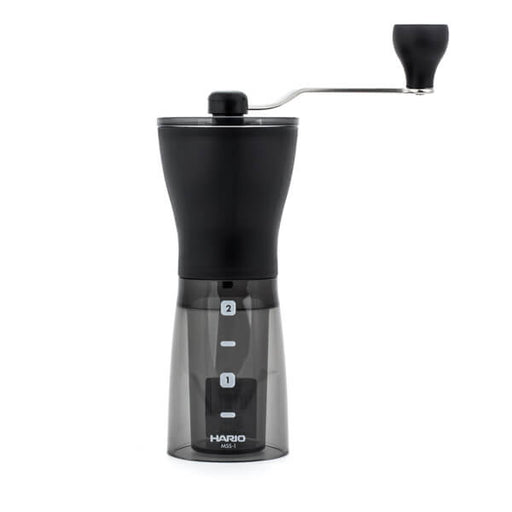
A model like the Hario Mini Slim Plus is a simple and compact choice for traditional manual brewing methods.

That type of grinder can be relevant for those who primarily want freshly ground coffee for filter coffee, AeroPress, or French press without needing advanced espresso adjustment.

For espresso, we would normally choose a grinder that is more specifically developed for that purpose.

How much coffee can a manual coffee grinder hold?

The capacity varies from model to model.

It is worth checking if you often brew larger portions.

If the grinder, for example, can only hold about 20–25 grams of coffee beans, but you usually use 60 grams for a large pot of filter coffee, you will have to grind in multiple batches.

For one cup of V60, AeroPress, or a double espresso, a smaller capacity is rarely a problem.

Larger capacity also often means a larger physical grinder, so there is a compromise between capacity and portability.

How to find the right grind size

There is no one setting that fits all coffee grinders.

Even two grinders of the same model can have small differences, and different coffee beans may require different settings.

Therefore, use the manufacturer's recommendation as a starting point and adjust after brewing.

As a general direction, you can think from fine to coarse:

Espresso → AeroPress/V60 → filter coffee → Chemex → French press

There is significant overlap between the areas, so these are not fixed limits.

Taste should always be the final guide.

Should you grind coffee just before brewing?

It is a good habit.

When coffee beans are ground, far more of the coffee's surface is exposed to the environment.

Therefore, ground coffee changes faster than whole coffee beans.

One of the advantages of owning your own coffee grinder is precisely that you can store the coffee as whole beans and only grind the amount you need.

This applies to both manual coffee grinders and electric coffee grinders.

How to clean a manual coffee grinder

Old coffee particles and coffee oils can accumulate in the grinder over time.

Therefore, clean the grinder regularly according to the manufacturer's instructions.

On many models, parts of the burr set can be disassembled and brushed clean.

Avoid washing the burr set itself with water, unless the manufacturer specifically states that it is suitable for it.

It is also important to assemble the grinder correctly again so that the adjustment and the placement of the burr set do not change.

Is an expensive manual coffee grinder worth the money?

It depends on your needs.

A more expensive manual coffee grinder can, among other things, provide faster grinding, more stable construction, a better adjustment mechanism, and greater control over the grind size.

For espresso, these differences can be very valuable.

If you only make French press coffee once in a while, you might not get the same value out of an advanced espresso grinder.

It therefore makes more sense to choose according to brewing method than by price alone.

Manual coffee grinder for the beginner

If you are new to freshly ground coffee, you do not need to start with the most expensive model.

First, choose a grinder that fits the brewing method you use most.

For V60, AeroPress, filter coffee, and French press, there are good manual grinders available without the need for very fine espresso adjustment.

If, on the other hand, you want to start with espresso, it may pay off to choose a more espresso-suited grinder from the start.

It is frustrating to try to set up espresso with a grinder that simply does not have sufficiently small adjustment steps.

Frequently asked questions about manual coffee grinders

What is a manual coffee grinder?

A manual coffee grinder is a manual coffee grinder where the burr set is driven by turning a handle. It requires no electricity and is used to grind whole coffee beans before brewing.

Is a manual coffee grinder better than an electric one?

Not necessarily. Both can produce excellent results. A hand grinder is typically more compact and cheaper, while an electric grinder is faster and more practical for larger quantities.

Can a manual coffee grinder be used for espresso?

Yes, if the model can grind sufficiently fine and has small enough adjustment steps. Preferably choose a model that is specifically developed with espresso in mind.

Which manual coffee grinder is best for V60?

A grinder with a uniform grind and good adjustment options in the medium to medium-fine range is suitable for V60. You normally do not need the very small steps required for espresso.

What grind size is used for French press?

Medium-coarse to coarse is a good starting point. Adjust according to brewing time and taste.

Are Timemore manual coffee grinders good for espresso?

Some Timemore models are developed specifically with finer espresso adjustment, for example, ESP models. Always check the recommended use of the specific model.

How often should a manual coffee grinder be cleaned?

It depends on use and coffee beans. Brush out old coffee particles regularly and follow the manufacturer's cleaning guide.

Is a manual coffee grinder good for travel?

Yes. It requires no electricity and comes in very compact models, which makes it suitable for use together with, for example, AeroPress or V60.

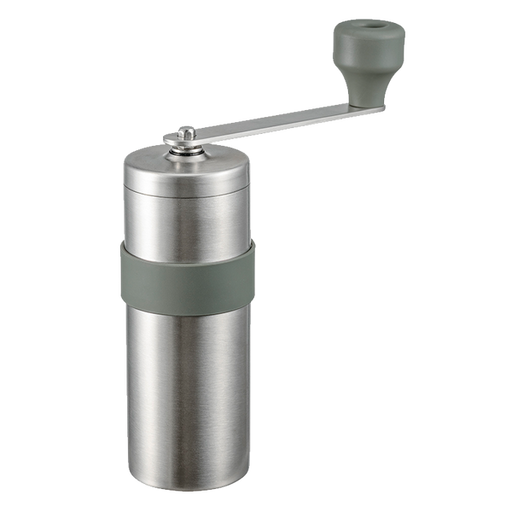
Hario Outdoor V60 Metal Coffee Grinder

Original price 499,00 kr - Original price 499,00 kr
Original price
499,00 kr
499,00 kr - 499,00 kr
Current price 499,00 kr

Hario Outdoor V60 Metal Hand Coffee Grinder – Freshly ground coffee, wherever you are Discover the freedom of grinding your coffee beans exactly ho...

View full details

Hario Mini Slim Plus Hand Coffee Grinder

Original price 259,00 kr - Original price 259,00 kr
Original price
259,00 kr
259,00 kr - 259,00 kr
Current price 259,00 kr

Freshly ground coffee beans provide significantly better aroma in the cup. The Hario Mini Slim Plus is a compact hand grinder that makes it easy to...

View full details

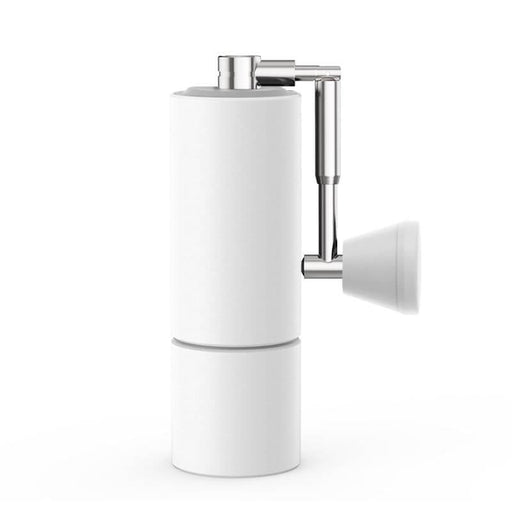
Timemore Chestnut C3s Pro white

Original price 999,00 kr
Original price 999,00 kr - Original price 999,00 kr
Original price 999,00 kr
Current price 799,00 kr
799,00 kr - 799,00 kr
Current price 799,00 kr

The Timemore Chestnut C3S Pro White is a compact manual coffee grinder featuring an all-metal construction, a foldable handle, and Timemore’s 38 mm...

View full details

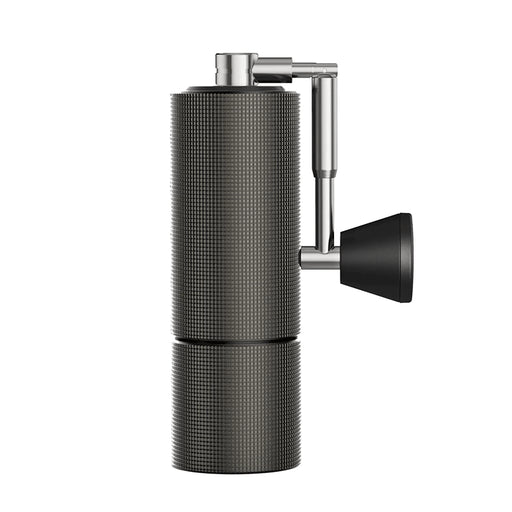
Timemore Chestnut C2 Fold black

Original price 745,00 kr - Original price 745,00 kr
Original price
745,00 kr
745,00 kr - 745,00 kr
Current price 745,00 kr

Timemore Chestnut C2 FOLD: A metal workhorse at a great priceEvery category of coffee equipment has its intended winner, and the Chestnut C2 grinde...

View full details

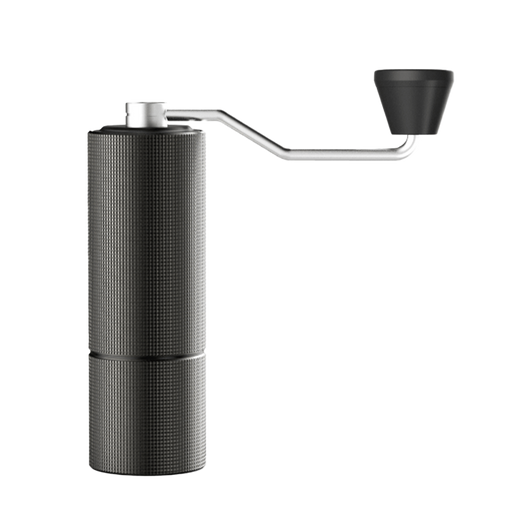
Timemore Chestnut C2 black

Original price 599,00 kr - Original price 599,00 kr
Original price
599,00 kr
599,00 kr - 599,00 kr
Current price 599,00 kr

Timemore Chestnut C2 – The perfect coffee grinder for the home baristaWhen you want to take your coffee brewing to the next level, the Timemore Che...

View full details

Timemore Chestnut C2 Fold white

Original price 745,00 kr - Original price 745,00 kr
Original price
745,00 kr
745,00 kr - 745,00 kr
Current price 745,00 kr

Timemore Chestnut C2 FOLD: A metal workhorse at a great priceEvery category of coffee equipment has its intended winner, and the Chestnut C2 grinde...

View full details

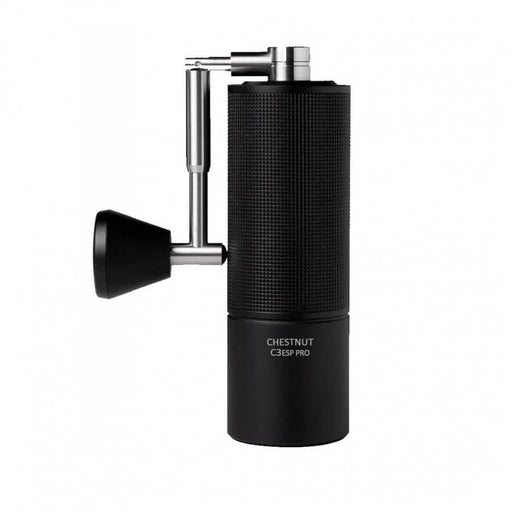
Timemore Chestnut C3 ESP PRO

Original price 1.029,00 kr - Original price 1.029,00 kr
Original price
1.029,00 kr
1.029,00 kr - 1.029,00 kr
Current price 1.029,00 kr

Timemore Chestnut C3 ESP PRO – the ultimate coffee grinderAre you looking for a hand coffee grinder that delivers world-class precision and perform...

View full details

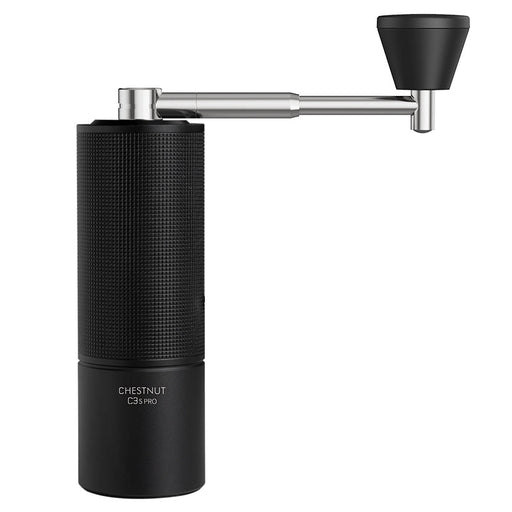
Timemore Chestnut C3s Pro Black

Original price 999,00 kr
Original price 999,00 kr - Original price 999,00 kr
Original price 999,00 kr
Current price 799,00 kr
799,00 kr - 799,00 kr
Current price 799,00 kr

Timemore Chestnut C3s Pro - Premium manual coffee grinder Meet the latest grinder from Timemore. The C3S PRO model in stylish black is the cousin a...

View full details

Manual coffee grinders – manual coffee grinder for freshly ground coffee

A manual coffee grinder is a simple way to grind coffee beans immediately before brewing. It requires no electricity, typically takes up less space than an electric coffee grinder, and is easy to take with you to the summer house, camping, or on trips.

At Brændeholm Risteri, you will find manual coffee grinders for various brewing methods and needs. Some models are particularly suitable for filter coffee and pour over, while others have finer adjustment options and can also be used for espresso.

The right manual coffee grinder therefore depends primarily on how you brew coffee, how much you grind at a time, and how precisely you wish to be able to adjust the grind size.

Why choose a manual coffee grinder?

A manual coffee grinder is especially interesting if you want freshly ground coffee without investing in a larger electric grinder.

You only grind the amount of coffee beans you need and can adjust the grind size according to the brewing method.

At the same time, a manual coffee grinder is compact and quiet, and requires neither a power outlet nor charging.

This makes hand grinders popular for both daily home brewing and coffee on the go.

Manual coffee grinder or electric coffee grinder?

Both types can make very good coffee.

A manual coffee grinder is typically smaller, more portable, and cheaper than an electric grinder with a similar focus on burr set and adjustment options.

On the other hand, you have to turn the handle yourself.

An electric coffee grinder is therefore more practical if you often grind large amounts of coffee or make many brews in succession.

For espresso, an electric espresso grinder can also be more convenient because espresso requires very fine grinding, and the coffee amount can take longer to grind manually.

The choice is therefore not about one type automatically producing better coffee than the other.

The most important thing is the quality of the grinder, how uniformly the coffee is ground, and whether you can adjust the grind to your brewing method.

Which manual coffee grinder should I choose?

Start with the coffee you usually brew.

If you primarily brew V60, AeroPress, filter coffee, or French press, you do not necessarily need a hand grinder with extremely fine adjustment steps.

For espresso, the requirements are higher.

Here, very small changes in grind size can significantly change the espresso's extraction time. Therefore, you should choose a manual coffee grinder that is specifically suitable for espresso if that is your primary purpose.

You should also consider capacity, weight, size, and how fast the grinder works.

Manual coffee grinder for filter coffee

Filter coffee typically requires a medium grind size.

This makes filter coffee relatively uncomplicated for a good manual coffee grinder.

If you brew on a standard coffee machine, you can, for example, start with about 60 grams of coffee per liter of water and adjust the grind according to taste.

A hand grinder is especially practical if you only brew one or a few portions at a time.

Grind the coffee beans shortly before brewing so you get the most out of the coffee's aroma.

Manual coffee grinder for Hario V60

For Hario V60, a manual coffee grinder is a really good match.

V60 typically requires a medium to medium-fine grind size, and small adjustments can be used to control the flow.

If the water runs through the coffee bed very quickly and the coffee tastes thin or sharp, you can try grinding finer.

If the brewing takes a very long time and the coffee becomes bitter or dry, you can try a slightly coarser setting.

A uniform grind makes it easier to adjust the V60 recipe systematically.

Manual coffee grinder for AeroPress

AeroPress can be brewed with many different grind sizes, which makes it well-suited for use with a manual coffee grinder.

Medium-fine is a good starting point for many recipes.

Because AeroPress is compact and does not require electricity, it is also often combined with a manual coffee grinder as a travel setup.

Then you only need a brewer, grinder, coffee, and hot water.

Manual coffee grinder for French press

For French press coffee, a medium-coarse to coarse grind size is usually used.

This does not place the same demands on very small adjustment steps as espresso.

Therefore, even relatively simple manual coffee grinders can work well for French press.

If the coffee becomes very bitter or muddy, you can try grinding a little coarser. If it tastes thin or lacks sweetness, you can experiment with a slightly finer setting or a longer brewing time.

Can a manual coffee grinder be used for espresso?

Yes – but not all manual coffee grinders are equally suitable.

Espresso requires both fine grinding and the possibility of very small adjustments.

If, for example, the espresso runs too fast, the coffee usually needs to be ground finer. If it runs too slowly, it should be ground coarser.

If the distance between two steps on the hand grinder is too large, one setting may be too coarse, while the next becomes too fine.

For espresso, you should therefore choose a model where the manufacturer has specifically had espresso and fine-tuning in mind.

A model like the Timemore C3 ESP PRO, for example, is designed with finer adjustment options than more general filter-oriented hand grinders.

Burr set in a manual coffee grinder

A coffee grinder should use an actual burr set rather than rotating blades.

The burr set crushes the coffee beans between two surfaces and makes it possible to control the particle size by changing the distance between them.

In manual coffee grinders, you will find, among other things, ceramic and stainless steel burrs.

The material alone, however, does not tell you how good the grinder is.

The geometry of the burrs, stability, bearings, shaft, and adjustment mechanism also affect both workflow and result.

Therefore, you should evaluate the entire construction of the grinder rather than just choosing based on whether the burrs are ceramic or steel.

Burr set in a manual coffee grinder

A good manual coffee grinder uses an actual burr set rather than rotating blades.

The coffee beans are ground between the two burr surfaces, and the grind size is adjusted by changing the distance between them.

In manual coffee grinders, you will find, among other things, ceramic burrs and stainless steel burrs.

The material alone, however, does not tell you how good the grinder is.

The geometry of the burrs, stability, bearings, shaft, and adjustment mechanism also affect both workflow and grinding.

Therefore, you should evaluate the entire construction of the grinder rather than just choosing based on the material of the burr set.

Steel or ceramic burr set?

Ceramic burrs are found, among other things, in some simpler and affordable manual coffee grinders.

Stainless steel burrs are very common in modern hand grinders from manufacturers like Timemore.

A modern steel burr set can grind quickly and effectively, but the quality still depends on the construction of the entire grinder.

A more expensive hand grinder is therefore not automatically the right solution for everyone.

For French press, AeroPress, or standard filter coffee, a simpler grinder may be sufficient, while espresso places greater demands on fine-tuning.

Manual coffee grinder for espresso

A manual coffee grinder can easily be used for espresso, but the model must be able to grind sufficiently fine and have small enough adjustment steps.

Espresso reacts strongly to small changes in grind size. If the espresso runs too fast, the coffee usually needs to be ground finer. If it runs too slowly, it typically needs to be ground coarser.

If the distance between two settings on the grinder is too large, one setting can therefore be too coarse, while the next becomes too fine.

Therefore, choose a manual coffee grinder that is developed with fine espresso adjustment in mind if espresso is your primary purpose.

You can combine the grinder with different roasts and flavor profiles from our selection of coffee beans for espresso.

What does the number of clicks mean on a manual coffee grinder?

Many manual coffee grinders are adjusted in clicks.

When you turn the adjustment mechanism, the burr set moves a small distance for each click.

More and smaller adjustment steps allow for finer control.

This is especially valuable for espresso.

For V60, AeroPress, and French press, larger steps can often work fine because these brewing methods are not as sensitive to very small changes in grind size.

You should not compare the number of clicks directly between different grinders. One click on one model does not necessarily correspond to one click on another.

How long does it take to grind coffee manually?

It depends on the amount of coffee, grind size, coffee beans, and the construction of the grinder.

A small portion for a single cup of filter coffee can be ground relatively quickly.

A large portion or a very fine espresso grind requires more work.

Modern hand grinders with efficient steel burrs can be significantly faster than simpler models.

If you have to grind 60–80 grams of coffee every morning for a large coffee machine, an electric grinder will normally be more practical.

For 15–30 grams at a time, a manual coffee grinder is much easier to live with.

Manual coffee grinder for travel and outdoor coffee

One of the hand grinder's greatest advantages is that it does not require electricity.

This makes it obvious to use together with, for example, AeroPress, V60, or other manual coffee brewers on vacations, camping, and outdoor trips.

If you want to use the grinder on the go, you should especially look at weight and size.

A foldable or detachable handle can also make the grinder easier to pack.

For travel use, the largest and heaviest hand grinder is therefore not necessarily the best.

Timemore manual coffee grinders

Timemore makes several manual coffee grinders for different needs.

Some models are primarily developed as versatile grinders for filter coffee and manual brewing methods, while ESP variants have a greater focus on the finer adjustments necessary for espresso.

Models in the Chestnut series differ, among other things, in burr set, construction, adjustment mechanism, and handle.

If you are in doubt between two models, the brewing method should be the first thing you compare.

Hario manual coffee grinders

Hario is especially known for filter coffee and V60 and also produces manual coffee grinders.

A model like the Hario Mini Slim Plus is a simple and compact choice for traditional manual brewing methods.

That type of grinder can be relevant for those who primarily want freshly ground coffee for filter coffee, AeroPress, or French press without needing advanced espresso adjustment.

For espresso, we would normally choose a grinder that is more specifically developed for that purpose.

How much coffee can a manual coffee grinder hold?

The capacity varies from model to model.

It is worth checking if you often brew larger portions.

If the grinder, for example, can only hold about 20–25 grams of coffee beans, but you usually use 60 grams for a large pot of filter coffee, you will have to grind in multiple batches.

For one cup of V60, AeroPress, or a double espresso, a smaller capacity is rarely a problem.

Larger capacity also often means a larger physical grinder, so there is a compromise between capacity and portability.

How to find the right grind size

There is no one setting that fits all coffee grinders.

Even two grinders of the same model can have small differences, and different coffee beans may require different settings.

Therefore, use the manufacturer's recommendation as a starting point and adjust after brewing.

As a general direction, you can think from fine to coarse:

Espresso → AeroPress/V60 → filter coffee → Chemex → French press

There is significant overlap between the areas, so these are not fixed limits.

Taste should always be the final guide.

Should you grind coffee just before brewing?

It is a good habit.

When coffee beans are ground, far more of the coffee's surface is exposed to the environment.

Therefore, ground coffee changes faster than whole coffee beans.

One of the advantages of owning your own coffee grinder is precisely that you can store the coffee as whole beans and only grind the amount you need.

This applies to both manual coffee grinders and electric coffee grinders.

How to clean a manual coffee grinder

Old coffee particles and coffee oils can accumulate in the grinder over time.

Therefore, clean the grinder regularly according to the manufacturer's instructions.

On many models, parts of the burr set can be disassembled and brushed clean.

Avoid washing the burr set itself with water, unless the manufacturer specifically states that it is suitable for it.

It is also important to assemble the grinder correctly again so that the adjustment and the placement of the burr set do not change.

Is an expensive manual coffee grinder worth the money?

It depends on your needs.

A more expensive manual coffee grinder can, among other things, provide faster grinding, more stable construction, a better adjustment mechanism, and greater control over the grind size.

For espresso, these differences can be very valuable.

If you only make French press coffee once in a while, you might not get the same value out of an advanced espresso grinder.

It therefore makes more sense to choose according to brewing method than by price alone.

Manual coffee grinder for the beginner

If you are new to freshly ground coffee, you do not need to start with the most expensive model.

First, choose a grinder that fits the brewing method you use most.

For V60, AeroPress, filter coffee, and French press, there are good manual grinders available without the need for very fine espresso adjustment.

If, on the other hand, you want to start with espresso, it may pay off to choose a more espresso-suited grinder from the start.

It is frustrating to try to set up espresso with a grinder that simply does not have sufficiently small adjustment steps.

Frequently asked questions about manual coffee grinders

What is a manual coffee grinder?

A manual coffee grinder is a manual coffee grinder where the burr set is driven by turning a handle. It requires no electricity and is used to grind whole coffee beans before brewing.

Is a manual coffee grinder better than an electric one?

Not necessarily. Both can produce excellent results. A hand grinder is typically more compact and cheaper, while an electric grinder is faster and more practical for larger quantities.

Can a manual coffee grinder be used for espresso?

Yes, if the model can grind sufficiently fine and has small enough adjustment steps. Preferably choose a model that is specifically developed with espresso in mind.

Which manual coffee grinder is best for V60?

A grinder with a uniform grind and good adjustment options in the medium to medium-fine range is suitable for V60. You normally do not need the very small steps required for espresso.

What grind size is used for French press?

Medium-coarse to coarse is a good starting point. Adjust according to brewing time and taste.

Are Timemore manual coffee grinders good for espresso?

Some Timemore models are developed specifically with finer espresso adjustment, for example, ESP models. Always check the recommended use of the specific model.

How often should a manual coffee grinder be cleaned?

It depends on use and coffee beans. Brush out old coffee particles regularly and follow the manufacturer's cleaning guide.

Is a manual coffee grinder good for travel?

Yes. It requires no electricity and comes in very compact models, which makes it suitable for use together with, for example, AeroPress or V60.