
Milk frothers
Milk frothers – electric and manual for coffee
A milk frother makes it easy to add warm, creamy, or textured milk to cappuccino, caffe latte, flat white, and other coffee drinks – even if you don't have an espresso machine with a steam wand.
At Brændeholm Risteri, you will find both electric and manual milk frothers. Some models heat and froth the milk automatically, while others require you to work with the milk yourself.
Which milk frother you should choose depends primarily on how much automation you want, which milk texture you prefer, and whether your goal is standard milk foam or fine microfoam for, for example, latte art.
If you want to work with traditional steaming from an espresso machine, you can instead see our selection of milk pitchers.
What is a milk frother?
A milk frother is a tool that adds air to milk or plant-based drinks, thereby changing the texture.
Depending on the type, the milk frother can heat the milk at the same time.
The most common types are:
Electric milk frother
Typically heats and froths the milk automatically.
Manual milk frother
Here, you work with a plunger or another mechanism yourself to add air.
Handheld milk frother
A smaller electric device used directly in the milk.
Automatic microfoam machine
More advanced models are developed specifically to create fine and pourable microfoam.
The different types do not necessarily produce the same milk texture.
Which milk frother should I choose?
Start with the coffee you usually drink.
If you primarily want warm, frothed milk for cappuccino or coffee, a standard electric milk frother may be the easiest solution.
If you would like to make latte art, the milk's texture becomes more important. Here, you should choose a model developed for fine and fluid microfoam rather than just creating very airy foam.
If you want to keep your equipment simple and don't mind working with the milk yourself, a manual milk frother can be a good choice.
Choose an electric milk frother if you:
- Want a high degree of automation
- Want heating and frothing in the same process
- Frequently make milk-based drinks
- Do not have a steam wand
- Want to be able to make the coffee while the milk is being prepared
Choose a manual milk frother if you:
- Want a simple construction
- Do not need automatic frothing
- Would like to control the process yourself
- Want to avoid electric equipment
- Only make milk foam occasionally
Electric milk frother
An electric milk frother is a practical solution for daily use.
You pour the milk into the container, choose the relevant function, and start the machine.
Depending on the model, an electric milk frother can:
- Heat milk
- Froth milk
- Have several frothing levels
- Work at different temperatures
- Stop automatically
- Have programs for different types of milk
The functions vary greatly from model to model.
Therefore, you should not assume that all electric milk frothers can make both warm and cold foam, work with plant-based alternatives, or produce microfoam for latte art.
Always check the specifications for the specific model.
Manual milk frother
A manual milk frother requires more work, but the principle is simple.
On a classic plunger model, milk is poured into the container, and then the plunger is moved up and down.
The filter or whisk mechanism adds air to the milk and creates foam.
Manual milk frothers have several advantages:
- No electricity required
- Simple construction
- Easy to store
- You control how long the milk is processed
- Often a lower price than advanced automatic models
If you want warm milk, the heating depends on the specific model. Always follow the manufacturer's instructions.
Electric or manual milk frother?
There is no one type that is best for everyone.
An electric milk frother is obvious if ease of use and automation are your top priorities.
A manual milk frother makes sense if you want a simple solution and are happy to work with the milk yourself.
If latte art is your main goal, you should first and foremost look at which milk texture the model can produce.
The milk frother that makes the most foam is not necessarily the best for latte art.
Milk foam or microfoam – what's the difference?
This is an important distinction when choosing a milk frother.
Standard milk foam
Standard milk foam can be relatively airy and thick.
It works fine for, for example:
- Cappuccino
- Hot chocolate
- Latte macchiato
- Coffee with milk foam
If your goal is just warm milk with a distinct layer of foam, you don't necessarily need an advanced microfoam machine.
Microfoam
Microfoam consists of very small and evenly distributed air bubbles.
This gives the milk a more smooth, shiny, and fluid texture.
It resembles the milk texture that a barista tries to create with a steam wand on an espresso machine.
Microfoam is especially relevant for:
- Flat white
- Caffe latte
- Cortado
- Cappuccino
- Latte art
If latte art is important to you, you should therefore choose a milk frother that is specifically developed for fine microfoam.
Can you make latte art with a milk frother?
Yes – but not necessarily with all milk frothers.
Some models produce relatively thick and airy foam. It may taste good, but it can be difficult to pour in a controlled manner.
For classic latte art, you want more fluid milk with fine microfoam.
A model like the Subminimal NanoFoamer PRO GEN2 is specifically developed with microfoam as the focus and works automatically with both heating and texturing.
Subminimal specifies temperature settings from about 55 to 70 °C, as well as programs for both regular milk and plant-based alternatives.
If latte art is your primary goal, it is therefore more important to choose based on texture rather than the maximum amount of foam.
See also our latte art accessories.
Subminimal NanoFoamer PRO
The Subminimal NanoFoamer PRO GEN2 is an automatic milk frother with a special focus on microfoam.
Unlike traditional milk frothers that primarily produce a large layer of airy foam, the NanoFoamer PRO is developed for a more fluid and uniform milk texture.
This makes the model particularly relevant for:
- Latte art
- Flat white
- Cappuccino
- Caffe latte
- Other drinks where smooth microfoam is desired
The machine heats and textures the milk automatically.
Subminimal also states support for both regular milk and various plant-based alternatives.
However, you do not need a NanoFoamer PRO if you just want standard airy milk foam. A simpler and cheaper solution may be sufficient.
Bialetti Montalatte – manual milk frother
Bialetti Montalatte is a manual milk frother with a plunger.
It therefore does not require the same type of electric automation as a NanoFoamer PRO.
At Brændeholm Risteri, you will find the Montalatte in, among other sizes, 160 ml and 330 ml. Both sizes are currently grouped as variants on the products.
The smaller size is practical for smaller amounts of milk, while 330 ml provides more capacity for larger drinks or servings.
The Montalatte can be a good choice if you want a relatively simple and manual solution for milk foam.
Bialetti Cappuccinatore – electric milk frother
The Bialetti Cappuccinatore is an electric solution for automatic heating and frothing of milk.
Bialetti describes their electric milk frothers as models that use separate whisks for heating and frothing, respectively.
This type of milk frother fits well for those who want a simple workflow with less manual work than with a plunger model.
If you primarily want warm and frothed milk for cappuccino or latte, a traditional electric milk frother may therefore be enough.
If the goal is very fine microfoam for latte art, you should compare the milk texture with more specialized models.
Bialetti or Subminimal?
The two brands do not necessarily solve the same needs.
Bialetti Montalatte
A good choice if you want:
- Manual operation
- Simple construction
- No advanced electronics
- A relatively compact solution
Bialetti electric milk frother
Relevant if you want:
- Automatic operation
- Heating and frothing
- Standard milk foam for cappuccino and latte
- Minimal manual effort
Subminimal NanoFoamer PRO
Relevant if you especially want:
- Fine microfoam
- Latte art
- Automatic texturing
- Multiple settings
- The ability to use different milk types
Therefore, choose based on the milk texture and workflow you desire rather than by brand alone.
Milk frother for cappuccino
Cappuccino combines espresso with textured milk.
Many types of milk frothers can therefore be used.
If you primarily want a classic cappuccino with a distinct layer of foam, you don't necessarily need the most advanced microfoam machine.
If you also want to make latte art, you should choose a model that provides smoother and more pourable microfoam.
You can also read our guide to cappuccino.
Milk frother for caffe latte
Caffe latte contains a relatively large amount of milk.
Here, a soft and creamy milk texture will often be more relevant than a very thick layer of foam.
If caffe latte is your preferred drink, you should therefore look at:
- The milk's texture
- The frother's capacity
- Whether the model heats the milk itself
- How automatic the process should be
A larger capacity can be practical because a caffe latte typically uses more milk than smaller espresso drinks.
Milk frother for flat white
Flat white is usually associated with very fine microfoam and a smooth milk texture.
A traditional milk frother that produces very stiff and airy foam is therefore not necessarily the obvious choice.
If flat white is important to you, you should prioritize a microfoam-oriented model.
Here, the Subminimal NanoFoamer PRO is a more targeted type of product than a traditional plunger frother.
Milk frother for cortado
Cortado uses a relatively small amount of milk.
Therefore, maximum capacity is not necessarily an advantage.
Check instead how small a portion the specific milk frother can work with.
A large electric milk frother may have a minimum amount that is inconvenient if you almost always make small coffee drinks.
For cortado, a smaller manual model can therefore also be interesting.
How hot should milk for coffee be?
Around 55–65 °C is a sensible, practical range for many coffee drinks.
However, this is not an absolute rule.
The preferred temperature depends, among other things, on:
- Milk type
- Coffee drink
- Personal preference
- The specific milk frother
Subminimal, for example, works with temperatures from about 55 °C up to around 70 °C on the NanoFoamer PRO.
If your milk frother has an adjustable temperature, you can therefore experiment and find the level you prefer.
Can you use oat drink in a milk frother?
Yes, many milk frothers can be used with oat drink and other plant-based alternatives.
However, the result varies.
Different plant-based drinks have different compositions and can therefore behave very differently during frothing.
Products marketed as barista versions are often developed with coffee and frothing in mind.
If plant-based alternatives are important to you, you should also check whether the manufacturer of the specific milk frother explicitly states compatibility.
Subminimal, for example, specifies both dairy milk and alternatives for the NanoFoamer PRO.
Which milk froths best?
There is no one answer.
Cow's milk is relatively easy to work with, but the result varies with fat and protein content, among other factors.
Plant-based alternatives can also give good results, especially products developed for barista use.
The best choice therefore depends on both the milk you prefer and the milk frother you use.
If you switch milk, it may be necessary to adjust the program or technique.
Should the milk be cold?
That depends on the milk frother.
With many electric models, you can start with cold milk straight from the fridge, and the machine then handles the heating itself.
With manual models, it depends on the construction and the drink you want.
Therefore, always follow the manufacturer's instructions for the specific model.
Milk frother or steam wand?
If you already have an espresso machine with a good steam wand, you don't necessarily need a separate milk frother.
Steam wand
With a steam wand, you control:
- Air supply
- Rotation
- Temperature
- Milk texture
This provides great control, but also requires more technique.
Milk frother
An automatic milk frother does a larger part of the work for you.
This is especially relevant if:
- Your coffee machine does not have a steam wand
- You brew with a moka pot
- You use AeroPress or filter coffee
- You want a more automatic workflow
A separate milk frother can therefore be useful even if you don't have an espresso machine at all.
Milk frother or milk pitcher?
A milk pitcher does not froth the milk by itself.
It is usually used together with the steam wand on an espresso machine.
A milk frother, on the other hand, has a mechanism that adds air to the milk.
If you have an espresso machine with a steam wand and want to learn traditional steaming, a milk pitcher is the natural choice.
If you don't have a steam wand, a milk frother is often easier.
Some automatic milk frothers also produce milk that can subsequently be poured into a milk pitcher if you want to work with latte art.
Milk frother for moka pot
A milk frother fits well with an espresso maker or moka pot.
The moka pot makes concentrated coffee but has no steam wand for milk.
Therefore, you can combine the coffee with separately heated and frothed milk for milk-based coffee drinks.
It will not necessarily be identical to a café drink made with espresso, but the combination is simple and does not require an espresso machine.
Milk frother for AeroPress
The same applies to AeroPress.
AeroPress can brew a relatively concentrated coffee that can be combined with frothed or textured milk.
A separate milk frother therefore makes it possible to make milk-based coffee drinks without a machine with a steam wand.
Milk frother for hot chocolate
A milk frother can also be useful for other hot drinks besides coffee.
Some electric models can heat and stir milk, but this does not mean that all models are designed to have cocoa, chocolate, or other ingredients added directly into the container.
Therefore, check the manufacturer's instructions.
If the model is only intended for milk, the cocoa should be mixed separately.
How large a milk frother should I choose?
Capacity is especially important if you make several milk drinks or large lattes.
A larger model is practical if you often use a lot of milk.
But maximum capacity is not the only interesting figure.
If you make cortado or other small drinks, you should also investigate the minimum capacity.
A milk frother should suit the amount of milk you actually use – it shouldn't just be as large as possible.
Cleaning your milk frother
Milk residue should not be allowed to dry onto the milk frother.
Therefore, clean the product after use according to the manufacturer's instructions.
On some models, parts can be detached and washed separately.
Others have electrical components that, naturally, must not be immersed in water.
Manual models may again have different requirements depending on material and coating.
Always follow the instructions for your specific product.
What should I look for before buying?
When comparing milk frothers, pay special attention to:
Heating
Does the model heat the milk itself?
Milk texture
Does it create regular foam or fine microfoam?
Temperature control
Can you select the temperature?
Capacity
How much and how little milk can it work with?
Plant-based drinks
Does the manufacturer state that the model is suitable for different types of milk?
Latte art
Is the foam fluid enough for controlled pouring?
Cleaning
How are the jug, whisk, or other components cleaned?
Choose based on the coffee you actually make, rather than the model with the longest list of features.
Milk frothers at Brændeholm Risteri
At Brændeholm Risteri, you will find milk frothers for various needs.
The range includes, among others, manual Bialetti models as well as electrical solutions from Bialetti and Subminimal.
This means you can choose between:
- Manual milk frothing
- Automatic heating and frothing
- Traditional airy milk foam
- More specialized microfoam
If you prefer to work with the steam wand on an espresso machine, you can find our milk pitchers.
For patterns and pouring techniques, you can also look at latte art accessories.
And for the coffee base itself, you will find coffee beans for espresso.
Frequently asked questions about milk frothers
Which milk frother should I choose?
Choose based on the milk texture and level of automation you desire. For simple warm frothed milk, many electric models are excellent. For latte art, you should prioritize fine and pourable microfoam.
What is the difference between a manual and an electric milk frother?
A manual milk frother requires you to work the milk yourself. An electric model uses a motor and, on many models, can both heat and froth automatically.
Can a milk frother make latte art?
Some can. Latte art requires relatively smooth and fluid microfoam, and traditional milk frothers do not necessarily produce this texture.
What is microfoam?
Microfoam is textured milk with very small and evenly distributed air bubbles. It creates a smoother and more pourable milk than coarse, airy foam.
Can you use oat drink in a milk frother?
Yes, if the specific model is suitable for it. The result varies between different plant-based drinks.
Do I need a milk frother if my espresso machine has a steam wand?
No. A steam wand and a milk pitcher can be used directly for steaming and creating microfoam. A separate milk frother can, however, be relevant if you prefer more automation.
Can you use a milk frother together with a moka pot?
Yes. The moka pot has no steam wand, so separately frothed milk is an easy way to make milk-based coffee drinks.
What is the difference between a milk frother and a milk pitcher?
A milk frother adds air to the milk itself. A milk pitcher is a container usually used in conjunction with the steam wand on an espresso machine.
Does the milk need to be heated before frothing?
That depends on the model. Many electric milk frothers heat the milk themselves, while manual models may require separate heating.
Which milk frother is best for latte art?
There isn't one model that is best for everyone. Choose a model developed for fine microfoam rather than just thick and airy milk foam.
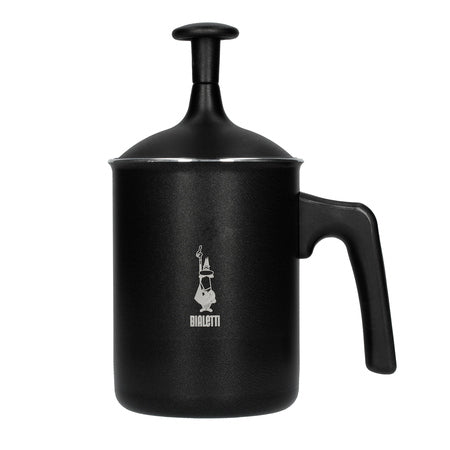
Bialetti Milk Frother - 160 ml
Original price
217,00 kr
-
Original price
217,00 kr
Original price
217,00 kr
217,00 kr
-
217,00 kr
Current price
217,00 kr
Bialetti Montalatte milk frother. Easily create creamy milk foam at home. Whether you are making a creamy cappuccino, a delicious latte, or a rich ...
View full details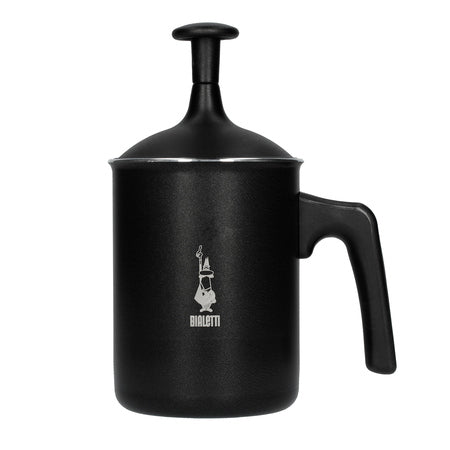
Bialetti Milk Frother - 330 ml
Original price
279,00 kr
-
Original price
279,00 kr
Original price
279,00 kr
279,00 kr
-
279,00 kr
Current price
279,00 kr
Bialetti Montalatte milk frother. Bring barista quality directly to your home. Whether you are making a creamy cappuccino, a delicious latte, or a ...
View full details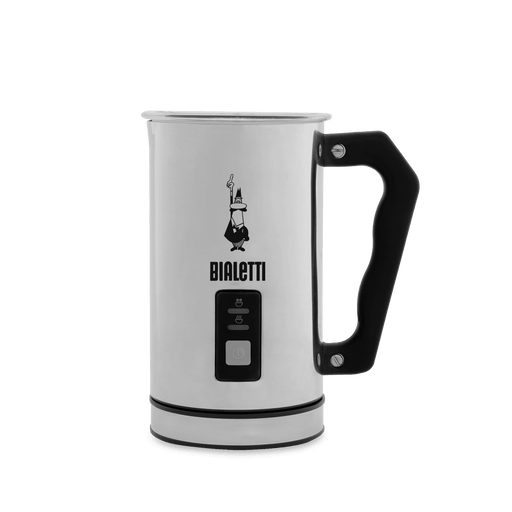
Bialetti Cappuccinatore Milk Frother MK01 - Electric milk frother
Original price
599,00 kr
-
Original price
599,00 kr
Original price
599,00 kr
599,00 kr
-
599,00 kr
Current price
599,00 kr
The Bialetti milk frother gives you access to airy and creamy milk with just the touch of a button. The milk frother can heat up to 240ml of milk o...
View full details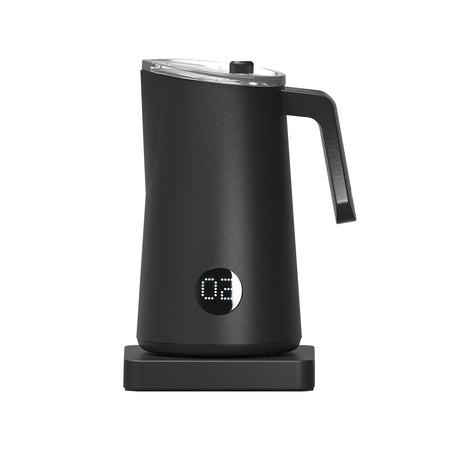
Subminimal NanoFoamer PRO Gen 2 – automatic milk foamer
Original price
1.479,00 kr
-
Original price
1.479,00 kr
Original price
1.479,00 kr
1.479,00 kr
-
1.479,00 kr
Current price
1.479,00 kr
Subminimal NanoFoamer PRO Gen 2 – automatic microfoam for latte art The Subminimal NanoFoamer PRO Gen 2 is an automatic milk frother developed for ...
View full details
Sage The Milk Café BMF600 Milk Frother
Original price
1.249,00 kr
-
Original price
1.249,00 kr
Original price
1.249,00 kr
1.249,00 kr
-
1.249,00 kr
Current price
1.249,00 kr
The Sage The Milk Café BMF600 is an automatic milk frother with induction heating and adjustable temperature. It is designed for those who want hot...
View full detailsMilk frothers – electric and manual for coffee
A milk frother makes it easy to add warm, creamy, or textured milk to cappuccino, caffe latte, flat white, and other coffee drinks – even if you don't have an espresso machine with a steam wand.
At Brændeholm Risteri, you will find both electric and manual milk frothers. Some models heat and froth the milk automatically, while others require you to work with the milk yourself.
Which milk frother you should choose depends primarily on how much automation you want, which milk texture you prefer, and whether your goal is standard milk foam or fine microfoam for, for example, latte art.
If you want to work with traditional steaming from an espresso machine, you can instead see our selection of milk pitchers.
What is a milk frother?
A milk frother is a tool that adds air to milk or plant-based drinks, thereby changing the texture.
Depending on the type, the milk frother can heat the milk at the same time.
The most common types are:
Electric milk frother
Typically heats and froths the milk automatically.
Manual milk frother
Here, you work with a plunger or another mechanism yourself to add air.
Handheld milk frother
A smaller electric device used directly in the milk.
Automatic microfoam machine
More advanced models are developed specifically to create fine and pourable microfoam.
The different types do not necessarily produce the same milk texture.
Which milk frother should I choose?
Start with the coffee you usually drink.
If you primarily want warm, frothed milk for cappuccino or coffee, a standard electric milk frother may be the easiest solution.
If you would like to make latte art, the milk's texture becomes more important. Here, you should choose a model developed for fine and fluid microfoam rather than just creating very airy foam.
If you want to keep your equipment simple and don't mind working with the milk yourself, a manual milk frother can be a good choice.
Choose an electric milk frother if you:
- Want a high degree of automation
- Want heating and frothing in the same process
- Frequently make milk-based drinks
- Do not have a steam wand
- Want to be able to make the coffee while the milk is being prepared
Choose a manual milk frother if you:
- Want a simple construction
- Do not need automatic frothing
- Would like to control the process yourself
- Want to avoid electric equipment
- Only make milk foam occasionally
Electric milk frother
An electric milk frother is a practical solution for daily use.
You pour the milk into the container, choose the relevant function, and start the machine.
Depending on the model, an electric milk frother can:
- Heat milk
- Froth milk
- Have several frothing levels
- Work at different temperatures
- Stop automatically
- Have programs for different types of milk
The functions vary greatly from model to model.
Therefore, you should not assume that all electric milk frothers can make both warm and cold foam, work with plant-based alternatives, or produce microfoam for latte art.
Always check the specifications for the specific model.
Manual milk frother
A manual milk frother requires more work, but the principle is simple.
On a classic plunger model, milk is poured into the container, and then the plunger is moved up and down.
The filter or whisk mechanism adds air to the milk and creates foam.
Manual milk frothers have several advantages:
- No electricity required
- Simple construction
- Easy to store
- You control how long the milk is processed
- Often a lower price than advanced automatic models
If you want warm milk, the heating depends on the specific model. Always follow the manufacturer's instructions.
Electric or manual milk frother?
There is no one type that is best for everyone.
An electric milk frother is obvious if ease of use and automation are your top priorities.
A manual milk frother makes sense if you want a simple solution and are happy to work with the milk yourself.
If latte art is your main goal, you should first and foremost look at which milk texture the model can produce.
The milk frother that makes the most foam is not necessarily the best for latte art.
Milk foam or microfoam – what's the difference?
This is an important distinction when choosing a milk frother.
Standard milk foam
Standard milk foam can be relatively airy and thick.
It works fine for, for example:
- Cappuccino
- Hot chocolate
- Latte macchiato
- Coffee with milk foam
If your goal is just warm milk with a distinct layer of foam, you don't necessarily need an advanced microfoam machine.
Microfoam
Microfoam consists of very small and evenly distributed air bubbles.
This gives the milk a more smooth, shiny, and fluid texture.
It resembles the milk texture that a barista tries to create with a steam wand on an espresso machine.
Microfoam is especially relevant for:
- Flat white
- Caffe latte
- Cortado
- Cappuccino
- Latte art
If latte art is important to you, you should therefore choose a milk frother that is specifically developed for fine microfoam.
Can you make latte art with a milk frother?
Yes – but not necessarily with all milk frothers.
Some models produce relatively thick and airy foam. It may taste good, but it can be difficult to pour in a controlled manner.
For classic latte art, you want more fluid milk with fine microfoam.
A model like the Subminimal NanoFoamer PRO GEN2 is specifically developed with microfoam as the focus and works automatically with both heating and texturing.
Subminimal specifies temperature settings from about 55 to 70 °C, as well as programs for both regular milk and plant-based alternatives.
If latte art is your primary goal, it is therefore more important to choose based on texture rather than the maximum amount of foam.
See also our latte art accessories.
Subminimal NanoFoamer PRO
The Subminimal NanoFoamer PRO GEN2 is an automatic milk frother with a special focus on microfoam.
Unlike traditional milk frothers that primarily produce a large layer of airy foam, the NanoFoamer PRO is developed for a more fluid and uniform milk texture.
This makes the model particularly relevant for:
- Latte art
- Flat white
- Cappuccino
- Caffe latte
- Other drinks where smooth microfoam is desired
The machine heats and textures the milk automatically.
Subminimal also states support for both regular milk and various plant-based alternatives.
However, you do not need a NanoFoamer PRO if you just want standard airy milk foam. A simpler and cheaper solution may be sufficient.
Bialetti Montalatte – manual milk frother
Bialetti Montalatte is a manual milk frother with a plunger.
It therefore does not require the same type of electric automation as a NanoFoamer PRO.
At Brændeholm Risteri, you will find the Montalatte in, among other sizes, 160 ml and 330 ml. Both sizes are currently grouped as variants on the products.
The smaller size is practical for smaller amounts of milk, while 330 ml provides more capacity for larger drinks or servings.
The Montalatte can be a good choice if you want a relatively simple and manual solution for milk foam.
Bialetti Cappuccinatore – electric milk frother
The Bialetti Cappuccinatore is an electric solution for automatic heating and frothing of milk.
Bialetti describes their electric milk frothers as models that use separate whisks for heating and frothing, respectively.
This type of milk frother fits well for those who want a simple workflow with less manual work than with a plunger model.
If you primarily want warm and frothed milk for cappuccino or latte, a traditional electric milk frother may therefore be enough.
If the goal is very fine microfoam for latte art, you should compare the milk texture with more specialized models.
Bialetti or Subminimal?
The two brands do not necessarily solve the same needs.
Bialetti Montalatte
A good choice if you want:
- Manual operation
- Simple construction
- No advanced electronics
- A relatively compact solution
Bialetti electric milk frother
Relevant if you want:
- Automatic operation
- Heating and frothing
- Standard milk foam for cappuccino and latte
- Minimal manual effort
Subminimal NanoFoamer PRO
Relevant if you especially want:
- Fine microfoam
- Latte art
- Automatic texturing
- Multiple settings
- The ability to use different milk types
Therefore, choose based on the milk texture and workflow you desire rather than by brand alone.
Milk frother for cappuccino
Cappuccino combines espresso with textured milk.
Many types of milk frothers can therefore be used.
If you primarily want a classic cappuccino with a distinct layer of foam, you don't necessarily need the most advanced microfoam machine.
If you also want to make latte art, you should choose a model that provides smoother and more pourable microfoam.
You can also read our guide to cappuccino.
Milk frother for caffe latte
Caffe latte contains a relatively large amount of milk.
Here, a soft and creamy milk texture will often be more relevant than a very thick layer of foam.
If caffe latte is your preferred drink, you should therefore look at:
- The milk's texture
- The frother's capacity
- Whether the model heats the milk itself
- How automatic the process should be
A larger capacity can be practical because a caffe latte typically uses more milk than smaller espresso drinks.
Milk frother for flat white
Flat white is usually associated with very fine microfoam and a smooth milk texture.
A traditional milk frother that produces very stiff and airy foam is therefore not necessarily the obvious choice.
If flat white is important to you, you should prioritize a microfoam-oriented model.
Here, the Subminimal NanoFoamer PRO is a more targeted type of product than a traditional plunger frother.
Milk frother for cortado
Cortado uses a relatively small amount of milk.
Therefore, maximum capacity is not necessarily an advantage.
Check instead how small a portion the specific milk frother can work with.
A large electric milk frother may have a minimum amount that is inconvenient if you almost always make small coffee drinks.
For cortado, a smaller manual model can therefore also be interesting.
How hot should milk for coffee be?
Around 55–65 °C is a sensible, practical range for many coffee drinks.
However, this is not an absolute rule.
The preferred temperature depends, among other things, on:
- Milk type
- Coffee drink
- Personal preference
- The specific milk frother
Subminimal, for example, works with temperatures from about 55 °C up to around 70 °C on the NanoFoamer PRO.
If your milk frother has an adjustable temperature, you can therefore experiment and find the level you prefer.
Can you use oat drink in a milk frother?
Yes, many milk frothers can be used with oat drink and other plant-based alternatives.
However, the result varies.
Different plant-based drinks have different compositions and can therefore behave very differently during frothing.
Products marketed as barista versions are often developed with coffee and frothing in mind.
If plant-based alternatives are important to you, you should also check whether the manufacturer of the specific milk frother explicitly states compatibility.
Subminimal, for example, specifies both dairy milk and alternatives for the NanoFoamer PRO.
Which milk froths best?
There is no one answer.
Cow's milk is relatively easy to work with, but the result varies with fat and protein content, among other factors.
Plant-based alternatives can also give good results, especially products developed for barista use.
The best choice therefore depends on both the milk you prefer and the milk frother you use.
If you switch milk, it may be necessary to adjust the program or technique.
Should the milk be cold?
That depends on the milk frother.
With many electric models, you can start with cold milk straight from the fridge, and the machine then handles the heating itself.
With manual models, it depends on the construction and the drink you want.
Therefore, always follow the manufacturer's instructions for the specific model.
Milk frother or steam wand?
If you already have an espresso machine with a good steam wand, you don't necessarily need a separate milk frother.
Steam wand
With a steam wand, you control:
- Air supply
- Rotation
- Temperature
- Milk texture
This provides great control, but also requires more technique.
Milk frother
An automatic milk frother does a larger part of the work for you.
This is especially relevant if:
- Your coffee machine does not have a steam wand
- You brew with a moka pot
- You use AeroPress or filter coffee
- You want a more automatic workflow
A separate milk frother can therefore be useful even if you don't have an espresso machine at all.
Milk frother or milk pitcher?
A milk pitcher does not froth the milk by itself.
It is usually used together with the steam wand on an espresso machine.
A milk frother, on the other hand, has a mechanism that adds air to the milk.
If you have an espresso machine with a steam wand and want to learn traditional steaming, a milk pitcher is the natural choice.
If you don't have a steam wand, a milk frother is often easier.
Some automatic milk frothers also produce milk that can subsequently be poured into a milk pitcher if you want to work with latte art.
Milk frother for moka pot
A milk frother fits well with an espresso maker or moka pot.
The moka pot makes concentrated coffee but has no steam wand for milk.
Therefore, you can combine the coffee with separately heated and frothed milk for milk-based coffee drinks.
It will not necessarily be identical to a café drink made with espresso, but the combination is simple and does not require an espresso machine.
Milk frother for AeroPress
The same applies to AeroPress.
AeroPress can brew a relatively concentrated coffee that can be combined with frothed or textured milk.
A separate milk frother therefore makes it possible to make milk-based coffee drinks without a machine with a steam wand.
Milk frother for hot chocolate
A milk frother can also be useful for other hot drinks besides coffee.
Some electric models can heat and stir milk, but this does not mean that all models are designed to have cocoa, chocolate, or other ingredients added directly into the container.
Therefore, check the manufacturer's instructions.
If the model is only intended for milk, the cocoa should be mixed separately.
How large a milk frother should I choose?
Capacity is especially important if you make several milk drinks or large lattes.
A larger model is practical if you often use a lot of milk.
But maximum capacity is not the only interesting figure.
If you make cortado or other small drinks, you should also investigate the minimum capacity.
A milk frother should suit the amount of milk you actually use – it shouldn't just be as large as possible.
Cleaning your milk frother
Milk residue should not be allowed to dry onto the milk frother.
Therefore, clean the product after use according to the manufacturer's instructions.
On some models, parts can be detached and washed separately.
Others have electrical components that, naturally, must not be immersed in water.
Manual models may again have different requirements depending on material and coating.
Always follow the instructions for your specific product.
What should I look for before buying?
When comparing milk frothers, pay special attention to:
Heating
Does the model heat the milk itself?
Milk texture
Does it create regular foam or fine microfoam?
Temperature control
Can you select the temperature?
Capacity
How much and how little milk can it work with?
Plant-based drinks
Does the manufacturer state that the model is suitable for different types of milk?
Latte art
Is the foam fluid enough for controlled pouring?
Cleaning
How are the jug, whisk, or other components cleaned?
Choose based on the coffee you actually make, rather than the model with the longest list of features.
Milk frothers at Brændeholm Risteri
At Brændeholm Risteri, you will find milk frothers for various needs.
The range includes, among others, manual Bialetti models as well as electrical solutions from Bialetti and Subminimal.
This means you can choose between:
- Manual milk frothing
- Automatic heating and frothing
- Traditional airy milk foam
- More specialized microfoam
If you prefer to work with the steam wand on an espresso machine, you can find our milk pitchers.
For patterns and pouring techniques, you can also look at latte art accessories.
And for the coffee base itself, you will find coffee beans for espresso.
Frequently asked questions about milk frothers
Which milk frother should I choose?
Choose based on the milk texture and level of automation you desire. For simple warm frothed milk, many electric models are excellent. For latte art, you should prioritize fine and pourable microfoam.
What is the difference between a manual and an electric milk frother?
A manual milk frother requires you to work the milk yourself. An electric model uses a motor and, on many models, can both heat and froth automatically.
Can a milk frother make latte art?
Some can. Latte art requires relatively smooth and fluid microfoam, and traditional milk frothers do not necessarily produce this texture.
What is microfoam?
Microfoam is textured milk with very small and evenly distributed air bubbles. It creates a smoother and more pourable milk than coarse, airy foam.
Can you use oat drink in a milk frother?
Yes, if the specific model is suitable for it. The result varies between different plant-based drinks.
Do I need a milk frother if my espresso machine has a steam wand?
No. A steam wand and a milk pitcher can be used directly for steaming and creating microfoam. A separate milk frother can, however, be relevant if you prefer more automation.
Can you use a milk frother together with a moka pot?
Yes. The moka pot has no steam wand, so separately frothed milk is an easy way to make milk-based coffee drinks.
What is the difference between a milk frother and a milk pitcher?
A milk frother adds air to the milk itself. A milk pitcher is a container usually used in conjunction with the steam wand on an espresso machine.
Does the milk need to be heated before frothing?
That depends on the model. Many electric milk frothers heat the milk themselves, while manual models may require separate heating.
Which milk frother is best for latte art?
There isn't one model that is best for everyone. Choose a model developed for fine microfoam rather than just thick and airy milk foam.


