


Latte art accessories – equipment for milk foam and coffee patterns
Latte art is about pouring textured milk into espresso so that the milk and coffee form patterns like hearts, tulips, and rosettas.
First and foremost, this requires good microfoam and control over the pour. Equipment can make the job easier, but it cannot replace properly steamed milk and practice.
At Brændeholm Risteri, you will find latte art accessories for the home barista, including tools for decorating and equipment for working with milk.
Also see our large selection of milk pitchers for coffee and latte art.
What is latte art?
Latte art consists of patterns created when textured milk is poured into an espresso-based coffee drink.
Classic patterns are usually made directly during the pour.
Among the most well-known are:
Heart
A good place to start, because the pattern can be made with a relatively simple pouring motion.
Tulip
Built up in several layers and requires more control over distance and milk flow.
Rosetta
Requires a more controlled side-to-side motion and is typically more difficult to master than a simple heart.
There are also more detailed techniques where the pattern is subsequently worked on with, for example, a latte art pen.
What do I need for latte art?
You don't need a large collection of specialized equipment.
The most important things are:
An espresso-based coffee.
Milk or a plant-based drink that can be textured.
A suitable milk pitcher.
A way to steam or froth the milk.
A cup or glass to pour into.
After that, you can supplement with items like a latte art pen and a milk thermometer, if it suits the technique you are working with.
The milk pitcher is the most important tool for classic latte art
For classic free-pour latte art, the milk pitcher is far more important than a latte art pen.
The pitcher is used both during steaming and during the pour itself.
When choosing a milk pitcher, it is especially worth looking at:
The size of the pitcher.
The shape of the spout.
How the pitcher feels in your hand.
How much milk you normally use.
A good milk pitcher does not automatically make the milk correctly textured, but it can make it easier to work with control during both steaming and pouring.
What size milk pitcher for latte art?
This depends on how much milk you usually steam.
A very large pitcher is not necessarily easier to work with if you are only making one small cappuccino.
Around 350 ml
A smaller milk pitcher is well-suited for smaller amounts of milk and one smaller milk drink.
This could be, for example, a cappuccino, flat white, or cortado.
Around 450 ml
A size of around 450 ml is a versatile, middle-of-the-road choice.
It provides more room than a small milk pitcher, but is still relatively compact for one standard milk drink.
Around 600 ml
A larger milk pitcher provides better room for larger amounts of milk or multiple servings.
However, if you almost always make one small cappuccino, it may be larger than necessary.
Also read our guide to choosing the right milk pitcher.
The spout and latte art
The shape of the spout affects how the milk leaves the pitcher.
A more precise spout can be useful when you want to work with fine lines and details.
A slightly wider spout can be comfortable for larger and simpler shapes.
This does not mean that one specific spout is best for everyone.
Your technique, the consistency of the milk, and the way you hold the pitcher have at least as much significance.
If you are new to latte art, it is therefore better to learn to create stable microfoam and a simple heart than to spend a lot of energy on small differences between various spout designs.
What is microfoam?
Microfoam is milk with very small and evenly distributed air bubbles.
The goal is not a thick layer of stiff foam on top of hot milk.
For latte art, you want a more cohesive texture where the liquid milk and fine air bubbles work together.
When the pitcher is moved, the milk should appear smooth and glossy rather than consisting of clearly separated milk and foam.
It is this texture that makes it possible to pour the milk through the espresso's crema and later let the white milk appear on the surface.
Milk frother for latte art
If you don't have a traditional steam wand, a milk frother can be an alternative.
However, milk frothers work differently.
Some are primarily developed to create regular milk foam, while others allow for more opportunity to work with the fine texture that is desirable for latte art.
If latte art is your primary goal, you should therefore look at what type of foam the specific milk frother can make – not just whether it can make milk foamy.
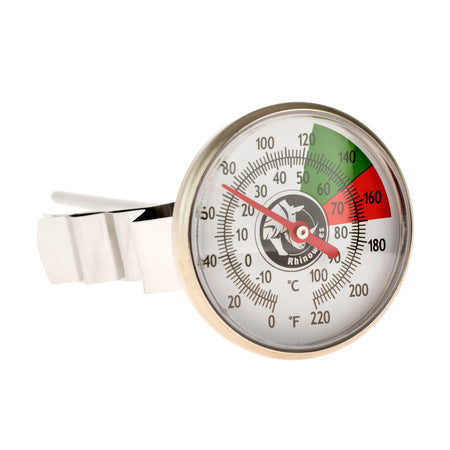
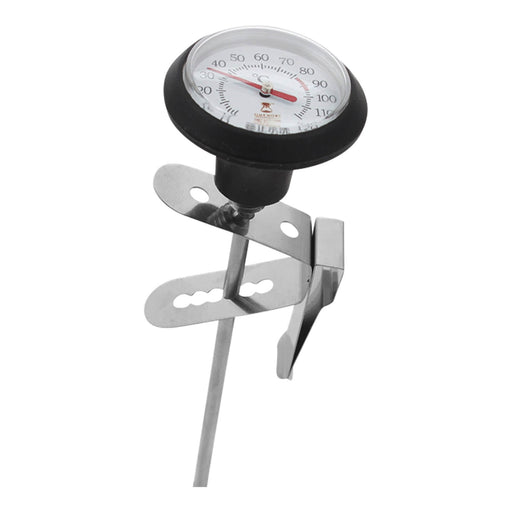
Milk thermometer for latte art
A milk thermometer can be useful while you are learning to steam milk.
It gives you a concrete temperature to keep an eye on and can help create a more consistent routine.
As you become more experienced, you may learn to judge the temperature by, among other things, the feel of the pitcher, but a thermometer can be a good training tool.
However, it is important to remember that temperature is only one part of the process.
The milk's texture and the amount of air introduced are just as important for latte art.
Motta Latte Art Pen
Motta Latte Art Pen is a tool for further refining patterns on the surface of the milk foam.
Motta states the length of the latte art pen itself as 13.5 cm.
Unlike classic free-pour latte art, the pen is used after or during decoration to draw and shape details in the milk foam.
It can, for example, be used to work with:
Smaller details.
Lines.
Figures.
Patterns that are more difficult to create through pouring alone.
This makes the latte art pen a supplement to the pouring technique – not a replacement for a good milk pitcher and correctly textured milk.
Free pour or latte art pen?
There are different ways to work with latte art.
Free pour
With free pour, the entire pattern is created through the way the milk is poured into the espresso.
Hearts, tulips, and rosettas are classic examples.
Here, the milk's texture and control of the milk pitcher are decisive.
Latte art pen
With a latte art pen, you can work on the surface and create or adjust details.
The technique offers different possibilities than pure free pour and can be used for more illustrative patterns.
You don't have to choose one or the other.
The two techniques can also be combined.
How to get started with latte art
Start simple.
The most important thing is to first be able to make an espresso and milk with a consistency that can be poured in a controlled manner.
Then begin with a simple pattern like a heart.
Once you can repeat it reasonably consistently, you can work on tulips, rosettas, and other patterns.
If you try to learn very advanced patterns before the milk's texture is working, the process becomes unnecessarily difficult.
Latte art is, therefore, largely about repetition.
Why does the milk sink into the coffee?
At the start of the pour, you usually want the milk to integrate with the espresso.
Here, you pour from a slightly greater height so that the stream of milk goes through the surface.
When the actual pattern needs to emerge, the pitcher is moved closer to the surface of the coffee.
The shorter distance makes it easier for the white microfoam to become visible on top.
If all the milk disappears into the coffee, it may be due to the pouring height, the flow, or the texture of the milk.
Why is my latte art pattern unclear?
There can be several reasons.
The milk may have bubbles that are too large.
The foam may be too stiff.
The milk and foam may have had time to separate in the pitcher.
You may be pouring too slowly or too quickly.
The pitcher may be too far from the surface when the pattern needs to be formed.
The surface of the espresso can also affect how easy the pattern is to work with.
That is why latte art is rarely a question of one specific piece of equipment.
The technique consists of several steps that must work together.
Can you make latte art with plant-based drinks?
Yes, but different plant-based drinks behave differently during frothing.
Products developed for coffee and barista use are often made with better frothing and stability in mind.
You may therefore have to adjust your technique if you switch between cow's milk, oat drink, and other alternatives.
The most important thing is still to achieve a smooth and pourable texture.
Latte art for cappuccino
Cappuccino is an obvious drink to practice latte art in.
Here, espresso and textured milk are combined in a cup size well-suited for classic patterns.
The most important thing is not whether the first heart becomes symmetrical.
Focus first on being able to make the milk consistent from time to time.
When the texture becomes stable, the pouring itself becomes much easier to work with.
Latte art for caffe latte and flat white
Latte art can also be used for other milk-based espresso drinks.
A caffe latte typically has more milk than a cappuccino, while a flat white is usually served smaller and with a relatively thin layer of microfoam.
The technique must therefore be adapted to the specific cup, volume, and drink.
The same latte art equipment can, however, be used for several different milk drinks.
Which cup is good for latte art?
A cup with a relatively wide opening provides good room to work with the pattern on the surface.
The precise size depends on the drink.
A smaller cup fits well for cappuccino and flat white, while a larger cup is better suited for caffe latte.
You will find various options under coffee cups and coffee glasses.
The most important thing is that the cup size fits reasonably well with the ratio between espresso and milk.
Coffee beans for latte art drinks
Latte art does not change the actual taste of the espresso.
Therefore, the coffee should still be chosen according to the flavor profile you want in the drink.
When the coffee is combined with a relatively large amount of milk, an espresso with good body can be easier to taste through the milk.
At Brændeholm Risteri, you will find various coffee beans for espresso.
You can then adjust both the coffee and the milk according to the type of cappuccino, flat white, or caffe latte you prefer.
Latte art is first and foremost technique
It can be tempting to look for a piece of equipment that makes latte art easy.
But an expensive milk pitcher or latte art pen cannot compensate for milk with large air bubbles or a pouring technique that isn't working yet.
Therefore, prioritize:
Good milk structure.
A milk pitcher of a suitable size.
A stable pouring technique.
Practice.
Specialized latte art accessories become interesting when they help with something concrete that you want to work on further.
Latte art accessories at Brændeholm Risteri
At Brændeholm Risteri, you will find equipment for various parts of working with milk and espresso.
See, for example:
Milk pitchers for steaming and pouring.
Milk frothers for those who want a separate solution for milk foam.
Milk thermometers for temperature control.
Espresso equipment for the rest of your coffee station.
Coffee beans for espresso for the coffee itself.
And if you want to work with details and decorations on the milk foam, you will also find the Motta Latte Art Pen.
Frequently asked questions about latte art
What is latte art?
Latte art is patterns created on the surface of a milk-based espresso drink using textured milk and various pouring techniques.
What do I need for latte art?
First and foremost, you need espresso, texturable milk, a milk pitcher, and a cup. A latte art pen and a milk thermometer are optional extra accessories.
Which milk pitcher is best for latte art?
It depends on the amount of milk, your technique, and what type of spout you prefer. First and foremost, choose a size that fits the amount of milk you usually steam.
What is microfoam?
Microfoam is textured milk with very small and evenly distributed air bubbles, which provide a smooth and pourable consistency.
What is a latte art pen used for?
A latte art pen is used to draw, pull, and refine details in patterns on the surface of the milk foam.
Is a latte art pen necessary?
No. Classic patterns like the heart, tulip, and rosetta are usually made by free pouring directly from the milk pitcher.
Can I make latte art without an espresso machine?
It is possible to work with patterns if you can make a suitable coffee base and texture the milk in another way. However, an espresso machine with a steam wand is a common way to make classic latte art drinks.
Can you make latte art with oat drink?
Yes. The result depends on the product and the frothing technique. Barista variants are often developed for better frothing.
Which latte art pattern is the easiest?
A simple heart is a good place to start before moving on to, for example, tulips and rosettas.
Why can't I get the pattern to appear?
The most common reasons are the texture of the milk, pouring height, flow, and distance to the surface of the coffee.


