
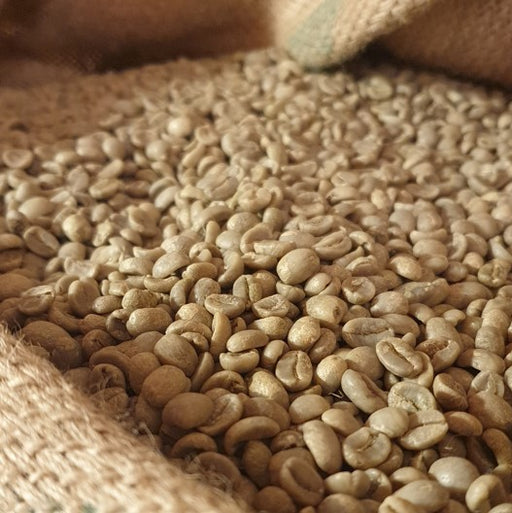

Raw coffee beans for home roasting
Raw coffee beans – also called green coffee beans – are coffee beans that have not yet been roasted. They are for those who want to roast their own coffee and work with roast degree, development, and flavor profile from raw bean to finished coffee.
At Brændeholm Risteri, you will find green coffee beans from various coffee-producing countries and regions. The assortment may change continuously, allowing you to experiment with different origins, processing methods, and flavor profiles.
If you would rather have the coffee roasted and ready for brewing, you can find our freshly roasted coffee and coffee beans here.
What are green coffee beans?
Green coffee beans are the raw coffee beans that remain after the coffee cherries have been harvested and processed, but before the actual roasting.
They are called green coffee beans because of their typical green to greenish or yellow-green color. Raw coffee beans and green coffee beans are therefore usually used to describe the same product.
It is only during roasting that the coffee beans undergo the significant physical and chemical changes that create the aroma, color, and flavor character we associate with roasted coffee.
If you want to understand more about what happens to the coffee bean before roasting, you can read our page on coffee processing.
Why roast coffee beans yourself?
Home roasting gives you the opportunity to experiment with coffee yourself.
When you start with raw coffee beans, you can, among other things, work with how far the roast should be developed and investigate how different roast profiles affect the same coffee bean.
This makes home roasting interesting if you want to learn more about coffee rather than just brewing it.
For example, you can roast the same raw coffee in different ways and compare how a lighter and darker roast affects acidity, sweetness, body, and roast character.
How do I choose raw coffee beans?
There is no single green coffee bean that is the best for home roasting. It depends both on your preferred taste and on how you choose to roast the beans.
A good place to start is to look at origin, tasting notes, and processing method of the individual product.
The tasting notes for a raw coffee should be understood as a description of the coffee's potential and character – not as a guarantee that your finished roast will taste exactly like that. The roast profile and subsequent brewing have a significant impact on the final result.
Therefore, feel free to try different origins and roasts. It is one of the best ways to learn which coffee types you prefer.
The coffee's origin matters
The coffee's origin can have a major impact on its character.
Climate, altitude, coffee variety, soil, and processing are among the factors that can influence the raw coffee bean and its flavor potential.
Therefore, two raw coffees can react differently during roasting and provide very different results, even if you try to roast them in the same way.
On the individual products, you will find the information we have regarding, among other things, origin, processing, and tasting notes.
Natural, washed, and other processing methods
Before the coffee beans arrive as green coffee beans, the coffee cherry must be processed.
With washed coffee, most of the fruit surrounding the bean is removed before drying.
With natural processing, the coffee cherry is dried with the fruit surrounding the bean, before it is subsequently removed.
There are also other and combined methods.
The processing can affect the coffee's flavor profile, and therefore it is worth considering when you compare different raw coffee beans.
You can read more in our guide to coffee processing.
Light, medium, or dark roast?
When you roast your own coffee beans, you largely decide for yourself which roast degree you want to work towards.
A lighter roast typically provides more room for the coffee's original character, fruitiness, and acidity.
A medium roast often provides more balance between the coffee's original character and the flavor nuances developed during roasting.
A darker roast provides more distinct roast character and often a stronger and more bitter flavor profile.
If you want to see how we work with different roast degrees for our pre-roasted coffee, you can compare our light roasted coffee beans, medium roasted coffee beans, and dark roasted coffee beans.
How to get started with roasting coffee at home
Always use equipment suitable for coffee roasting and follow the manufacturer's instructions.
Start with smaller batches so you can get to know both the coffee and your coffee roaster. For example, note the quantity, time, and your observations during roasting. This makes it easier to compare different attempts and repeat a roast you are satisfied with.
Also, pay attention to ventilation. Coffee roasting generates heat, smoke, and loose chaff from the coffee beans, so roasting should take place with the ventilation and safety your equipment requires.
When you change one parameter at a time, it also becomes easier to understand what affects the result.
After roasting
Once green coffee beans have been roasted, they begin to release carbon dioxide, among other things.
Therefore, freshly roasted coffee does not necessarily need to be brewed immediately after roasting. What rest period works best depends on, among other things, roast degree, coffee bean, and brewing method.
Once the coffee has cooled completely, it should be stored in a dry, dark place protected from unnecessary contact with air.
If you roast coffee regularly, valve bags for coffee can be a practical solution for storing the finished roasted beans. You can also see our other selection within coffee storage.
From raw coffee bean to finished cup
One of the exciting things about home roasting is that you get the opportunity to follow the entire process yourself.
You choose the raw coffee bean, work with the roasting, let the coffee develop after roasting, and then adapt the grind size and brewing to the result you want.
This also means that the same raw coffee can provide different taste experiences depending on how you choose to roast and brew it.
If you need help with the subsequent brewing, you can find inspiration in our brewing guides.
Raw coffee beans from Brændeholm Risteri
At Brændeholm Risteri, we work with roasting coffee ourselves at our coffee roastery near Faaborg on Funen.
This gives us practical experience with the process you will work with yourself when you buy raw coffee beans for home roasting.
The selection of green coffee beans can change continuously. Therefore, check the individual product for current information regarding, among other things, origin, processing, and flavor profile.
Frequently asked questions about raw and green coffee beans
Are raw coffee beans and green coffee beans the same?
Yes. Both terms are used for coffee beans that have not yet been roasted.
Do green coffee beans need to be roasted before use?
If you want to use them for regular coffee brewing, they must be roasted first. Roasting develops the color, aroma, and flavor character we normally associate with coffee.
Can I roast coffee beans at home myself?
Yes. There are coffee roasters intended for home use. Always follow the manufacturer's instructions and ensure necessary ventilation during roasting.
Which raw coffee beans should I start with?
There is no one correct choice. Look at origin, processing, and the described flavor profile and choose a coffee that seems interesting to you. Start with a smaller quantity while you get to know your coffee roaster and the bean.
Which roast degree is best?
It depends on the individual coffee bean, the brewing method, and your own taste. Light, medium, and dark roast can highlight different sides of the coffee.
How long should coffee rest after roasting?
There is no one rest period that suits all coffees. Roast degree, bean, and brewing method matter. Taste the coffee at different times after roasting and use your own results as a guide.
How do I store raw coffee beans?
Store green coffee beans in a dry, cool place protected from direct sunlight, strong odors, and large fluctuations in temperature and humidity.
How do I store the coffee after roasting?
Let the coffee beans cool completely first. Then store the roasted coffee in a dry and dark place in a suitable bag or container that limits contact with air.


