
Cupping equipment
Cupping equipment for coffee tasting
Cupping is a method for tasting and comparing coffee under uniform conditions.
By preparing several coffees in the same way, it becomes easier to focus on differences in aroma, flavor, acidity, sweetness, mouthfeel, and aftertaste without changing many other variables at the same time.
At Brændeholm Risteri, you will find cupping equipment for home use, coffee roasteries, and cafés, including cupping spoons and cupping bowls.
You don't need a large selection of specialized equipment to get started. The most important thing is that you can work relatively consistently from sample to sample.
What is coffee cupping?
Coffee cupping – often just called cupping – is a systematic way to taste and compare coffee.
Ground coffee is placed directly into a cup or cupping bowl, after which hot water is poured over it.
The coffee is brewed without a paper filter, French press, or other traditional coffee brewer.
After brewing, coffee and foam are removed from the surface, and the coffee is tasted using a cupping spoon.
The main advantage is that several coffees can be prepared in the same way side by side.
If one coffee tastes significantly different from another, the comparison is less affected by different brewing methods.
Why do people cup coffee?
Cupping can be used for several different purposes.
Coffee roasteries and other professionals in the coffee industry can use cupping to:
-
Compare different coffees
-
Evaluate roast profiles
-
Control quality and consistency
-
Describe aroma and flavor
-
Compare samples from different origins
-
Follow a coffee over time
As a coffee enthusiast, you can use the exact same basic principle to learn more about your own taste.
For example, you can compare a light roast coffee with a medium roast and a dark roast coffee.
This can make differences easier to identify because the coffees are tasted using the same procedure.
What equipment do I need for cupping?
For a simple cupping session, you don't need much equipment.
A good starting point is:
-
Coffee beans
-
Coffee grinder
-
Coffee scale
-
Cupping bowls or identical cups
-
Cupping spoons
-
Hot water
-
Kettle
-
Timer or stopwatch
-
Water and possibly notes for taste impressions
The most important thing is not that every single tool is specialized equipment.
The most important thing is consistency.
Use the same type of bowl, the same amount of coffee, the same amount of water, and the same procedure for the coffees you are comparing.
What is a cupping spoon?
A cupping spoon is a spoon developed for coffee tasting.
It typically has a deeper and rounder bowl than a regular teaspoon, so it can collect an appropriate amount of coffee for the tasting.
At Brændeholm Risteri, you will find, among other things:
Rhino Coffee Gear Cupping Spoon
Both can be used for the same basic task: taking coffee from the cupping bowl and tasting it during the evaluation.
Do I need a special cupping spoon?
No.
If you just want to try cupping at home, you can get started without professional cupping equipment.
A cupping spoon becomes especially relevant if you cup regularly and want a tool specifically shaped for the job.
The deeper spoon makes it easier to collect coffee from the bowl and repeat the same tasting movement across several samples.
You do not need to buy specialized equipment before you even know if cupping interests you.
Why do you slurp coffee during cupping?
During cupping, the coffee is often tasted with a quick and distinct slurp from the spoon.
The purpose is to spread the coffee quickly in the mouth and make it easier to register aroma, flavor, and texture.
You don't need to do it aggressively to get something out of cupping at home.
The most important thing is that you taste the coffees in roughly the same way and give yourself time to compare them.
What is a cupping bowl?
A cupping bowl is the container in which the coffee is brewed and tasted during cupping.
When comparing several coffees, identical bowls are practical because they help keep the brewing conditions the same between samples.
Our Rhinowares cupping bowl is made of porcelain and has a volume of approximately 210 ml.
If you cup regularly, several identical bowls can be useful because you can taste several coffees side by side.
Do I need special cupping bowls?
Not necessarily.
For an informal coffee tasting at home, identical cups or bowls can also be used.
The most important thing is that the containers are as similar as possible.
If one cup is much larger, thicker, or differently shaped than the others, you introduce yet another difference between the samples.
Dedicated cupping bowls therefore become especially practical when you want to work more systematically and repeat the same setup.
How to do a simple cupping at home
You don't need to start with an advanced professional protocol.
If the goal is to compare different coffees at home, you can focus on keeping the most important variables the same.
1. Choose the coffees
Feel free to start with two to four different coffees.
The clearer the differences, the easier it is to get started.
A coffee tasting pack can be a simple way to get several different coffees for comparison.
2. Use identical bowls
Place one coffee in each bowl.
If you have several identical cupping bowls, it is obvious to use them.
3. Weigh the coffee
Use the same amount of coffee in relation to water in all the bowls.
A coffee scale makes it easier to keep the dosage the same.
4. Grind the coffee
Grind the samples to the same grind size and, as far as possible, immediately before the tasting.
A coffee grinder with stable settings makes the comparison easier.
5. Smell the dry coffee
Before adding water, you can smell the freshly ground coffee.
Note any aromas you experience.
6. Add hot water
Pour the same amount of water into each bowl.
Use the same water and temperature for all samples.
A kettle makes it easier to work consistently between the bowls.
7. Let the coffee steep
During brewing, some of the ground coffee collects on the surface and forms a crust.
Let all samples steep for the same amount of time.
8. Break the crust
When you break the crust with the spoon, a distinct aroma is released.
You can smell each sample and compare the differences.
9. Remove coffee from the surface
Skim the foam and loose coffee particles from the surface so the samples become easier to taste.
10. Taste the coffee
Take coffee up with the cupping spoon and taste the samples one by one.
Feel free to go back and forth between them.
It is often easier to describe a coffee when you have something else to compare it with.
Taste the coffee several times while it cools
An important part of cupping is not just tasting the coffee once.
Coffee changes as the temperature drops.
When the coffee is very hot, some differences can be more difficult to detect.
As it cools, other aromas and taste impressions can become easier to notice.
Therefore, feel free to taste the same coffee several times during the session.
Note if your experience changes.
What should I look for?
You don't need to know a large sensory vocabulary to begin.
Start with simple questions.
Aroma
What does the scent remind you of?
It could, for example, be:
-
Fruit
-
Flowers
-
Cocoa
-
Spices
-
Nuts
-
Caramel
Sweetness
Does the coffee taste sweet?
What does the sweetness remind you of?
Acidity
Is the acidity clear or subtle?
Does it remind you, for example, of citrus or other fruit?
Mouthfeel
Does the coffee feel:
-
Light
-
Round
-
Full-bodied
-
Dry
Creamy
Aftertaste
What taste impressions remain after you have swallowed the coffee?
And how long do they last?
There is no requirement that you must be able to put a very specific name on every single flavor.
The most important thing is to start registering the differences.
Comparison is easier than tasting one coffee alone
If you only taste one coffee, it can be difficult to determine if, for example, the acidity is high or low.
If you set three coffees next to each other, the differences often become clearer.
You might, for example, experience:
Coffee A as more acidic than coffee B.
Coffee B as fuller-bodied than coffee C.
Coffee C as sweeter or more chocolatey than the others.
This is one of the reasons why cupping works well as training for the sense of taste.
You don't need to know the "right answer" in advance.
Cupping of different roast levels
Cupping can also be used to examine the differences between different roast levels.
You can, for example, compare:
The roast level is, however, only one factor.
Origin, variety, processing, the quality of the raw coffee, and the roast itself also affect the flavor.
Therefore, cupping should be used to observe the specific coffee rather than assuming how it will necessarily taste based solely on the roast level.
Cupping as quality control
Cupping is also used professionally as a tool for quality control.
When coffee is prepared in a uniform way, it becomes easier to compare different samples and discover if a coffee deviates from the expected.
This can be relevant when, among other things:
-
Purchasing coffee
-
Comparing raw coffee samples after roasting
-
Developing roast profiles
-
Checking different roasts
-
Sensory evaluation
Professional evaluation can follow fixed standards and protocols.
If you work professionally with formal coffee evaluation, you should therefore follow the current protocol that applies to the system you are using, rather than a simplified home recipe.
Cupping at home doesn't need to be an exam
If you cup coffee at home, you don't need to give each coffee a professional score.
You can easily use the method more simply.
Write, for example:
Which coffee is the sweetest?
Which one has the most acidity?
Which feels the fullest-bodied?
Which would I prefer to drink again?
Eventually, you can start using more specific flavor descriptions.
The most important thing is to make the tasting comparable and be curious about the differences.
Cupping and regular coffee brewing are not the same
Cupping is primarily developed to taste and evaluate coffee under comparable conditions.
This does not necessarily mean that it is the way you prefer to drink coffee on a daily basis.
A coffee can be experienced differently as, for example:
or espresso.
Cupping can help you understand the character of the coffee, after which you can choose the brewing method you think presents the coffee best.
Cleaning of cupping equipment
Clean cupping spoons and bowls thoroughly after use.
If you are comparing several coffees, it is also important not to transfer too much coffee from one sample to the next.
During joint cupping sessions, there may be a need for extra focus on hygiene and a workflow where participants do not taste directly from the same spoon and then return it to the sample.
Always follow the manufacturer's cleaning instructions for the specific product.
Cupping equipment at Brændeholm Risteri
At Brændeholm Risteri, you will find a simple selection of equipment for coffee cupping and sensory tasting.
The assortment includes:
Rhino Coffee Gear cupping spoon
For the rest of the setup, you can also use a coffee scale, coffee grinder, and kettle.
If you want to compare several different coffees, you can look at our coffee tasting packs or the entire selection of freshly roasted coffee.
Frequently asked questions about cupping
What is coffee cupping?
Coffee cupping is a method for tasting and comparing coffee, where samples are prepared under conditions as uniform as possible and subsequently assessed based on, among other things, aroma, flavor, acidity, mouthfeel, and aftertaste.
What do you need for cupping?
At a minimum, you need coffee, a grinder, hot water, identical cups or bowls, and spoons. A coffee scale and dedicated cupping spoons and cupping bowls make it easier to work systematically.
Do I need a cupping spoon?
No. You can try cupping without special equipment, but a cupping spoon is shaped specifically to take and taste coffee from the bowl.
Why do you slurp coffee during cupping?
The slurp helps to spread the coffee quickly in the mouth so that aroma, flavor, and texture become easier to register and compare.
Can I do cupping at home?
Yes. A simple home cupping can be done with few tools. The most important thing is to use the same procedure for all the coffees you are comparing.
How many coffees should I compare?
Two coffees are enough to get started. Three or four different coffees can make the differences even clearer without making the tasting overwhelming.
Can I cup light, medium, and dark roast coffee together?
Yes. It can be a good way to experience the differences between different coffees and roasts under the same brewing conditions.
Should coffee for cupping be coarsely ground?
Cupping uses a relatively coarse grind size compared to espresso. If you follow a specific professional protocol, you should use the grind size and other specifications that the current protocol states.
Is cupping the same as filter coffee?
No. In cupping, the ground coffee lies directly in the water without a paper filter. The purpose is primarily comparison and sensory evaluation rather than regular serving.
Is cupping only for professionals?
No. Professionals use cupping systematically, but the method is also a great way for coffee enthusiasts to get to know the differences between different coffees.

Motta Cupping Spoon
Original price
44,00 kr
-
Original price
44,00 kr
Original price
44,00 kr
44,00 kr
-
44,00 kr
Current price
44,00 kr
Motta Cupping SpoonCupping (coffee tasting) is an interesting and unique process – perhaps something almost reminiscent of a ceremony, where coffee...
View full details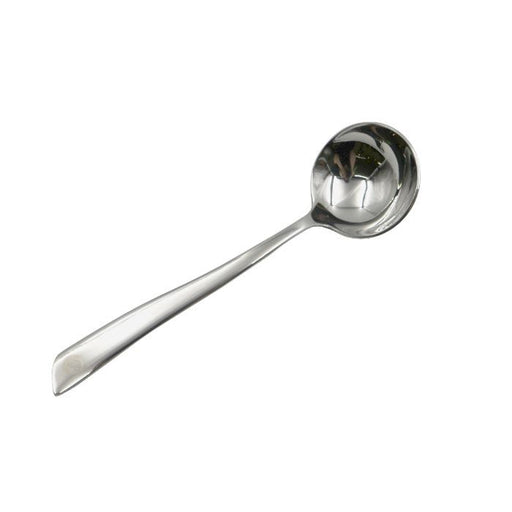
Rhino Coffee Gear - Cupping Spoon
Original price
39,00 kr
-
Original price
39,00 kr
Original price
39,00 kr
39,00 kr
-
39,00 kr
Current price
39,00 kr
Rhino Coffee Gear - Cupping SpoonIf you participate in many coffee tastings or host cupping events, you understand how important it is to have a hi...
View full details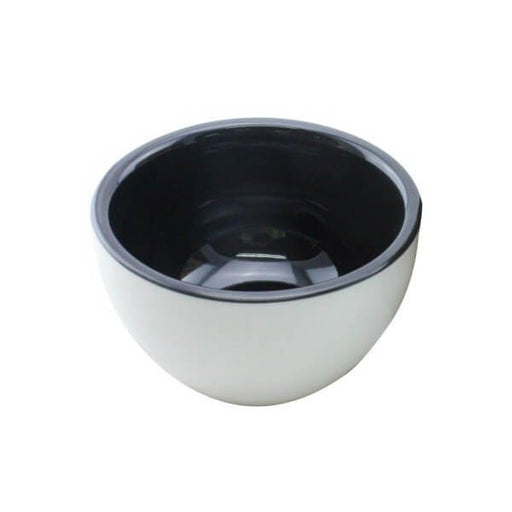
Rhinowares cupping bowl - black/white
Original price
69,00 kr
-
Original price
69,00 kr
Original price
69,00 kr
69,00 kr
-
69,00 kr
Current price
69,00 kr
Rhinowares cupping bowl The cupping bowl from Rhinowares is made of high-quality porcelain and meets the requirements of SCAA Volume Standards, a t...
View full detailsCupping equipment for coffee tasting
Cupping is a method for tasting and comparing coffee under uniform conditions.
By preparing several coffees in the same way, it becomes easier to focus on differences in aroma, flavor, acidity, sweetness, mouthfeel, and aftertaste without changing many other variables at the same time.
At Brændeholm Risteri, you will find cupping equipment for home use, coffee roasteries, and cafés, including cupping spoons and cupping bowls.
You don't need a large selection of specialized equipment to get started. The most important thing is that you can work relatively consistently from sample to sample.
What is coffee cupping?
Coffee cupping – often just called cupping – is a systematic way to taste and compare coffee.
Ground coffee is placed directly into a cup or cupping bowl, after which hot water is poured over it.
The coffee is brewed without a paper filter, French press, or other traditional coffee brewer.
After brewing, coffee and foam are removed from the surface, and the coffee is tasted using a cupping spoon.
The main advantage is that several coffees can be prepared in the same way side by side.
If one coffee tastes significantly different from another, the comparison is less affected by different brewing methods.
Why do people cup coffee?
Cupping can be used for several different purposes.
Coffee roasteries and other professionals in the coffee industry can use cupping to:
-
Compare different coffees
-
Evaluate roast profiles
-
Control quality and consistency
-
Describe aroma and flavor
-
Compare samples from different origins
-
Follow a coffee over time
As a coffee enthusiast, you can use the exact same basic principle to learn more about your own taste.
For example, you can compare a light roast coffee with a medium roast and a dark roast coffee.
This can make differences easier to identify because the coffees are tasted using the same procedure.
What equipment do I need for cupping?
For a simple cupping session, you don't need much equipment.
A good starting point is:
-
Coffee beans
-
Coffee grinder
-
Coffee scale
-
Cupping bowls or identical cups
-
Cupping spoons
-
Hot water
-
Kettle
-
Timer or stopwatch
-
Water and possibly notes for taste impressions
The most important thing is not that every single tool is specialized equipment.
The most important thing is consistency.
Use the same type of bowl, the same amount of coffee, the same amount of water, and the same procedure for the coffees you are comparing.
What is a cupping spoon?
A cupping spoon is a spoon developed for coffee tasting.
It typically has a deeper and rounder bowl than a regular teaspoon, so it can collect an appropriate amount of coffee for the tasting.
At Brændeholm Risteri, you will find, among other things:
Rhino Coffee Gear Cupping Spoon
Both can be used for the same basic task: taking coffee from the cupping bowl and tasting it during the evaluation.
Do I need a special cupping spoon?
No.
If you just want to try cupping at home, you can get started without professional cupping equipment.
A cupping spoon becomes especially relevant if you cup regularly and want a tool specifically shaped for the job.
The deeper spoon makes it easier to collect coffee from the bowl and repeat the same tasting movement across several samples.
You do not need to buy specialized equipment before you even know if cupping interests you.
Why do you slurp coffee during cupping?
During cupping, the coffee is often tasted with a quick and distinct slurp from the spoon.
The purpose is to spread the coffee quickly in the mouth and make it easier to register aroma, flavor, and texture.
You don't need to do it aggressively to get something out of cupping at home.
The most important thing is that you taste the coffees in roughly the same way and give yourself time to compare them.
What is a cupping bowl?
A cupping bowl is the container in which the coffee is brewed and tasted during cupping.
When comparing several coffees, identical bowls are practical because they help keep the brewing conditions the same between samples.
Our Rhinowares cupping bowl is made of porcelain and has a volume of approximately 210 ml.
If you cup regularly, several identical bowls can be useful because you can taste several coffees side by side.
Do I need special cupping bowls?
Not necessarily.
For an informal coffee tasting at home, identical cups or bowls can also be used.
The most important thing is that the containers are as similar as possible.
If one cup is much larger, thicker, or differently shaped than the others, you introduce yet another difference between the samples.
Dedicated cupping bowls therefore become especially practical when you want to work more systematically and repeat the same setup.
How to do a simple cupping at home
You don't need to start with an advanced professional protocol.
If the goal is to compare different coffees at home, you can focus on keeping the most important variables the same.
1. Choose the coffees
Feel free to start with two to four different coffees.
The clearer the differences, the easier it is to get started.
A coffee tasting pack can be a simple way to get several different coffees for comparison.
2. Use identical bowls
Place one coffee in each bowl.
If you have several identical cupping bowls, it is obvious to use them.
3. Weigh the coffee
Use the same amount of coffee in relation to water in all the bowls.
A coffee scale makes it easier to keep the dosage the same.
4. Grind the coffee
Grind the samples to the same grind size and, as far as possible, immediately before the tasting.
A coffee grinder with stable settings makes the comparison easier.
5. Smell the dry coffee
Before adding water, you can smell the freshly ground coffee.
Note any aromas you experience.
6. Add hot water
Pour the same amount of water into each bowl.
Use the same water and temperature for all samples.
A kettle makes it easier to work consistently between the bowls.
7. Let the coffee steep
During brewing, some of the ground coffee collects on the surface and forms a crust.
Let all samples steep for the same amount of time.
8. Break the crust
When you break the crust with the spoon, a distinct aroma is released.
You can smell each sample and compare the differences.
9. Remove coffee from the surface
Skim the foam and loose coffee particles from the surface so the samples become easier to taste.
10. Taste the coffee
Take coffee up with the cupping spoon and taste the samples one by one.
Feel free to go back and forth between them.
It is often easier to describe a coffee when you have something else to compare it with.
Taste the coffee several times while it cools
An important part of cupping is not just tasting the coffee once.
Coffee changes as the temperature drops.
When the coffee is very hot, some differences can be more difficult to detect.
As it cools, other aromas and taste impressions can become easier to notice.
Therefore, feel free to taste the same coffee several times during the session.
Note if your experience changes.
What should I look for?
You don't need to know a large sensory vocabulary to begin.
Start with simple questions.
Aroma
What does the scent remind you of?
It could, for example, be:
-
Fruit
-
Flowers
-
Cocoa
-
Spices
-
Nuts
-
Caramel
Sweetness
Does the coffee taste sweet?
What does the sweetness remind you of?
Acidity
Is the acidity clear or subtle?
Does it remind you, for example, of citrus or other fruit?
Mouthfeel
Does the coffee feel:
-
Light
-
Round
-
Full-bodied
-
Dry
Creamy
Aftertaste
What taste impressions remain after you have swallowed the coffee?
And how long do they last?
There is no requirement that you must be able to put a very specific name on every single flavor.
The most important thing is to start registering the differences.
Comparison is easier than tasting one coffee alone
If you only taste one coffee, it can be difficult to determine if, for example, the acidity is high or low.
If you set three coffees next to each other, the differences often become clearer.
You might, for example, experience:
Coffee A as more acidic than coffee B.
Coffee B as fuller-bodied than coffee C.
Coffee C as sweeter or more chocolatey than the others.
This is one of the reasons why cupping works well as training for the sense of taste.
You don't need to know the "right answer" in advance.
Cupping of different roast levels
Cupping can also be used to examine the differences between different roast levels.
You can, for example, compare:
The roast level is, however, only one factor.
Origin, variety, processing, the quality of the raw coffee, and the roast itself also affect the flavor.
Therefore, cupping should be used to observe the specific coffee rather than assuming how it will necessarily taste based solely on the roast level.
Cupping as quality control
Cupping is also used professionally as a tool for quality control.
When coffee is prepared in a uniform way, it becomes easier to compare different samples and discover if a coffee deviates from the expected.
This can be relevant when, among other things:
-
Purchasing coffee
-
Comparing raw coffee samples after roasting
-
Developing roast profiles
-
Checking different roasts
-
Sensory evaluation
Professional evaluation can follow fixed standards and protocols.
If you work professionally with formal coffee evaluation, you should therefore follow the current protocol that applies to the system you are using, rather than a simplified home recipe.
Cupping at home doesn't need to be an exam
If you cup coffee at home, you don't need to give each coffee a professional score.
You can easily use the method more simply.
Write, for example:
Which coffee is the sweetest?
Which one has the most acidity?
Which feels the fullest-bodied?
Which would I prefer to drink again?
Eventually, you can start using more specific flavor descriptions.
The most important thing is to make the tasting comparable and be curious about the differences.
Cupping and regular coffee brewing are not the same
Cupping is primarily developed to taste and evaluate coffee under comparable conditions.
This does not necessarily mean that it is the way you prefer to drink coffee on a daily basis.
A coffee can be experienced differently as, for example:
or espresso.
Cupping can help you understand the character of the coffee, after which you can choose the brewing method you think presents the coffee best.
Cleaning of cupping equipment
Clean cupping spoons and bowls thoroughly after use.
If you are comparing several coffees, it is also important not to transfer too much coffee from one sample to the next.
During joint cupping sessions, there may be a need for extra focus on hygiene and a workflow where participants do not taste directly from the same spoon and then return it to the sample.
Always follow the manufacturer's cleaning instructions for the specific product.
Cupping equipment at Brændeholm Risteri
At Brændeholm Risteri, you will find a simple selection of equipment for coffee cupping and sensory tasting.
The assortment includes:
Rhino Coffee Gear cupping spoon
For the rest of the setup, you can also use a coffee scale, coffee grinder, and kettle.
If you want to compare several different coffees, you can look at our coffee tasting packs or the entire selection of freshly roasted coffee.
Frequently asked questions about cupping
What is coffee cupping?
Coffee cupping is a method for tasting and comparing coffee, where samples are prepared under conditions as uniform as possible and subsequently assessed based on, among other things, aroma, flavor, acidity, mouthfeel, and aftertaste.
What do you need for cupping?
At a minimum, you need coffee, a grinder, hot water, identical cups or bowls, and spoons. A coffee scale and dedicated cupping spoons and cupping bowls make it easier to work systematically.
Do I need a cupping spoon?
No. You can try cupping without special equipment, but a cupping spoon is shaped specifically to take and taste coffee from the bowl.
Why do you slurp coffee during cupping?
The slurp helps to spread the coffee quickly in the mouth so that aroma, flavor, and texture become easier to register and compare.
Can I do cupping at home?
Yes. A simple home cupping can be done with few tools. The most important thing is to use the same procedure for all the coffees you are comparing.
How many coffees should I compare?
Two coffees are enough to get started. Three or four different coffees can make the differences even clearer without making the tasting overwhelming.
Can I cup light, medium, and dark roast coffee together?
Yes. It can be a good way to experience the differences between different coffees and roasts under the same brewing conditions.
Should coffee for cupping be coarsely ground?
Cupping uses a relatively coarse grind size compared to espresso. If you follow a specific professional protocol, you should use the grind size and other specifications that the current protocol states.
Is cupping the same as filter coffee?
No. In cupping, the ground coffee lies directly in the water without a paper filter. The purpose is primarily comparison and sensory evaluation rather than regular serving.
Is cupping only for professionals?
No. Professionals use cupping systematically, but the method is also a great way for coffee enthusiasts to get to know the differences between different coffees.


