
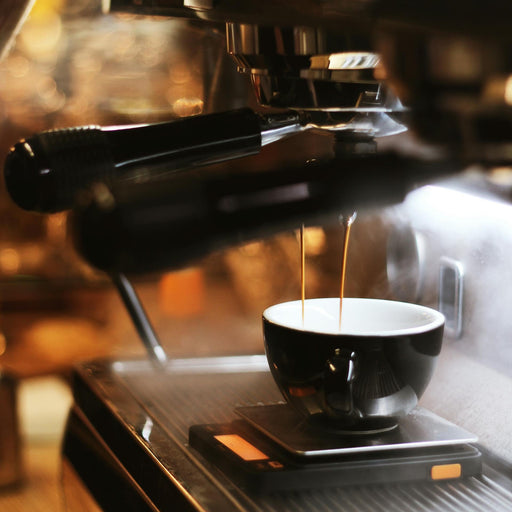
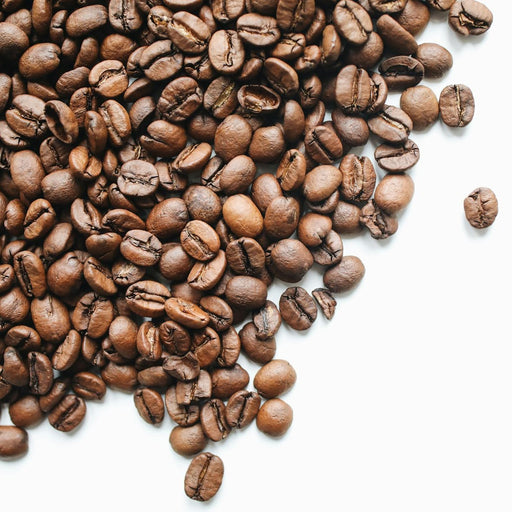

Coffee beans for espresso – find the taste that suits you
Good coffee beans are the starting point for great espresso.
However, there is no one specific type of coffee bean that must be used for espresso. You can brew espresso using light, medium, and dark roasted coffee beans, as well as single-origin coffee and blends.
The difference lies primarily in the flavor profile you desire, how the coffee is roasted, and how it is dialed in on your espresso machine.
At Brændeholm Risteri, you will find selected coffee beans that we think work particularly well for espresso. We roast our own coffee on Funen several times a week and offer coffee for both classic, full-bodied espresso and more nuanced flavor profiles.
What are espresso beans?
“Espresso beans” are not a specific botanical type of coffee bean.
The term is usually used for coffee that a roastery or producer recommends for espresso.
This could, for example, be a coffee roasted with the intention of providing:
• Good sweetness
• Appropriate body
• Balanced acidity
• A flavor profile that works well at high concentration
• A coffee that also works well with milk
Espresso beans can therefore be Arabica, Robusta, or a mix of different coffee types.
They can also have different roast levels.
It is the taste of the espresso itself that is important – not whether it says “espresso” on the bag.
Which coffee beans are best for espresso?
That depends on how you prefer your espresso.
If you want a classic and full-bodied espresso, you can look for medium or dark roasted coffee beans with flavor notes such as chocolate, nuts, caramel, and spices.
If you prefer a more modern and fruity espresso, a lighter roast may be interesting.
If you primarily make cappuccino and caffe latte, it can be an advantage to choose a coffee with enough body and intensity to still be tasted through the milk.
So, there is no one “best espresso bean”.
The best choice is the coffee that delivers the flavor profile you prefer.
Medium roasted coffee beans for espresso
Medium roast coffee is a great all-round choice for espresso.
Here you can typically get a fine balance between:
• Sweetness
• Acidity
• Body
• The coffee's origin character
• Roast character
Medium roasted coffee beans are therefore interesting if you want an espresso that works both on its own and with milk.
They can provide more distinct origin character than dark roast coffee without necessarily being as demanding to dial in as a very light roast espresso.
If you are in doubt about which roast level to start with, medium roast coffee is a very good starting point.
Dark roasted coffee beans for espresso
Dark roast coffee is often associated with classic espresso.
Here, the roast typically has a greater impact on the flavor, and the espresso can be perceived as more full-bodied and less acidic.
Depending on the specific coffee, you may experience flavor notes such as:
• Dark chocolate
• Cocoa
• Caramel
• Nuts
• Spices
• Roasted character
Dark roasted coffee beans can be particularly interesting for cappuccino, latte, and other milk-based drinks because the stronger coffee character often cuts clearly through the milk.
They are also often relatively easy to extract on a home espresso machine.
Can light roasted coffee beans be used for espresso?
Yes.
Espresso does not have to be dark roasted.
Light roasted coffee beans can produce an espresso with more distinct fruitiness, floral notes, and acidity.
This can be an exciting way to experience a single-origin coffee.
Light roast espresso is, however, often more demanding to dial in.
You may, among other things, need:
• A finer grind
• A higher brewing temperature
• A longer brew ratio
• More precise temperature control
If you have just got your first espresso machine, a medium or dark roast coffee will therefore normally be an easier place to start.
Once you have mastered the grinder and extraction, light roast espresso can be very interesting to experiment with.
Espresso blend or single origin?
Both can produce excellent espresso.
Espresso blend
A blend consists of coffee from several different origins or coffee types.
The roastery can combine coffees with different characteristics to create a specific overall flavor profile.
It could, for example, be a combination that provides:
sweetness from one coffee
body from another
and fruitiness from a third.
A blend can therefore be developed specifically to provide a stable and balanced espresso.
Single origin
Single-origin coffee comes from a more defined origin.
It can be a country, a region, a cooperative, or a specific producer.
For espresso, single origin provides an opportunity to experience the individual coffee's character in a very concentrated way.
It is particularly interesting if you want to explore the difference between coffees from different origins.
Arabica or Robusta for espresso?
Espresso can be made with both Arabica and Robusta.
The two coffee species have different properties.
Arabica
Arabica is generally associated with greater aromatic complexity and is used very widely within specialty coffee.
Depending on the coffee, you can experience everything from chocolate and nuts to citrus, flowers, and berries.
Robusta
Robusta usually has a higher caffeine content and can contribute more bitterness, strong body, and a lot of crema.
Therefore, Robusta is traditionally found in many Italian-inspired espresso blends.
But more crema does not automatically mean better espresso.
Crema is only one part of the espresso, and the taste is more important.
Should espresso be 100% Arabica?
No.
100% Arabica can produce excellent espresso, but coffee does not automatically become better just because it consists only of Arabica.
A good blend of Arabica and Robusta can also be a really good choice – especially if you prefer traditional espresso with plenty of body and clear intensity.
Conversely, a pure Arabica coffee can be ideal if you want more focus on sweetness, fruitiness, and the origin of the coffee.
Choose by taste rather than percentages alone.
Coffee beans for cappuccino
For cappuccino, the espresso must be able to work well with milk.
The milk adds both sweetness and body while simultaneously tempering some of the espresso's intensity.
Therefore, medium and dark roasted coffee beans often work really well.
Flavor profiles with, for example:
chocolate
caramel
nuts
and rich sweetness
can go well with milk.
However, you can also make cappuccino with fruitier coffee if that is the style you prefer.
Coffee beans for caffe latte
Caffe latte typically contains even more milk than cappuccino.
This means that a very light espresso can disappear more easily into the drink.
If you want a distinct coffee taste in your latte, a medium or dark roast espresso can therefore be a good choice.
You can also use an espresso blend developed with milk drinks in mind.
The most important thing is that you can taste the coffee through the milk at the strength you prefer.
Coffee beans for flat white
Flat white uses less milk than a large caffe latte and can therefore highlight the espresso's character more clearly.
Here, both:
• Medium roast coffee
• Dark roast coffee
• Lighter espresso
• Single origin
• Blends
work really well.
The choice depends primarily on whether you want a classic chocolatey profile or a more modern and fruity espresso.
Coffee beans for cortado
Cortado contains relatively little milk.
Therefore, the taste of the espresso stands out very clearly.
This makes cortado particularly interesting if you want to taste the difference between different espresso beans.
A medium-roast single origin can, for example, produce a completely different cortado than a darker espresso blend.
Because the ratio between coffee and milk is closer than in a latte, the quality and dialing in of the espresso is particularly important.
How fresh should coffee beans for espresso be?
Freshly roasted coffee does not necessarily mean that the coffee should be used the same day it is roasted.
Coffee beans release carbon dioxide after roasting.
Very fresh coffee can therefore be more difficult to work with for espresso because the degassing affects the extraction.
A resting period can be an advantage.
How long the coffee should rest depends, among other things, on:
• Roast level
• Coffee type
• Roast profile
• Brewing method
• Your own taste preference
Therefore, there is no universal rule that espresso is always best after, for example, exactly 7, 14, or 21 days.
Taste the coffee and follow its development.
At Brændeholm Risteri, we roast coffee several times a week as part of our ongoing production.
Should you use whole coffee beans for espresso?
If you have the option, yes.
Espresso requires a very precise grind size, which often needs to be adjusted from coffee to coffee – and sometimes from day to day.
If the coffee is already ground, you lose the opportunity to change the grind size.
Therefore, we recommend a good espresso grinder and whole coffee beans.
This gives you the opportunity to dial in the espresso based on:
• The specific coffee beans
• The age of the coffee
• The dosage
• The machine
• The desired brew ratio
The coffee grinder is therefore at least as important as the espresso machine when you want to make consistent espresso.
How finely should coffee beans be ground for espresso?
Espresso generally requires a fine grind size.
However, there is no single correct setting.
If the espresso runs too fast, you typically need to grind finer.
If the espresso runs too slow, you typically need to grind coarser.
It is important to be able to make small changes.
Therefore, a coffee grinder intended for espresso is a great advantage.
A standard filter coffee grinder may have gaps between settings that are too large.
Then one setting might be too coarse, while the next step is too fine.
What is a good espresso ratio?
A really good starting point is 1:2.
This means, for example:
18 grams of coffee in
↓
36 grams of espresso out
However, this is not a “golden ratio” that all coffee beans must follow.
Some coffees taste better with:
1:1.5
1:2
1:2.5
or even longer brew ratios.
The roast level often matters.
A darker coffee can, for example, work well with a slightly shorter ratio, while a lighter espresso can often benefit from a longer ratio.
Use 1:2 as a starting point – and taste from there.
How long should espresso run?
A practical starting point is around 25–35 seconds.
Example:
18 g of coffee in
36 g of espresso out
in 30 seconds.
But time is not the goal in itself.
If the espresso tastes excellent after 24 seconds, do not change it just to hit 30.
Time is a tool to understand what is happening.
The taste determines whether the espresso is good.
How hot should espresso be brewed?
Many espressos work well around 90–96 °C.
The roast level can be used as a starting point:
Light roast espresso: often the higher part of the range.
Medium roast espresso: often the middle.
Dark roast espresso: can often work at a slightly lower temperature.
These are not fixed rules.
If your espresso machine does not have temperature adjustment, do not worry.
Grind size and brew ratio are far easier and more important parameters to work with on most home espresso machines.
Why does my espresso run too fast?
If you reach, for example, 36 grams of espresso in 15 seconds, the flow is likely faster than desired.
The first thing we would try is:
Grind the coffee finer.
At the same time, check that:
• The dosage is consistent from time to time
• The coffee puck is distributed evenly
• You tamp straight
• The filter basket fits the dosage
Preferably change one thing at a time.
Otherwise, it will be difficult to see what actually solved the problem.
Why does my espresso run too slow?
If almost no espresso comes out, or a standard yield takes a very long time, the coffee may be ground too fine.
Try:
To grind a little coarser.
A dosage that is too high can also reduce the flow.
But again: start with one variable.
Grind size is usually the most obvious place.
Why does the espresso taste sour?
Sharp, thin, and unpleasantly sour espresso can be a sign of under-extraction.
You can, among other things, try:
• Finer grind size
• Longer brew ratio
• Higher temperature if the machine allows it
But remember that acidity is not necessarily a fault.
Lighter coffee beans, in particular, can naturally have distinct fruitiness and acidity.
The question is whether it is perceived as balanced and pleasant.
Why does the espresso taste bitter?
A very bitter, dry, or harsh espresso can, among other things, be caused by over-extraction.
Try, for example:
• Coarser grinding
• Shorter brew ratio
• Lower temperature
The coffee beans also play a big role.
A dark roast coffee will naturally have more roast character and often more bitterness than a light coffee.
Therefore, you should always taste the espresso in relation to the type of coffee you have chosen.
What does crema mean?
Crema is the light brown foam layer that often lies on top of a freshly brewed espresso.
It arises, among other things, due to gases from the coffee beans and the espresso's brewing process.
The amount of crema is influenced by many factors:
• Coffee type
• Roast
• The age of the coffee
• The brewing
• Content of Robusta
Crema can be part of the espresso experience, but a lot of crema is not the same as high quality.
Taste the espresso rather than judging it by the thickness of the crema.
Why does the espresso change from day to day?
Espresso is sensitive.
Even when using exactly the same coffee, the flow can change over time.
This is partly because coffee beans continue to develop after roasting.
Therefore, a grind setting that worked perfectly before might need to be adjusted.
That is normal.
One of the most important skills as a home barista is therefore not to find one “perfect” grind setting – but to be able to adjust it continuously.
Should espresso beans be oily?
No.
An oily surface is not a requirement for espresso.
Visible oils occur more often on very dark roasted coffee beans, but many excellent espresso coffees have a dry surface.
You can make espresso with:
light roast coffee
medium roast coffee
and dark roast coffee.
The appearance of the bean, therefore, does not tell you alone whether it is suitable for espresso.
Can regular coffee beans be used for espresso?
Yes.
If you have a bag of coffee beans where it does not say “espresso”, it can still be used in an espresso machine.
You just need to adjust the grinder and the recipe to the specific coffee.
A coffee that is roasted very lightly for filter coffee can be more difficult to extract as an espresso, but that does not mean it is impossible.
“Espresso beans” should therefore be seen as a recommendation – not a technical necessity.
Can espresso beans be used for filter coffee?
Yes.
The opposite is also true.
A coffee recommended for espresso can easily be brewed as filter coffee.
If it is dark roasted, you will obviously get a darker and more roast-forward filter coffee.
There is no rule that the beans must only be used in an espresso machine.
The brewing method changes how the coffee's taste is expressed.
How do you store coffee beans for espresso?
Store the coffee beans:
• Dry
• Sealed
• At a stable room temperature
• Away from direct sunlight
• Away from intense heat
A good resealable coffee bag works perfectly.
You can also use a coffee canister.
If you use espresso daily, it is often more practical to store the amount you use regularly at room temperature than to move the coffee in and out of the refrigerator.
Preferably, grind the coffee beans just before brewing.
How many coffee beans do you use for an espresso?
It makes more sense to measure coffee in grams than to count coffee beans.
A common starting point for a double espresso is:
18 grams of coffee beans
The precise dosage depends on the filter basket and your recipe.
Some filter baskets are developed for, for example:
14–16 g
18 g
20 g
or larger dosages.
Therefore, use a dosage that fits your filter basket rather than automatically copying a specific number.
Coffee beans for a fully automatic espresso machine
Medium- and dark-roasted coffee beans often work very well in fully automatic coffee machines.
However, very dark and very oily coffee beans can be problematic in some machines.
The manufacturer may, for example, advise against very oily beans because they can affect the bean hopper and the built-in grinder.
Therefore, always follow the machine manufacturer's recommendations.
You do not need to choose the darkest coffee to get a strong espresso from a fully automatic machine.
A good medium roast can be a really fine choice.
Coffee beans for a Sage espresso machine
Sage machines can be used with many different coffee beans.
There is no such thing as special “Sage beans”.
If, for example, you have a Sage Barista Express, Barista Pro, Barista Touch, or Bambino combined with a separate grinder, you can use both medium- and dark-roasted coffee – and also lighter coffee as you become more experienced.
The most important thing is to set the grinder, dosage, and brew ratio for the coffee.
For a new home barista, we would usually begin with a medium- or dark-roasted coffee because it is often easier to achieve a balanced result with.
Espresso for milk or espresso without milk?
It is worth thinking about this when you choose coffee beans.
Do you primarily drink pure espresso?
Then you can choose quite freely based on the flavor profile you prefer.
Feel free to try both single origin, blends, and different roast levels.
Do you primarily drink cappuccino and latte?
Then coffee with more body and distinct flavor character can be practical.
Medium- and dark-roasted coffees are therefore popular.
Do you drink both?
A balanced medium-roasted coffee or an espresso blend can be a very good compromise.
How to choose coffee beans for your espresso
If you are in doubt, start with the taste you want.
Chocolate, nuts, caramel, and body
→ Look towards medium- and dark-roasted coffees.
Balance between sweetness and fruitiness
→ Look towards medium roasts.
Fruit, flowers, and distinct acidity
→ Try lighter espresso.
Classic cappuccino and latte
→ A full-bodied medium roast, dark roast, or espresso blend is a good starting point.
Pure espresso and desire to experiment
→ Try different single origin coffees.
There is no single correct solution.
The fun part of espresso is precisely tasting the difference between different coffee beans.
Coffee beans for espresso from our own roastery in Funen
At Brændeholm Risteri, we roast our own coffee on Funen several times a week.
In this collection, we have gathered the coffee beans that we particularly recommend for espresso.
The selection may change over time as new coffees arrive.
Therefore, please check the individual product for current:
• Roast level
• Origin
• Flavor profile
• Composition
• Pack size
You can also use other coffees from our range for espresso.
This collection is primarily intended as an easy place to start if you are specifically looking for good coffee beans for your espresso machine.
Frequently asked questions about coffee beans for espresso
Which coffee beans are best for espresso?
That depends on your taste. Medium- and dark-roasted coffee beans are good starting points for classic espresso, while lighter coffee can provide a more fruity and acidic espresso.
What are espresso beans?
Espresso beans are regular coffee beans that are roasted or recommended with espresso in mind. There is no special botanical type of coffee bean called an espresso bean.
Must espresso be dark-roasted?
No. Espresso can be brewed with light-, medium-, and dark-roasted coffee beans.
What is best – Arabica or Robusta for espresso?
Both can be used. Arabica is often associated with more aromatic complexity, while Robusta can contribute with stronger body, bitterness, caffeine, and crema. Many espresso blends combine them.
Can regular coffee beans be used in an espresso machine?
Yes. You can use regular coffee beans even if it does not say espresso on the bag. The grinder and espresso recipe just need to be set for the specific coffee.
Can espresso beans be used for filter coffee?
Yes. Coffee beans are not locked to one brewing method because they are marketed for espresso.
How many grams of coffee are used for espresso?
18 grams is a common starting point for a double espresso, but the dosage should fit your filter basket.
What is a good espresso ratio?
1:2 is a good starting point. This could, for example, be 18 grams of coffee in and 36 grams of espresso out. The ratio can then be adjusted based on the coffee and taste.
How long should espresso brew?
Around 25–35 seconds is a practical starting range, but the taste is more important than hitting a specific second count.
How finely should espresso beans be ground?
Espresso generally requires a fine grind. If the espresso runs too fast, grind finer. If it runs too slowly, grind coarser.
Which coffee beans are best for cappuccino?
Medium- and dark-roasted coffees are popular because their body and flavor character typically work well with milk.
How fresh should espresso beans be?
Coffee does not need to be used immediately after roasting. Espresso can benefit from a rest period, and the optimal time depends on the coffee, roast, and recipe.


