What does blending mean in coffee?
Blending means combining two or more coffees to create a specific overall flavor profile.
The result is called a coffee blend.
The individual coffees in a blend can, for example, come from different countries, regions, producers, or coffee varieties. They may have different characteristics, which together are used to create the desired balance between sweetness, acidity, body, and aroma, among other things.
Blending is therefore not just a matter of mixing different coffee beans at random. A good blend is put together with a specific result in the cup in mind.
If you first want to understand the raw material better, you can read more about what coffee beans actually are.
Why do we make coffee blends?
There can be several reasons for combining different coffees.
One of the most important is the taste.
For example, one coffee can contribute body and sweetness, while another can add more fruitiness or freshness. When they work well together, the result can be a flavor profile that none of the coffees would necessarily provide on their own.
Blending can also be used to create a specific character that the roastery wants to be able to offer over time.
Coffee is an agricultural product, and the taste can change between harvest years, batches, and seasons. The composition of a blend can therefore be adjusted if the goal is to maintain a specific overall taste experience.
What is the difference between a blend and single origin?
A blend consists of several coffees that are combined into one overall coffee experience.
Single origin, on the other hand, means that the coffee comes from one defined origin. Where exactly this origin is can vary. It could be a country, a region, a producer, or a more specific lot.
The difference does not mean that one type is automatically better than the other.
A single origin coffee can be interesting if you want to experience the character of a specific origin.
A blend can be interesting when the characteristics of different coffees are consciously combined to create a specific flavor profile.
At Brændeholm Risteri, you will find both blends and single origin coffees among our freshly roasted coffee beans.
Blending and espresso
Blends are often associated with espresso, and there is a good reason for that.
Espresso is a concentrated brewing method where the coffee's sweetness, acidity, bitterness, body, and aroma become very clear.
By combining different coffees, a roastery can attempt to create an espresso with, for example:
- more body
- more sweetness
- a specific degree of fruitiness
- a stable crema
- a flavor profile that works both as a pure espresso and when combined with milk
But espresso does not have to be a blend.
Single origin coffee can also be used for espresso, and both lighter and darker roasts can work depending on the desired taste and the setup of the espresso machine.
If you want to learn more about the brewing itself, you can read our guide to better espresso.
What is an espresso blend?
An espresso blend is a coffee blend that is composed with espresso as a key brewing method.
This does not mean that there is one specific recipe for an espresso blend.
Some blends consist entirely of Arabica, while others combine Arabica and Robusta. The composition depends on the taste and the characteristics that the roastery wants in the cup.
At Brændeholm Risteri, for instance, we have developed our own Primo Espresso Blend.
Primo consists of 80% Arabica and 20% Robusta from South America and Africa and has flavor notes of chocolate, marzipan, and raspberry. The combination was developed with a focus on a creamy, full-bodied espresso with fruitiness without it becoming dominant.
You can also see the coffee beans we specifically recommend for espresso in our selection of coffee beans for espresso.
Are coffee beans blended before or after roasting?
Basically, blending can be done in two ways.
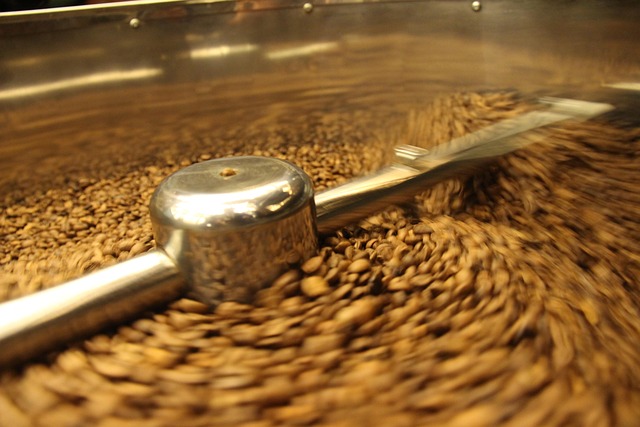
With pre-roast blending, the green coffee beans are mixed before roasting, after which they are roasted together.
With post-roast blending, the individual coffees are roasted separately and mixed afterwards.
Both methods can be used.
The advantage of roasting the coffees separately is that the roast profile can be adjusted to the individual raw coffee before the finished roasted coffees are combined.
By roasting a blend together, you are instead working with the mixture as one single raw material throughout the roasting process.
Which method is best depends on, among other things, the coffees used and the result the roaster wants to achieve.
Do blends always taste more balanced?
Not necessarily.
The word “blend” only tells you that the coffee consists of several coffees. It does not in itself tell you whether the coffee is light, dark, mild, strong, fruity, or balanced.
The taste depends on factors such as:
the coffees in the mixture, their ratio, origin, processing, quality, roasting, and the way the coffee is finally brewed.
A blend can therefore be both classic and chocolatey or very fruity and complex.
The same applies to single origin coffee.
The most interesting thing is therefore not just whether a coffee is a blend, but which coffees are included, why they were combined, and how the finished coffee tastes.
Is a blend the same as inferior coffee?
No.
The fact that coffee is a blend does not in itself say anything about the quality.
A blend can consist of excellent coffees, just as a single origin coffee is not automatically of high quality just because it comes from one origin.
Blending is a tool.
The quality depends on the raw materials, the composition, the roasting, and the subsequent brewing.
Therefore, it makes more sense to judge the coffee by its quality and taste than solely by whether it says “blend” or “single origin” on the bag.
How do I choose between blend and single origin?
If you are looking for a specific and often more rounded flavor profile, a good coffee blend can be an obvious choice.
For espresso, blends are particularly popular because different coffees can be combined with a focus on, for example, body, sweetness, and balance.
If, on the other hand, you would like to explore how coffee from different countries and regions can taste, single origin coffee can be exciting.
However, there is no rule that you have to choose one over the other.
Ultimately, the best coffee is the one that suits your taste and your brewing method.
In short: What does blending mean?
Blending in coffee means that two or more coffees are combined to create a specific overall flavor profile.
The coffees can contribute different characteristics, and the mixture can be composed with a focus on, for example, sweetness, body, fruitiness, or balance.
Blends are often used for espresso, but can also be used for other brewing methods.
A blend is also not automatically better or worse than single origin coffee. They are two different ways of working with coffee.
At Brændeholm Risteri, we work with both single origins and blends. If you want to explore the differences in practice, you can browse through our freshly roasted coffee beans.