
How fresh should coffee be? A guide to degassing and resting time
Freshly roasted coffee does not necessarily mean coffee that should be brewed on the same day it comes out of the coffee roaster.
After roasting, the coffee beans continue to develop. Among other things, they release carbon dioxide, and freshly roasted coffee in particular can therefore behave differently during brewing compared to coffee that has been allowed to rest for a few days.
This process is called degassing.
How long coffee should rest after roasting depends on factors including the coffee bean, the roast degree, the roast profile, the brewing method, and how the coffee is stored.
Therefore, there is no single specific day after roasting when all coffee is suddenly at its best.
In this guide, we will go through what degassing is, why coffee can benefit from resting, the difference between espresso and filter coffee, and how to find the point where your coffee tastes best.
.jpg)
In short: When can freshly roasted coffee be used?
Coffee can be brewed shortly after roasting, but that does not necessarily mean it tastes best at that time.
As a practical starting point:
- During the first few days after roasting, coffee releases a relatively large amount of CO₂.
- Filter coffee can often work sooner than espresso.
- Espresso can be more sensitive to very fresh coffee.
- Lighter roasts may, in some cases, benefit from a longer rest.
- Darker roasts typically degas faster.
- There is no single optimal number of days that suits all coffees.
The best method is therefore to taste the coffee over time.
At Brændeholm Risteri, we roast coffee and coffee beans several times a week, so the coffee does not need to sit in storage unnecessarily long before delivery.
What is coffee degassing?
When coffee is roasted, extensive physical and chemical changes occur in the coffee bean.
During the process, carbon dioxide (CO₂) is formed, among other things.
Some of this gas becomes trapped inside the porous structure of the roasted coffee bean.
After roasting, the gas begins to gradually move out of the bean.
This is called:
degassing
The degassing process is most intense shortly after roasting but does not stop suddenly after a specific number of hours or days.
The coffee continues to change over time.
Why does coffee degas after roasting?
During roasting, the coffee bean is exposed to high heat.
The bean's structure changes significantly, it expands, and both aromatic compounds and gases are formed.
At the same time, the roasted coffee bean is porous.
Therefore, after roasting, some of the CO₂ is trapped inside this structure and is gradually released into the surroundings.
How quickly this happens depends on, among other things:
- the coffee bean
- the roast degree
- the roast profile
- the storage temperature
- whether the coffee is stored as whole beans or ground.
It is therefore too simple to say that all coffees, for example, are "finished degassing" after three days.
Why can very fresh coffee be difficult to brew?
CO₂ affects the contact between coffee and water.
When very fresh coffee comes into contact with hot water, some of the gas still present in the coffee beans is released.
This can be seen very clearly with pour-over methods like V60 and Chemex, where the ground coffee rises and bubbles during the initial addition of water.
This phase is often called blooming.
CO₂ can affect how the water moves through the coffee bed and comes into contact with the coffee particles.
Therefore, very freshly roasted coffee can behave less stably during brewing.
This does not mean it is bad.
It is simply still in a phase where it is changing relatively quickly.
Is coffee best on the day it is roasted?
Not necessarily.
"Freshly roasted" should not be understood as:
the closer to the roasting time, the better.
Coffee directly from the roaster contains relatively high amounts of CO₂.
Depending on the coffee and the brewing method, a certain resting time can therefore yield a more stable brewing result.
At the same time, you do not necessarily want to leave the coffee sitting for too long without reason.
Over time, coffee loses volatile aromatic compounds and is affected by factors such as oxygen and temperature.
The interesting window therefore lies between:
very freshly roasted coffee that is still degassing heavily
and
coffee that has gradually lost more of its freshness and aroma.
How long should coffee rest after roasting?
There is no single universal rule.
You may encounter recommendations such as:
3 days
5 days
7 days
14 days
21 days
but such numbers only make sense in a specific context.
A light-roasted coffee for espresso may behave differently than a dark-roasted coffee for filter.
Two light-roasted coffees can also develop differently.
Instead of looking for one magic number of days, we recommend treating the resting time as another variable in coffee brewing.
Taste the coffee.
Notice how it changes.
And find the point where that particular coffee works best with your brewing method.
Resting time for filter coffee
Filter coffee is often relatively tolerant of fresh coffee.
With V60, Chemex, and other pour-over methods, CO₂ can be released during blooming before the rest of the water is added.
This does not mean that resting time is irrelevant.
A coffee can change flavor and brewing character in the days following roasting, and some coffees can become more open and balanced after a little rest.
For filter coffee, we would therefore not automatically wait a specific number of days.
Try the coffee when you get it.
Brew it again a few days later.
You will often be able to taste it developing.
If you need specific recipes for V60, Chemex, drip coffee machines, or AeroPress, you can find them in our brewing guides.
Resting time for espresso
Espresso is often more sensitive to very fresh coffee.
Here, water is pressed through a compact layer of very finely ground coffee, and large amounts of CO₂ can make the extraction harder to control.
Very fresh espresso can, for example, result in:
- excessive crema
- more erratic flow
- larger changes from day to day
- a need for more frequent adjustments to the coffee grinder.
It is therefore common to let coffee for espresso rest before use.
But again:
there is no single number of days that fits all espresso.
Roast degree and roast profile play a big role.
If you brew espresso at home, a good method is to start tasting the coffee after a few days of rest and then follow its development.
You can read more about dose, ratio, and extraction in our espresso guide.
Should light-roasted coffee rest longer?
Often, lighter roasts can release gas more slowly than darker roasts.
This is due, among other things, to differences in the coffee bean's structure after roasting.
Therefore, some light-roasted coffees may benefit from a relatively longer resting time, especially for espresso.
But that should not be turned into a rule like:
"light-roasted coffee must always rest for 14 days."
Coffee bean, roast profile, and brewing method still matter a lot.
Therefore, use the roast degree as an indicator – not as a calendar.
You can view our light-roasted coffee beans if you prefer coffee with more fruitiness and distinct origin character.
Does dark-roasted coffee degas faster?
Darker roasts typically have a more porous structure and can release CO₂ faster than lighter roasts.
This means that a dark-roasted coffee may develop differently after roasting.
Dark roasting, however, does not mean that the coffee is "finished" with degassing after a specific number of hours.
The process continues.
Therefore, the same principle applies:
Taste the coffee rather than just following the calendar.
Our dark-roasted coffee beans can be used for both espresso, filter, and other brewing methods depending on your taste.
What does the roast date mean?
The roast date tells you when the coffee beans were roasted.
It can therefore help you understand where the coffee is in its development after roasting.
But the roast date does not, in itself, tell you:
- when the coffee tastes best
- how fast it degasses
- what brewing method it suits
- how well it has been stored.
A coffee on day 10 may be in a really good flavor window, while another coffee might work best earlier or later.
Use the roast date as information – not as a quality grade.
When is coffee too old?
There is also no single date when coffee goes from good to bad overnight.
Roasted coffee develops gradually.
Over time, it loses aromatic compounds, and oxidation can change the flavor.
How quickly this happens depends on, among other things:
- packaging
- temperature
- light
- oxygen
- moisture
- whether the coffee is whole or ground
- how often the packaging is opened.
Coffee should therefore be assessed based on both age and storage.
If the coffee still smells and tastes good, the calendar does not tell the whole story.
Whole coffee beans retain aroma better
If freshness matters to you, we recommend whole coffee beans rather than grinding the whole bag at once.
When coffee is ground, the surface area increases very significantly.
This means that gas and aromatic compounds are released far more quickly.
Therefore, one of the most effective things you can do yourself is:
store the coffee as whole beans and grind only the amount you need.
A coffee grinder also allows you to adjust the grind size to the specific brewing method.
Read our grind size guide if you are in doubt about how fine the coffee should be ground.
Should the coffee bag be left open while the coffee degasses?
No.
Coffee needs to be able to release gas, but that does not mean you should leave the bag open.
When the bag is open, the coffee is simultaneously exposed to oxygen and the environment.
Many coffee bags therefore have a one-way valve.
The valve allows gas from the coffee to escape the bag without the bag needing to be left open.
It is a practical solution for freshly roasted coffee.
If you roast coffee yourself or need packaging, you can view our valve bags for coffee.
What does the valve in a coffee bag do?
A one-way valve is primarily used to handle gas from freshly roasted coffee beans.
After roasting, the coffee can continue to release CO₂ inside the closed bag.
The valve allows some of this gas to escape.
It is important not to overinterpret the valve.
The coffee's overall shelf life also depends on the bag's material itself, barrier properties, closure, and how the bag is used.
A valve cannot keep coffee fresh forever.
How should freshly roasted coffee be stored?
The most important principles are simple.
Store the coffee:
- in a dry place
- protected from direct sunlight
- away from strong heat sources
- in a well-sealed bag or coffee canister
- preferably as whole coffee beans.
You do not need to pour the coffee out of its original coffee bag if the bag can be sealed properly and has good barrier properties.
A coffee canister can, however, be practical for daily use.
In our coffee storage guide, you can read more about bags, coffee tins, the refrigerator, and the freezer.
Should coffee be stored in the refrigerator?
For the coffee you use on a daily basis, we do not normally recommend the refrigerator.
A refrigerator contains both moisture and various odors, which you ideally do not want to expose the coffee to.
A closed bag or container at a stable room temperature, away from direct sunlight and intense heat, is usually a simpler solution.
If you have a lot of coffee that will not be used for a long time, freezing is a different discussion.
It requires proper packaging and handling.
Read more in our guide to coffee storage.
Can coffee beans be frozen?
Yes, coffee can be frozen.
With proper packaging, low temperatures can slow down the processes that cause coffee to age.
This can be relevant if you have coffee that will not be used for a long time.
The coffee should be well protected against moisture and air during freezing.
For a bag of coffee that you will drink within a short time, it is often easier to simply store it correctly at room temperature.
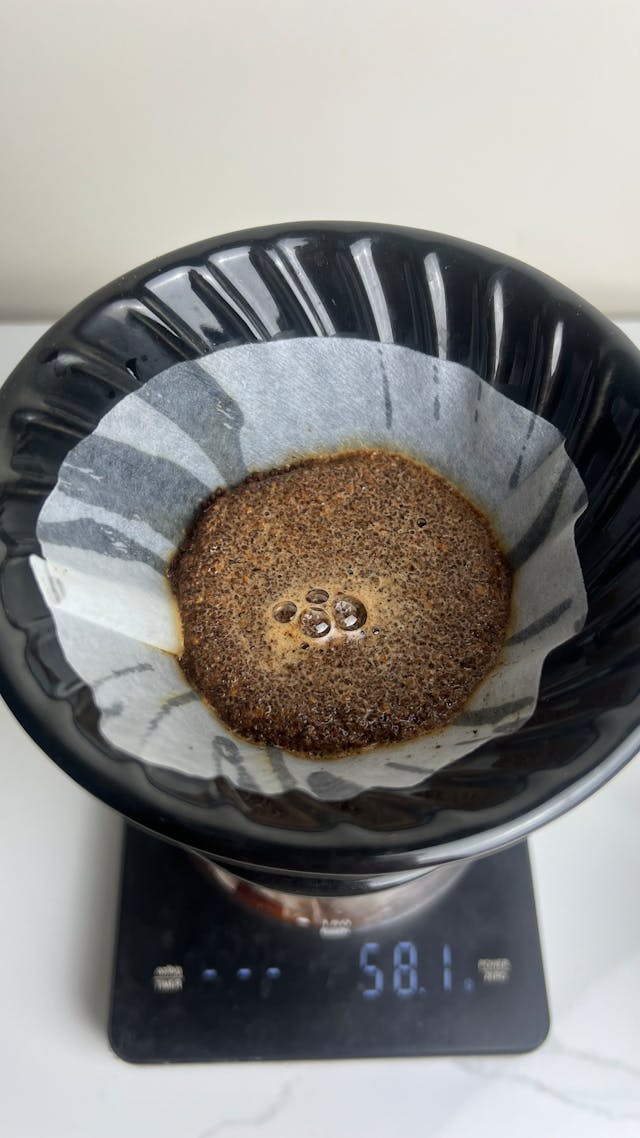
Why does fresh coffee bloom so much?
If you pour hot water over freshly ground coffee and see the coffee bed rise and bubble, it is primarily CO₂ being released.
The more gas remaining in the coffee, the more pronounced the blooming can be.
This is particularly visible with pour-over.
However, the bloom is not a direct quality test.
A very large bloom does not automatically mean that the coffee is better than a coffee with less bloom.
First and foremost, it tells you something about gas release.
Why does fresh espresso have so much crema?
CO₂ also plays a role in crema.
Fresh coffee can therefore produce a lot of crema during espresso extraction.
However, a lot of crema is not the same as good espresso.
Crema is influenced by, among other things:
- the coffee's freshness
- roast level
- coffee type
- pressure
- extraction.
The taste should always be more important than the amount of crema.
Should you adjust the coffee grinder as the coffee gets older?
It may be necessary – especially for espresso.
The coffee changes gradually after roasting.
As the gas content and structure change, the same grinder setting can result in a different flow than it did a few days earlier.
If an espresso suddenly runs faster, even though you are using the same coffee, dose, and recipe, you may need to grind a little finer.
This is a normal part of working with espresso.
Read more about adjustments in our guide to grind size.
Is freshly roasted coffee always better than supermarket coffee?
Roast date and freshness are only one part of coffee quality.
A fresh roast date cannot compensate for:
- poor raw coffee beans
- inappropriate roasting
- poor storage
- incorrect grind size
- poor brewing.
Conversely, a good coffee can still taste good, even if it wasn't roasted yesterday.
At Brændeholm Risteri, we therefore focus on both the coffee bean itself, the roasting, and how the coffee performs in the cup.
Freshness is important – but it is not the only factor.
How to find the best time for the coffee
The best method is surprisingly simple:
taste the coffee multiple times.
If you buy freshly roasted coffee, you can, for example, brew it the same way with a few days in between.
Try to keep:
- the coffee dosage consistent
- the water volume consistent
- the temperature consistent
- the grind size as consistent as possible.
Then pay attention to:
- aroma
- sweetness
- acidity
- balance
- aftertaste
- how the coffee behaves during brewing.
This will teach you far more about the specific coffee than a rule stating that all coffee must be drunk on a specific day.
Freshly roasted coffee from Brændeholm Risteri
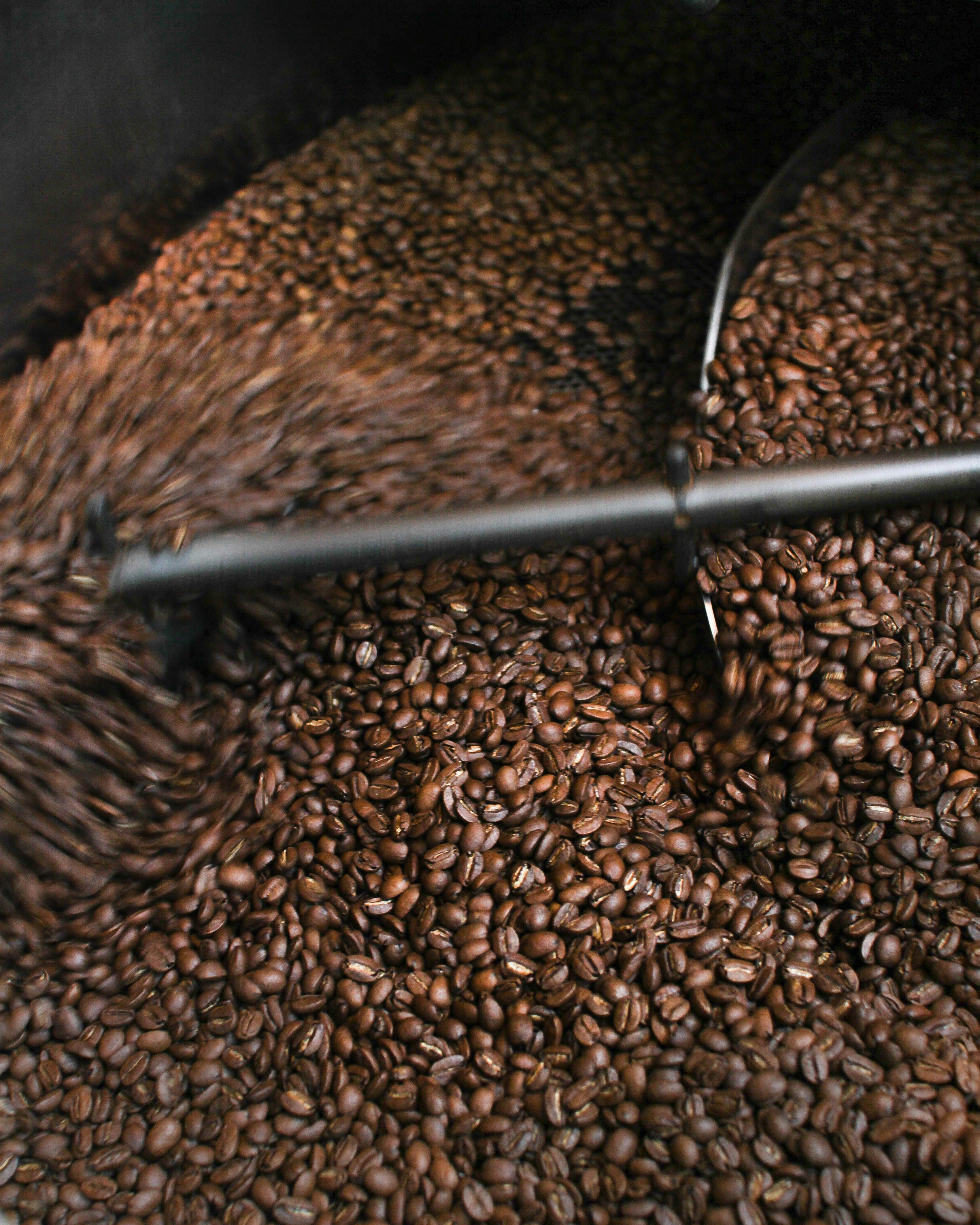
At Brændeholm Risteri, we roast coffee several times a week at our coffee roastery on Funen.
This means that we can continuously offer freshly roasted coffee beans rather than relying on large quantities of pre-roasted coffee in stock.
At the same time, freshly roasted does not mean that the coffee necessarily has to be drunk immediately.
The coffee continues to develop after roasting.
It is part of the experience of freshly roasted coffee.
You can see our entire selection of freshly roasted coffee beans and try different roast levels, origins, and flavor profiles.
Frequently asked questions about freshly roasted coffee and degassing
What is coffee degassing?
Degassing is the process where CO₂, among other things, is gradually released from the coffee bean after roasting. The process begins immediately after roasting and continues over time.
How long does coffee degas?
There is no fixed number of days. Degassing is fastest shortly after roasting but continues for longer. Roast level, coffee bean, roast profile, temperature, and grind size affect the speed.
How long should coffee rest after roasting?
It depends on the coffee and the brewing method. Filter coffee can often work relatively early, while espresso in many cases benefits from more rest. Taste the coffee rather than following one universal rule.
Can coffee be too fresh?
Yes, in the sense that very freshly roasted coffee can contain so much CO₂ that brewing becomes more difficult to control. This is especially seen with espresso.
Is coffee best right after roasting?
Not necessarily. Coffee develops after roasting and can benefit from rest before it hits a good flavor window.
What does the roast date mean?
The roast date tells you when the coffee was roasted. It helps you assess the age of the coffee, but it does not alone tell you when the coffee tastes best.
Does the coffee bag need to be open to degas?
No. A bag with a one-way valve allows gas to escape without the bag needing to be open.
Does ground coffee degas faster than whole beans?
Yes. When coffee is ground, the surface area increases significantly, and gas and aromatic compounds are released much faster.
Why does fresh coffee bubble during blooming?
The bubbles are caused by, among other things, CO₂, which is released when hot water hits the ground coffee.
Why does fresh espresso have a lot of crema?
CO₂ contributes to the formation of crema. However, a lot of crema is not in itself a measure of the espresso's quality.
Should the coffee grinder be adjusted when the coffee gets older?
It may be necessary, especially for espresso. The coffee changes after roasting, and therefore the same grinder setting can result in a different flow after a few days.