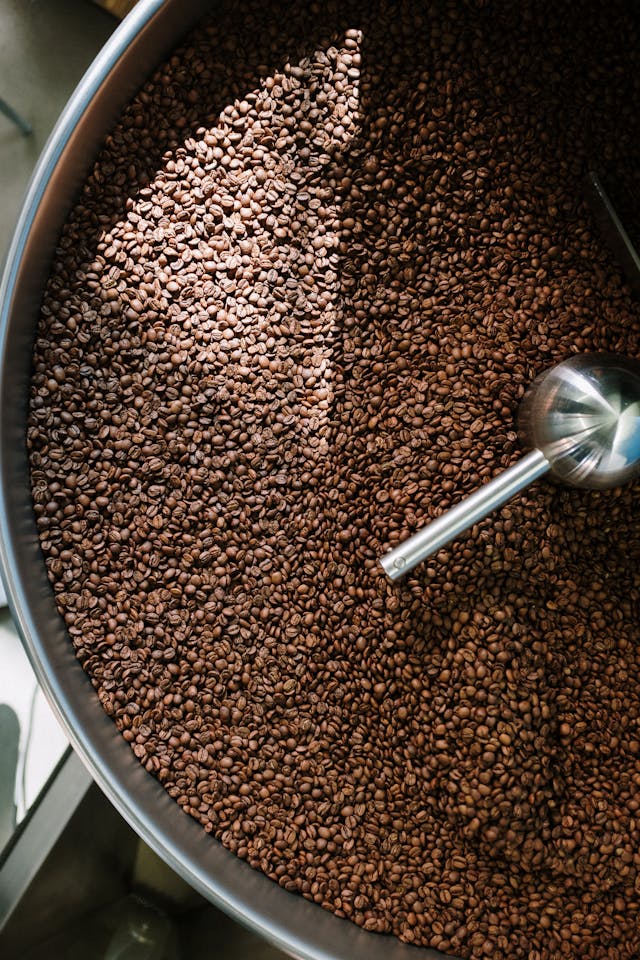
Cooling related to coffee roasting
refers to the process where freshly roasted coffee beans are rapidly cooled to stop the roasting reaction. When coffee beans are roasted, they undergo a chemical change in which sugars, proteins, and other components react to the heat, which develops the flavor profiles in the coffee. To preserve the desired flavor nuances and avoid further roasting, it is important to cool the beans quickly after roasting.
Why is cooling important?
Stops the roasting process: When the coffee beans reach the desired roast level, they must be cooled quickly to stop the heat development, which could otherwise cause the beans to become over-roasted, resulting in a burnt or unwanted flavor.
Preserves taste and aroma: Cooling preserves the desired flavor notes and aromas that have been developed during roasting. Without proper cooling, these flavor nuances can be destroyed, and the coffee may have a flatter or less complex taste.
How are coffee beans cooled?
Air cooling: In some roasteries, air coolers are used, where roasted coffee is quickly exposed to cold air to remove the heat. This method helps ensure that the beans are cooled quickly and evenly.
Cooling is a critical part of the coffee roasting process, as it helps ensure that the roasted beans retain their optimal flavor and quality.