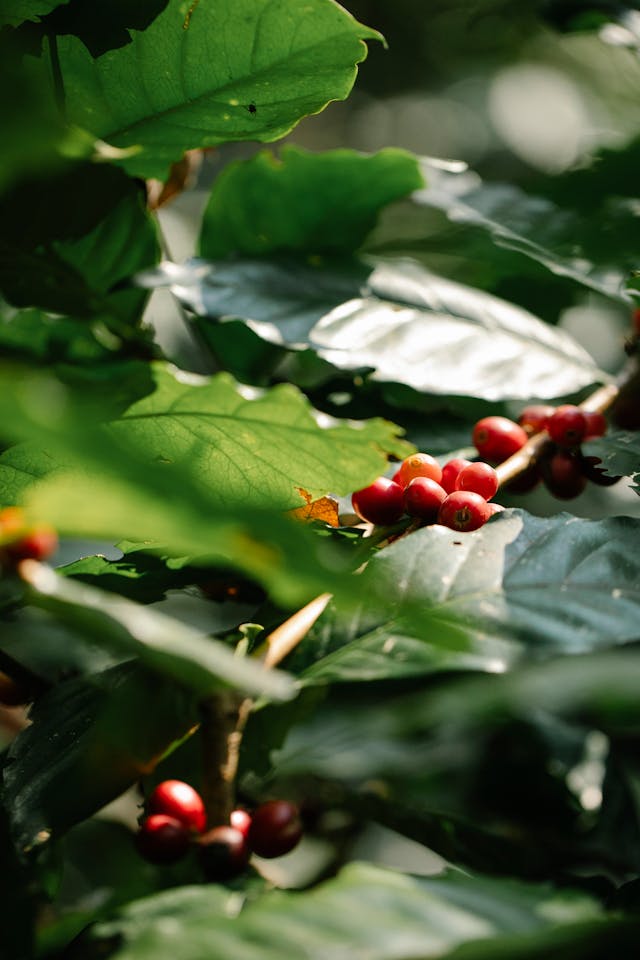
Arabica
Arabica (Coffea arabica) is one of the most popular and prized coffee species in the world, accounting for about 60-70% of global coffee production. It is known for its high quality and fine flavor nuances, making it the preferred choice among coffee enthusiasts and professional baristas.
Characteristics of Arabica:
Flavor
Arabica coffee is famous for its complex and nuanced flavor. It has a mild, sweet profile with fruity, floral, and sometimes slightly acidic notes. Many describe Arabica as a coffee with a clean, rounded taste without the bitterness often found in other coffee varieties.
Quality
Arabica beans are considered the finest coffee beans. They are grown under optimal conditions at higher altitudes, which results in slower growth, giving the beans time to develop their flavor. Arabica coffee is therefore synonymous with gourmet coffee and is often used for specialty coffee.
Shape and size
Arabica beans are usually flat and oval, and they tend to be slightly larger than beans from other coffee species. The beans are also more fragile, making them more difficult to handle during both cultivation and processing.
Caffeine content
Arabica coffee contains less caffeine than other types of coffee, which contributes to its milder flavor and makes it a perfect choice for those who want a less intense coffee experience.
Cultivation
The Arabica plant grows best in high-altitude areas with a cooler climate, usually between 600 and 2000 meters above sea level. It is mainly found in countries like Brazil, Colombia, Ethiopia, Kenya, and other coffee-producing countries in Central and South America.
All in all, Arabica is the preferred coffee for those who appreciate a sophisticated taste experience and a high-quality coffee. The coffee provides a more pleasant and refined drink that appeals to both beginners and experienced coffee lovers.