What is barista equipment?
Barista equipment comprises the tools and accessories used to brew, dose, distribute, tamp, and serve coffee more precisely.
The term is especially associated with espresso, because espresso requires relatively precise control over factors such as coffee dose, grind size, distribution, and tamping. However, barista equipment can also include tools for milk frothing, weighing, and other parts of the coffee brewing process.
You do not necessarily need a large collection of specialized equipment to make good coffee. The most important thing is to choose the equipment that solves a specific need in your workflow.
If you would like to see our entire range, you will find it gathered under espresso equipment and barista tools.
The espresso machine
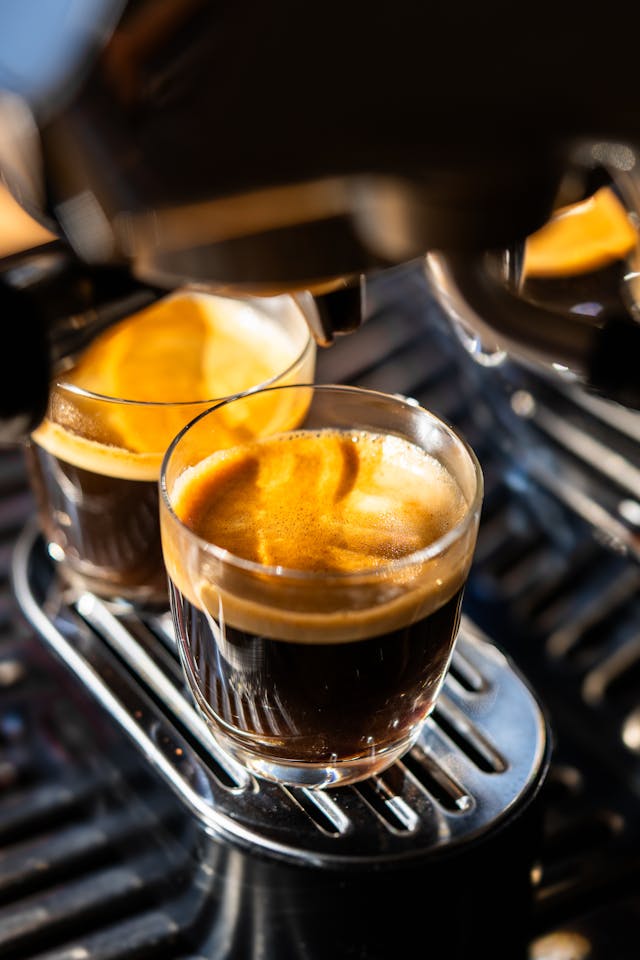
The espresso machine is the center of a classic espresso setup.
The machine forces hot water through a compact puck of finely ground coffee under pressure. However, the result itself depends on more than just the machine.
Coffee beans, the coffee grinder, dosing, grind size, distribution, and tamping all play a role.
An expensive espresso machine cannot necessarily compensate for a coffee grinder that is unable to grind precisely enough for espresso.
You can see our Sage espresso machines if you want to see examples of machines for home use.
The coffee grinder
The coffee grinder is one of the most important parts of a barista setup.
When coffee beans are ground, the grind size determines, among other things, how quickly the water can pass through the coffee.
For espresso, this is particularly important, because even small changes in grind size can noticeably alter the extraction time.
If the espresso runs too quickly, you would typically try to grind the coffee finer.
If it runs too slowly, you can try a slightly coarser setting.
For espresso, the coffee grinder should therefore be capable of making very small and controlled adjustments.
At Brændeholm Risteri, you will find both electric coffee grinders and manual coffee grinders.
Tamper
A tamper is used to compress the ground coffee in the filter basket before the espresso is brewed.
The purpose is to create a stable and reasonably level coffee puck through which the water can pass.
The most important thing when choosing a tamper is that the diameter fits your specific filter basket.
Tampers are therefore available in several sizes, for example around 51, 53, 54, and 58 mm.
You should not choose a tamper based solely on the name of your espresso machine. Check the specific measurements of your filter basket or the manufacturer's recommendation.
See our selection of espresso tampers.
WDT tool
WDT stands for Weiss Distribution Technique.
A WDT tool typically consists of several thin needles that are moved through the ground coffee in the filter basket before tamping.
The purpose is to break up clumps and distribute the coffee more evenly.
A more uniform distribution can make it easier to build a stable espresso workflow and reduce areas in the coffee puck where the water finds an easier path.
WDT is not a requirement for brewing espresso, but it can be a useful tool if you work systematically with distribution.
See our WDT tool for espresso.
Dosing funnel and dosing cup
When coffee is ground directly into a portafilter, some of the ground coffee can end up outside the filter basket.
A dosing funnel is placed on top of the portafilter and provides extra height around the edge.
This makes it easier to dose and distribute the coffee without spilling as much on the counter.
A dosing cup is used instead as an intermediary between the coffee grinder and the portafilter.
This can be particularly practical for single dosing, where a specific amount of coffee beans is weighed before grinding.
You will find both funnels and cups under dosing accessories for coffee and espresso.
Coffee scale
A coffee scale makes it possible to work with specific amounts rather than eyeballing it.
For espresso, you can for example weigh:
- how many grams of coffee you put in the filter basket
- how many grams of espresso end up in the cup
- how long the brewing takes
If you use 18 grams of coffee and get 36 grams of espresso out, you have, for example, a brew ratio of 1:2.
This does not mean that 1:2 is always the right recipe, but the scale gives you a starting point that can be repeated and adjusted.
For pour-over, the coffee scale is also used for both coffee and water.
See our selection of coffee scales for espresso and filter coffee.
Knockbox
A knockbox is a container used for the spent coffee puck after the espresso has been brewed.
The portafilter is gently tapped against the bar of the knockbox so that the coffee puck falls out.
The knockbox does not affect the extraction itself.
Instead, it makes the workflow around the espresso machine faster and more practical, especially if you are making several espressos in a row.
At Brændeholm Risteri, you will find knockboxes for espresso in various sizes and materials.
Milk pitcher
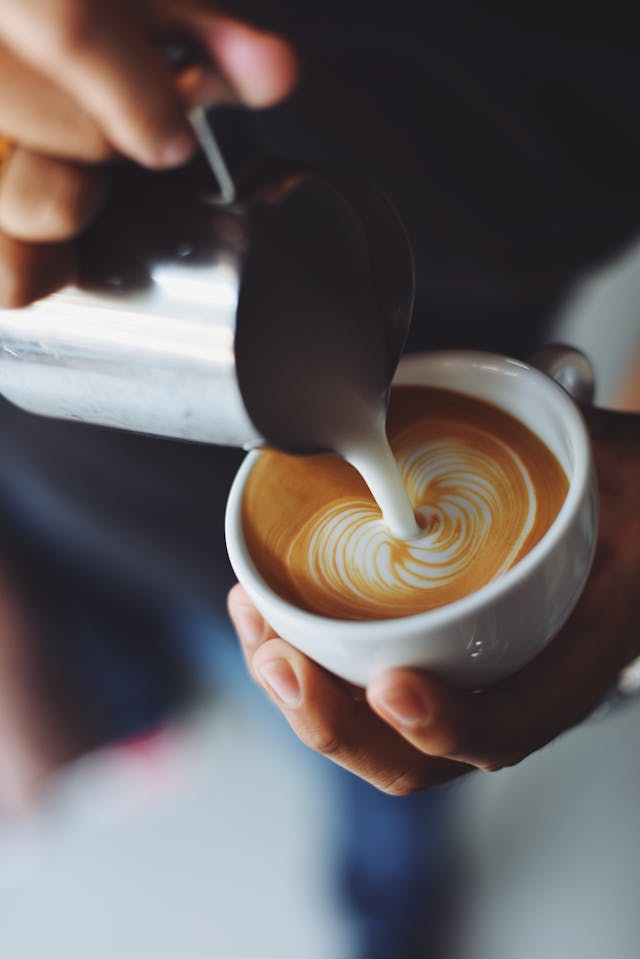
If you make cappuccino, caffe latte, or flat white, a milk pitcher is a central barista tool.
The milk pitcher is used to hold the milk while it is being steamed with the espresso machine's steam wand.
The shape of the pitcher and the spout can also be significant when the milk is subsequently poured into the espresso.
For latte art, the goal is typically to create a uniform microfoam with small air bubbles and a glossy, fluid texture.
Milk pitchers come in different sizes. A smaller pitcher is practical for a single small milk drink, while a larger pitcher provides more capacity.
See our selection of milk pitchers for latte art and coffee.
Milk thermometer
A milk thermometer can be used to monitor the temperature while the milk is being steamed.
This can be especially useful while you are learning the process and are not yet used to judging the temperature based on the pitcher and the time.
The temperature is only one part of milk frothing. Air intake, placement of the steam wand, and the subsequent rotation of the milk also affect the texture.
See our selection of milk thermometers.
Latte art equipment
Latte art primarily requires correctly textured milk and a controlled pouring technique.
However, there are also various accessories that can be used when you want to work with patterns in more detail.
A latte art pen, for example, can be used to drag or shape small details in the milk foam after pouring.
The most important foundation is still the espresso, the texture of the milk, and the pouring technique.
You will find relevant products under latte art accessories.
Precision baskets
The filter basket sits in the portafilter and holds the ground coffee during brewing.
A precision basket is manufactured with a focus on uniformity in, for example, hole size and hole distribution.
This can give the home barista another opportunity to work systematically with espresso.
The basket must fit the portafilter and the amount of coffee you want to use.
Therefore, you should check both the diameter, height, and recommended dose before purchasing.
See our precision baskets for espresso.
What barista equipment do you actually need?
You don't need to buy all barista equipment at once.
A good basic espresso setup typically consists of:
- an espresso machine
- a coffee grinder suitable for espresso
- a tamper of the correct size
- a coffee scale
- good coffee beans
After that, you can add equipment if it solves a specific problem.
If you spill coffee during dosing, a dosing funnel can be useful.
If you have problems with clumps or uneven distribution, a WDT tool may be relevant.
If you make many milk drinks, a good milk pitcher becomes more important.
If you make many espressos in a row, a knockbox can make cleanup easier.
The best barista setup is therefore not necessarily the one with the most equipment, but the setup where each tool has a specific purpose.
Which coffee beans are suitable for espresso?
Barista equipment can help you control the brewing, but the raw material is still decisive.
You can brew espresso with both blends and single-origin coffee and with different roast levels.
Medium-roasted and darker coffees are popular for classic espresso and milk drinks, while lighter roasts can also be used if you want a fruitier and more distinct origin character.
The most important thing is that the grinder, dosage, and brewing are adjusted to the specific coffee.
You can see our selection of coffee beans for espresso.
Barista equipment makes it easier to work consistently
The purpose of barista equipment is not to make coffee brewing unnecessarily complicated.
The best tools help you control certain variables and repeat what worked.
A coffee scale makes dosing measurable.
A coffee grinder makes the grind size adjustable.
A tamper helps create a stable coffee puck.
A WDT tool can improve distribution.
A milk pitcher helps with milk frothing and pouring.
When you can control these parts individually, it also becomes easier to find the cause if the espresso does not taste as you would like.
If you want to go further with the brewing itself, you can read our guide to better espresso.
In short: What is barista equipment?
Barista equipment comprises the tools that help a barista or home barista brew and serve coffee more precisely and consistently.
For espresso, this typically includes a coffee grinder, tamper, and coffee scale, as well as possibly a WDT tool, dosing funnel, knockbox, milk pitcher, and other accessories.
You do not need everything from the beginning.
Start with good basic equipment and then add the tools that actually improve your workflow.