
Skip to content

Espresso equipment

Espresso equipment for the home barista

The right espresso equipment can make it easier to work more precisely and consistently with espresso – from dosing and distributing the coffee to tamping, weighing, milk steaming, and cleaning.

At Brændeholm Risteri, you will find a wide selection of espresso equipment and barista tools for both the simple home setup and the more geeky coffee station.

The range includes tampers, WDT tools, dosing accessories, coffee scales, knock boxes, milk pitchers, precision baskets, and much more.

You don't need all the equipment from the start. The most important thing is to choose the parts that solve a specific need in your espresso workflow.

What espresso equipment do I need?

It depends on your espresso machine, coffee grinder, and how much you want to work with the preparation itself.

A basic espresso setup will typically consist of:

  • espresso machine
  • coffee grinder suitable for espresso
  • tamper of the correct size
  • coffee scale
  • freshly ground coffee

After that, you can supplement with equipment such as a WDT tool, dosing funnel, knock box, tamping mat, precision basket, and milk pitcher.

It is not necessary to buy everything at once.

If you experience a specific problem – for example, uneven distribution of coffee, grounds around the portafilter, or difficult tamping – it makes more sense to choose a tool that solves exactly that.

The coffee grinder is an important part of the espresso setup

For espresso, the coffee grinder is especially important, because very small changes in grind size can affect how quickly water passes through the coffee.

An espresso grinder must therefore be adjustable finely enough to allow you to adapt the brewing process.

At Brændeholm Risteri, you will find electric coffee grinders, including models developed specifically for or suitable for espresso.

When you change coffee beans, dosage, or basket, it may be necessary to readjust the grinder.

Tamper for espresso

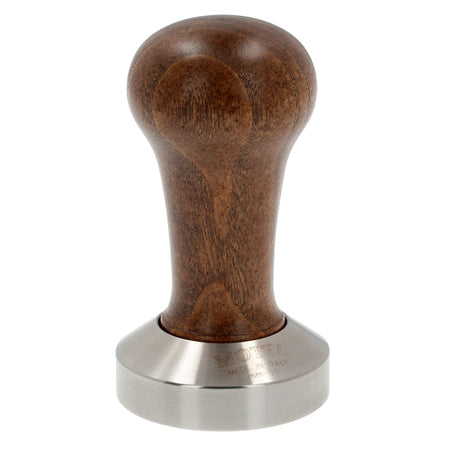
A tamper is used to compress the ground coffee in the filter basket before brewing.

The most important thing is first and foremost that the tamper's diameter fits the basket you are using.

We offer tampers in several sizes, including around 51, 53, 54, and 58 mm, depending on the model.

A more expensive tamper is not automatically necessary to make good espresso. Fit, stability, and a workflow that you can repeat are more important.

Which tamper size should I choose?

You must choose a tamper based on the internal diameter of the specific filter basket – not just based on the name or nominal size of the portafilter.

For example, two machines in the same general size category may require slightly different tamper diameters.

Therefore, always check the specifications for your machine or filter basket before purchasing.

If in doubt, you are welcome to contact us.

Manual or automatic tamper?

A standard hand tamper is the simplest solution and is sufficient for the vast majority of home baristas.

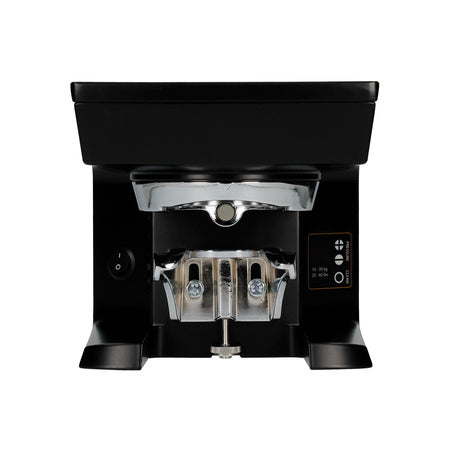
An automatic tamper like the PuqPress is designed to make tamping fast and very reproducible.

This can be particularly relevant if you are tamping many espressos throughout the day, or if you want to reduce the variation between each tamp.

For regular home use, however, it is not a requirement.

Start with the equipment that matches your actual needs.

WDT – Weiss Distribution Technique

WDT tools are used to distribute the ground coffee in the filter basket before tamping.

WDT stands for Weiss Distribution Technique.

The thin needles are moved through the ground coffee to break up clumps and distribute the coffee more evenly in the basket.

The purpose is to create a more uniform coffee bed before tamping.

It can be especially useful if your grinder produces clumps, or if the coffee lands unevenly in the portafilter.

We offer both traditional WDT tools and more compact solutions like the Subminimal Flick.

WDT or distributor?

A WDT tool and a classic distributor do not work in exactly the same way.

WDT works through the coffee bed with thin needles and helps to break up clumps and distribute the coffee.

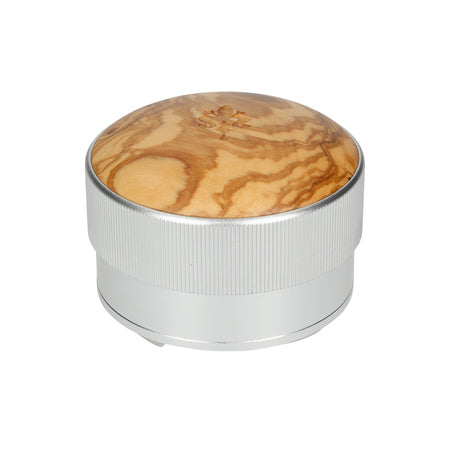
A distributor or leveler works primarily on the surface and is used to make the top of the coffee bed more uniform before tamping.

You don't necessarily need both.

Many home baristas will get more benefit from a good, simple routine with WDT and subsequent tamping than from adding many steps without a clear purpose.

Dosing funnel for espresso

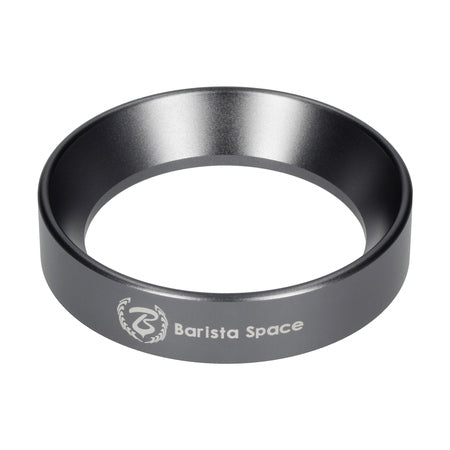
A dosing funnel is placed on top of the portafilter when the coffee is being dosed and distributed.

It can be particularly useful when you use WDT.

The funnel helps to keep the coffee in the basket, so less of it ends up on the counter during distribution.

It is a simple piece of accessory, but can make the workflow significantly cleaner.

51–54 mm or 58 mm dosing funnel?

Just like with tampers, the funnel must fit your portafilter.

In our range, you will find dosing funnels for smaller portafilters around 51–54 mm and for 58 mm.

Check compatibility on the specific product page before ordering.

Dosing cups and dosing bowls

Dosing equipment can be useful if you weigh coffee beans before grinding or move ground coffee from the grinder to the portafilter.

A dosing cup makes it easier to collect the ground coffee and transfer it without waste.

Dosing bowls can also be used in a single-dose setup where the beans are weighed individually for each brew.

It is not necessary for everyone, but can make the workflow more organized.

Coffee scale for espresso

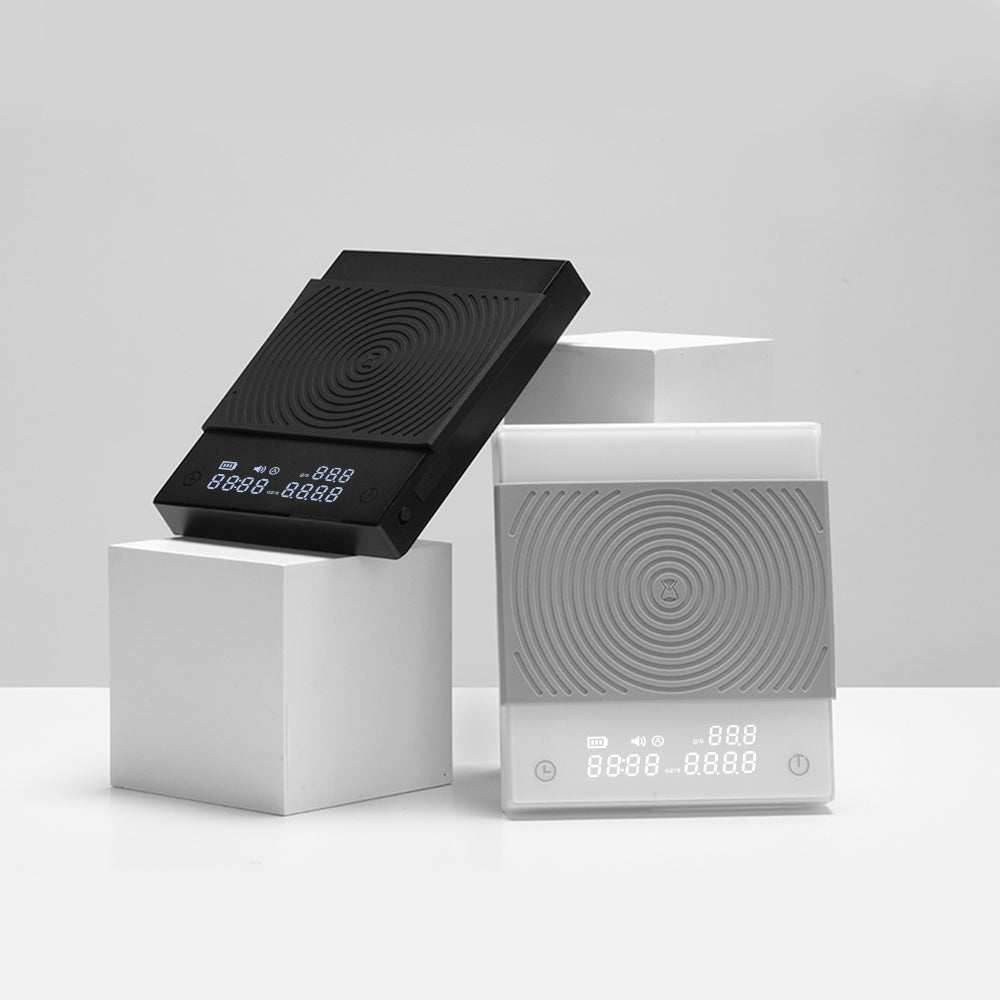
A coffee scale is one of the most useful tools if you want to work more consistently with espresso.

With a scale, you can measure:

  • the amount of coffee in the filter basket
  • the amount of finished espresso
  • the brewing time, if the scale has a timer

This makes it easier to repeat a result and understand what changes when you adjust the grinder.

If you, for example, always start with the same dose of coffee, it becomes much easier to see the effect of a change in grind size.

Which coffee scale for espresso?

For espresso, the size is important.

The scale should ideally be able to stand stably under the cup on the espresso machine's drip tray.

A compact scale can therefore be more practical than a large filter coffee scale.

It is also useful to have a fast response time and a resolution that makes it possible to follow small changes in weight.

See the specific dimensions of the individual coffee scale and compare them with the space on your machine.

Knock box – easier handling of coffee grounds

A knock box is used to knock the used coffee puck out of the portafilter after brewing.

It provides a designated place for coffee grounds and makes cleaning around the espresso machine easier.

If you make espresso often, a knock box is one of the pieces of equipment that doesn't directly change the taste, but can make the daily workflow much more practical.

Choose the size based on how many espressos you normally make and how much space you have at your coffee station.

Tamping mat and tamping station

A tamping mat or tamping station provides a stable surface when you tamp the coffee.

At the same time, it can protect both the countertop and the portafilter.

A simple tamping mat is sufficient for many home setups.

A tamping station holds the portafilter more securely and can be interesting if you would like a more organized coffee station.

Again, more equipment does not automatically mean better espresso. Choose the solution that makes your workflow easier.

Precision baskets for espresso

A precision basket is a filter basket manufactured with a focus on more uniform dimensions and perforations.

At Brændeholm Risteri, you will find, among other things, IMS Competition baskets in various sizes and capacities.

It is important to check compatibility carefully.

A filter basket must not only fit the portafilter; the height, diameter, shape, and recommended dose must also fit your setup.

Therefore, always read the specifications on the individual precision basket before ordering.

Should I upgrade the filter basket?

Not necessarily.

If you are still working on finding a stable grinder setting, dosage, and tamping, a new filter basket will not automatically solve all problems.

A precision basket becomes more interesting when you already have a reasonably stable workflow and want to experiment further with espresso.

It is therefore a good example of equipment that might be relevant later rather than something everyone needs from day one.

Milk pitchers for cappuccino and latte

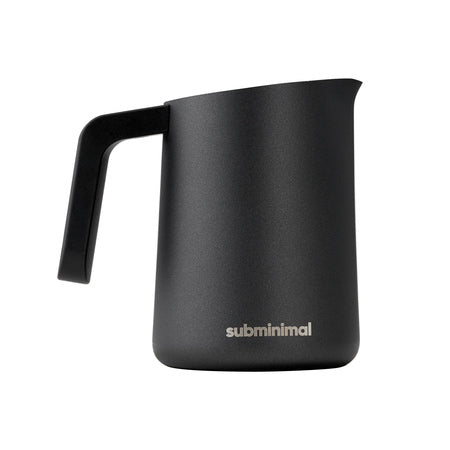
If you use the espresso machine's steam wand for milk-based drinks, a milk pitcher is a natural piece of equipment.

The milk pitcher is used both during the actual steaming process and for pouring the milk into the espresso.

At Brændeholm Risteri, you will find milk pitchers in different sizes and shapes, including models from Barista Space and other manufacturers.

The choice depends especially on how much milk you usually steam and how much control you want during the pour.

Which size milk pitcher?

A smaller milk pitcher is practical for a single smaller milk drink, while a larger pitcher provides more room if you are steaming milk for larger drinks or multiple servings.

You should also leave room in the pitcher so the milk can move and expand during the steaming process.

Therefore, it is rarely a good idea to fill the pitcher all the way to the brim.

Latte art accessories

Good latte art does not begin with decoration, but with espresso and milk that have the right consistency.

When the basic technique is in place, latte art accessories can be used for different ways to work further with the presentation.

If you are a beginner, I would prioritize a suitable milk pitcher and practice with milk foam before buying more specialized latte art equipment.

Milk frother

If your coffee machine does not have a steam wand, or if you want a separate solution, a milk frother might be relevant.

Milk frothers come in different types and do not necessarily work in the same way as a traditional steam wand.

Therefore, choose based on the drinks you make and whether you primarily want hot milk foam or more control over the texture.

Milk thermometer

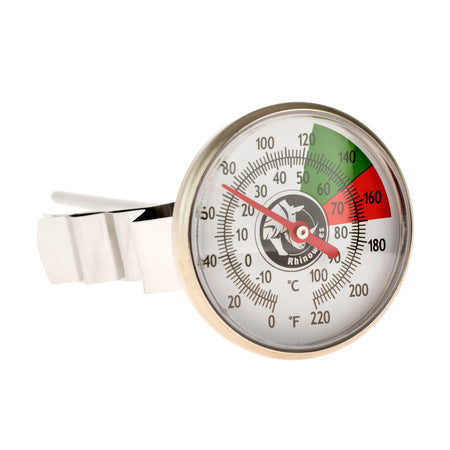
A milk thermometer can help you keep track of the temperature during steaming.

It can be useful while you are learning to work with the steam wand and cannot yet safely assess the temperature from the pitcher alone.

In the long run, many learn to use sound, movement, and the feel of the temperature in the pitcher as part of the technique.

What espresso equipment should a beginner buy first?

If you have just received an espresso machine, I would prioritize in this order:

1. A coffee grinder that can grind for espresso

Without sufficient adjustment options on the grinder, it becomes difficult to control the flow.

2. A tamper that fits correctly

Check the size of the filter basket.

3. A coffee scale

It makes it possible to work with a fixed dose and measure the result.

4. WDT tool

Relevant if you would like to improve the distribution of the coffee before tamping.

5. Dosing funnel

Especially practical together with WDT.

After that, you can add a knock box, tamping station, precision basket, and other equipment as needed.

Espresso equipment for the more experienced home barista

When you have already mastered the basic elements, more specialized equipment becomes interesting.

This can, for example, be:

  • WDT tool
  • precision baskets
  • leveler
  • automatic tamper
  • single-dose accessories
  • more precise coffee scale
  • specialized milk pitchers

However, each upgrade should preferably have a purpose.

If your espresso is already stable and tastes good, there is no reason to change equipment simply because a new gadget exists.

51, 53, 54 or 58 mm – why size is important

A large part of espresso equipment is mounted directly onto or works with the portafilter and filter basket.

Therefore, the size must fit.

This applies to, among other things:

  • tampers
  • dosing funnels
  • precision baskets
  • distributors
  • tamping stations
  • certain dosing cups

You should therefore know the size of your portafilter and preferably also the specifications of the specific filter basket.

58 mm is very common on a number of espresso machines, but that does not mean that everything marked 58 mm necessarily fits identically.

Always check the specific product.

Espresso begins with the right coffee beans

The equipment can help with precision and workflow, but it does not replace good coffee beans.

At Brændeholm Risteri, we roast coffee ourselves near Faaborg on Funen, and you will find a selection of coffee beans for espresso.

Here you can choose coffee with different roast levels and flavor profiles depending on what type of espresso you prefer.

You also do not necessarily need a coffee that is labeled "espresso" to use it in an espresso machine. Espresso is a brewing method, and different coffee beans can yield very different results.

Cleaning of espresso equipment

Coffee oils and coffee residues accumulate over time on equipment that is in contact with coffee.

This applies to filter baskets, portafilters, dosing equipment, and parts of the coffee grinder.

Therefore, keep the equipment clean and follow the manufacturer's instructions for your espresso machine and grinder.

At our shop, you will also find cleaning agents and water filters for various coffee machines and coffee equipment.

Always use the cleaning agent that is suitable for the specific machine or component.

Barista equipment or espresso equipment – what is the difference?

The terms overlap.

Barista equipment can in a broad sense cover tools for many types of coffee.

On this page, we primarily use the term espresso equipment, because the range mainly consists of tools for work involving espresso and milk-based drinks.

If you are looking for equipment for filter coffee, V60, Chemex, AeroPress, or other brewing methods, you will find it in our overall selection of coffee equipment.

This makes it easier to distinguish between equipment for espresso and the broader range for other brewing methods.

Espresso equipment at Brændeholm Risteri

At Brændeholm Risteri, you will find espresso equipment for many different parts of the work process.

You can, among other things, find:

This way, you can start with the basics and later expand your coffee station with the tools that make sense for your specific setup.

Frequently asked questions about espresso equipment

What equipment do I need for espresso?

As a starting point, you need an espresso machine, a coffee grinder suitable for espresso, a correctly sized tamper, and coffee. A coffee scale is also very useful. WDT, dosing funnel, knock box, and other accessories can be added as needed.

What is a tamper?

A tamper is used to compress the ground coffee in the filter basket before brewing espresso.

What size tamper do I need?

It depends on your filter basket. Always check the machine and basket specifications rather than choosing based on a general size alone.

What does WDT mean?

WDT stands for Weiss Distribution Technique and is used to distribute the ground coffee in the filter basket using thin needles.

Do I need both WDT and a distributor?

Not necessarily. They work differently, but many home baristas can achieve a good and simple workflow using WDT followed by tamping.

What is a dosing funnel used for?

A dosing funnel is mounted on top of the portafilter and helps keep the ground coffee in the basket during dosing and distribution.

Do I need a coffee scale for espresso?

It is not a requirement, but a coffee scale makes it much easier to work with fixed doses and repeat a brew.

What is a knock box used for?

A knock box is used to knock the spent coffee puck out of the portafilter after brewing.

What is a precision basket?

A precision basket is a filter basket where dimensions and perforations are manufactured with a focus on high consistency. Always check compatibility with your machine and portafilter.

Do I need a milk pitcher?

If you steam milk with a steam wand for drinks like cappuccino or latte, a suitable milk pitcher is a basic tool.

Are barista equipment and espresso equipment the same thing?

The terms overlap. Barista equipment can be used more broadly for coffee equipment in general, while espresso equipment more specifically covers tools related to espresso, portafilters, puck preparation, and milk drinks.

Barista Space - 450 ml Titanium Half Blue Milk Pitcher

Original price 299,95 kr - Original price 299,95 kr
Original price
299,95 kr
299,95 kr - 299,95 kr
Current price 299,95 kr

Professional milk pitcher from Barista SpaceThe milk pitcher features a profiled pouring spout, low weight, and a comfortable handle, which makes i...

View full details

Subminimal Flowtip Milk Pitcher

Original price 399,00 kr - Original price 399,00 kr
Original price
399,00 kr
399,00 kr - 399,00 kr
Current price 399,00 kr

Perfect milk foam every time with the Subminimal FlowTip milk pitcherExperience a professional milk pitcher designed for precision, control, and ea...

View full details

Loveramics Champion Signature dosing tray 2-piece set ceramic light blue

Original price 449,00 kr - Original price 449,00 kr
Original price
449,00 kr
449,00 kr - 449,00 kr
Current price 449,00 kr

Make your coffee experience luxurious with the Loveramics dosing trayImagine this: You are standing at your coffee station with the best beans, a w...

View full details

PuqPress M2 Gen 5 Matte Black 58.3 mm - Automatic tamper

Original price 7.350,00 kr - Original price 7.350,00 kr
Original price
7.350,00 kr
7.350,00 kr - 7.350,00 kr
Current price 7.350,00 kr

☕ Upgrade your espresso experience with the PuqPress M2 Gen 5 Automatic TamperAchieve exceptional consistency and quality in your espresso with the...

View full details

Eureka Leveler Olive Wood 58.3 mm

Original price 579,00 kr - Original price 579,00 kr
Original price
579,00 kr
579,00 kr - 579,00 kr
Current price 579,00 kr

Eureka Olive Wood Leveler – When precision and craftsmanship go hand in hand Do you want to brew espresso with more precision and consistency? Then...

View full details

Motta Latte Macchiato Spoons 6 pcs

Original price 108,00 kr - Original price 108,00 kr
Original price
108,00 kr
108,00 kr - 108,00 kr
Current price 108,00 kr

Set of 6 elegant stainless steel latte macchiato spoonsTreat your customers (or yourself) to a stylish set of 6 latte macchiato spoons designed for...

View full details

Motta cappuccino spoons 6 pcs

Original price 68,00 kr - Original price 68,00 kr
Original price
68,00 kr
68,00 kr - 68,00 kr
Current price 68,00 kr

Set of 6 elegant stainless steel cappuccino spoons Elevate your cappuccino experience with this set of 6 cappuccino spoons from Motta – renowned fo...

View full details

Motta Tamper 51 mm - Stainless steel - Wooden handle

Original price 323,00 kr - Original price 323,00 kr
Original price
323,00 kr
323,00 kr - 323,00 kr
Current price 323,00 kr

Motta Tamper 51mm A stainless steel coffee tamper with an elegant wooden handle. It will grace any coffee corner and make tamping a pure pleasure. ...

View full details

Motta Tamper Black 51 mm

Original price 319,00 kr - Original price 319,00 kr
Original price
319,00 kr
319,00 kr - 319,00 kr
Current price 319,00 kr

The Motta Tamper 51 mm Black is a professional tool for espresso enthusiasts who want a smooth and uniform coffee tamp. This tamper is designed to ...

View full details

Motta Tamper Black 54 mm

Original price 159,00 kr - Original price 159,00 kr
Original price
159,00 kr
159,00 kr - 159,00 kr
Current price 159,00 kr

The Motta Tamper 54 mm Black is a professional tool for espresso enthusiasts who want an even and consistent coffee tamp. This tamper is designed t...

View full details

Motta Carbon Tamper 58 mm

Original price 349,00 kr - Original price 349,00 kr
Original price
349,00 kr
349,00 kr - 349,00 kr
Current price 349,00 kr

The Motta Tamper 58 mm carbon is the ideal tool for espresso enthusiasts and professional baristas who want precise tamping and optimal extraction....

View full details

Motta Tamper Black 53 mm for Sage

Original price 165,00 kr - Original price 165,00 kr
Original price
165,00 kr
165,00 kr - 165,00 kr
Current price 165,00 kr

Fits perfectly with the Sage Barista series. The Motta Tamper 53 mm Black is a professional tool for espresso enthusiasts who want a smooth and con...

View full details

Motta Nonstick Tamper 58 mm

Original price 219,00 kr - Original price 219,00 kr
Original price
219,00 kr
219,00 kr - 219,00 kr
Current price 219,00 kr

The Motta Nonstick Tamper 58 mm is a professional tool for espresso lovers and baristas who want a smooth and seamless tamping experience. This tam...

View full details

Motta Tamper Black 57 mm

Original price 349,00 kr - Original price 349,00 kr
Original price
349,00 kr
349,00 kr - 349,00 kr
Current price 349,00 kr

The Motta Tamper 57 mm Black is a professional tool for espresso enthusiasts who want a smooth and uniform tamping of their coffee. This tamper is ...

View full details

Motta Tamper Black 58 mm

Original price 249,00 kr - Original price 249,00 kr
Original price
249,00 kr
249,00 kr - 249,00 kr
Current price 249,00 kr

The Motta Tamper 58 mm Black is a professional tool for espresso enthusiasts who want a smooth and uniform coffee tamp. This tamper is designed to ...

View full details

Motta Tamper Black 58.4 mm Competition

Original price 289,00 kr - Original price 289,00 kr
Original price
289,00 kr
289,00 kr - 289,00 kr
Current price 289,00 kr

The Motta Tamper 58.4 mm Black is a professional tool for espresso enthusiasts who want a smooth and uniform coffee tamp. This tamper is designed t...

View full details

Motta Rubber Tamper Stand

Original price 89,00 kr - Original price 89,00 kr
Original price
89,00 kr
89,00 kr - 89,00 kr
Current price 89,00 kr

The Motta Rubber Tamper Stand is the ideal solution for the safe and practical storage of your tamper. This tamper stand protects both your tamper ...

View full details

Barista Space - 450 ml Ice Grain Black Milk Pitcher

Original price 299,95 kr - Original price 299,95 kr
Original price
299,95 kr
299,95 kr - 299,95 kr
Current price 299,95 kr

Barista Space - 450 ml Milk Pitcher Professional milk pitcher from Barista Space. The milk pitcher features a profiled pouring spout, low weight, a...

View full details

Barista Space - 450 ml Ice Grain Blue Milk Pitcher

Original price 299,95 kr - Original price 299,95 kr
Original price
299,95 kr
299,95 kr - 299,95 kr
Current price 299,95 kr

Barista Space - 450 ml Milk Pitcher Professional milk pitcher from Barista Space. The milk pitcher features a profiled pouring spout, low weight, a...

View full details

Barista Space - 450 ml Ice Grain Golden Milk Pitcher

Original price 299,95 kr - Original price 299,95 kr
Original price
299,95 kr
299,95 kr - 299,95 kr
Current price 299,95 kr

Barista Space - 450 ml Milk Pitcher Professional milk pitcher from Barista Space. The milk pitcher features a profiled pouring spout, low weight, a...

View full details

Barista Space - 450 ml Ice Grain Rainbow Milk Pitcher

Original price 299,95 kr - Original price 299,95 kr
Original price
299,95 kr
299,95 kr - 299,95 kr
Current price 299,95 kr

Barista Space - 450 ml Milk Pitcher Professional milk pitcher from Barista Space. The milk pitcher features a profiled spout, low weight, and a com...

View full details

Barista Space - 450 ml Titanium Blue Milk Pitcher

Original price 299,95 kr - Original price 299,95 kr
Original price
299,95 kr
299,95 kr - 299,95 kr
Current price 299,95 kr

Barista Space - 450 ml Milk Pitcher Professional milk pitcher from Barista Space. The milk pitcher features a profiled pouring spout, low weight, a...

View full details

Barista Space - 450 ml Titanium Copper Milk Pitcher

Original price 299,95 kr - Original price 299,95 kr
Original price
299,95 kr
299,95 kr - 299,95 kr
Current price 299,95 kr

Barista Space - 450 ml Milk Pitcher Professional milk pitcher from Barista Space. The milk pitcher features a profiled pouring spout, low weight, a...

View full details

Barista Space - 450 ml Titanium Rose Gold Milk Pitcher

Original price 299,95 kr - Original price 299,95 kr
Original price
299,95 kr
299,95 kr - 299,95 kr
Current price 299,95 kr

A good milk pitcher is one of the most important tools when you want to make perfect microfoam and beautiful latte art. The Barista Space 450 ml Ti...

View full details

Espresso equipment for the home barista

The right espresso equipment can make it easier to work more precisely and consistently with espresso – from dosing and distributing the coffee to tamping, weighing, milk steaming, and cleaning.

At Brændeholm Risteri, you will find a wide selection of espresso equipment and barista tools for both the simple home setup and the more geeky coffee station.

The range includes tampers, WDT tools, dosing accessories, coffee scales, knock boxes, milk pitchers, precision baskets, and much more.

You don't need all the equipment from the start. The most important thing is to choose the parts that solve a specific need in your espresso workflow.

What espresso equipment do I need?

It depends on your espresso machine, coffee grinder, and how much you want to work with the preparation itself.

A basic espresso setup will typically consist of:

  • espresso machine
  • coffee grinder suitable for espresso
  • tamper of the correct size
  • coffee scale
  • freshly ground coffee

After that, you can supplement with equipment such as a WDT tool, dosing funnel, knock box, tamping mat, precision basket, and milk pitcher.

It is not necessary to buy everything at once.

If you experience a specific problem – for example, uneven distribution of coffee, grounds around the portafilter, or difficult tamping – it makes more sense to choose a tool that solves exactly that.

The coffee grinder is an important part of the espresso setup

For espresso, the coffee grinder is especially important, because very small changes in grind size can affect how quickly water passes through the coffee.

An espresso grinder must therefore be adjustable finely enough to allow you to adapt the brewing process.

At Brændeholm Risteri, you will find electric coffee grinders, including models developed specifically for or suitable for espresso.

When you change coffee beans, dosage, or basket, it may be necessary to readjust the grinder.

Tamper for espresso

A tamper is used to compress the ground coffee in the filter basket before brewing.

The most important thing is first and foremost that the tamper's diameter fits the basket you are using.

We offer tampers in several sizes, including around 51, 53, 54, and 58 mm, depending on the model.

A more expensive tamper is not automatically necessary to make good espresso. Fit, stability, and a workflow that you can repeat are more important.

Which tamper size should I choose?

You must choose a tamper based on the internal diameter of the specific filter basket – not just based on the name or nominal size of the portafilter.

For example, two machines in the same general size category may require slightly different tamper diameters.

Therefore, always check the specifications for your machine or filter basket before purchasing.

If in doubt, you are welcome to contact us.

Manual or automatic tamper?

A standard hand tamper is the simplest solution and is sufficient for the vast majority of home baristas.

An automatic tamper like the PuqPress is designed to make tamping fast and very reproducible.

This can be particularly relevant if you are tamping many espressos throughout the day, or if you want to reduce the variation between each tamp.

For regular home use, however, it is not a requirement.

Start with the equipment that matches your actual needs.

WDT – Weiss Distribution Technique

WDT tools are used to distribute the ground coffee in the filter basket before tamping.

WDT stands for Weiss Distribution Technique.

The thin needles are moved through the ground coffee to break up clumps and distribute the coffee more evenly in the basket.

The purpose is to create a more uniform coffee bed before tamping.

It can be especially useful if your grinder produces clumps, or if the coffee lands unevenly in the portafilter.

We offer both traditional WDT tools and more compact solutions like the Subminimal Flick.

WDT or distributor?

A WDT tool and a classic distributor do not work in exactly the same way.

WDT works through the coffee bed with thin needles and helps to break up clumps and distribute the coffee.

A distributor or leveler works primarily on the surface and is used to make the top of the coffee bed more uniform before tamping.

You don't necessarily need both.

Many home baristas will get more benefit from a good, simple routine with WDT and subsequent tamping than from adding many steps without a clear purpose.

Dosing funnel for espresso

A dosing funnel is placed on top of the portafilter when the coffee is being dosed and distributed.

It can be particularly useful when you use WDT.

The funnel helps to keep the coffee in the basket, so less of it ends up on the counter during distribution.

It is a simple piece of accessory, but can make the workflow significantly cleaner.

51–54 mm or 58 mm dosing funnel?

Just like with tampers, the funnel must fit your portafilter.

In our range, you will find dosing funnels for smaller portafilters around 51–54 mm and for 58 mm.

Check compatibility on the specific product page before ordering.

Dosing cups and dosing bowls

Dosing equipment can be useful if you weigh coffee beans before grinding or move ground coffee from the grinder to the portafilter.

A dosing cup makes it easier to collect the ground coffee and transfer it without waste.

Dosing bowls can also be used in a single-dose setup where the beans are weighed individually for each brew.

It is not necessary for everyone, but can make the workflow more organized.

Coffee scale for espresso

A coffee scale is one of the most useful tools if you want to work more consistently with espresso.

With a scale, you can measure:

  • the amount of coffee in the filter basket
  • the amount of finished espresso
  • the brewing time, if the scale has a timer

This makes it easier to repeat a result and understand what changes when you adjust the grinder.

If you, for example, always start with the same dose of coffee, it becomes much easier to see the effect of a change in grind size.

Which coffee scale for espresso?

For espresso, the size is important.

The scale should ideally be able to stand stably under the cup on the espresso machine's drip tray.

A compact scale can therefore be more practical than a large filter coffee scale.

It is also useful to have a fast response time and a resolution that makes it possible to follow small changes in weight.

See the specific dimensions of the individual coffee scale and compare them with the space on your machine.

Knock box – easier handling of coffee grounds

A knock box is used to knock the used coffee puck out of the portafilter after brewing.

It provides a designated place for coffee grounds and makes cleaning around the espresso machine easier.

If you make espresso often, a knock box is one of the pieces of equipment that doesn't directly change the taste, but can make the daily workflow much more practical.

Choose the size based on how many espressos you normally make and how much space you have at your coffee station.

Tamping mat and tamping station

A tamping mat or tamping station provides a stable surface when you tamp the coffee.

At the same time, it can protect both the countertop and the portafilter.

A simple tamping mat is sufficient for many home setups.

A tamping station holds the portafilter more securely and can be interesting if you would like a more organized coffee station.

Again, more equipment does not automatically mean better espresso. Choose the solution that makes your workflow easier.

Precision baskets for espresso

A precision basket is a filter basket manufactured with a focus on more uniform dimensions and perforations.

At Brændeholm Risteri, you will find, among other things, IMS Competition baskets in various sizes and capacities.

It is important to check compatibility carefully.

A filter basket must not only fit the portafilter; the height, diameter, shape, and recommended dose must also fit your setup.

Therefore, always read the specifications on the individual precision basket before ordering.

Should I upgrade the filter basket?

Not necessarily.

If you are still working on finding a stable grinder setting, dosage, and tamping, a new filter basket will not automatically solve all problems.

A precision basket becomes more interesting when you already have a reasonably stable workflow and want to experiment further with espresso.

It is therefore a good example of equipment that might be relevant later rather than something everyone needs from day one.

Milk pitchers for cappuccino and latte

If you use the espresso machine's steam wand for milk-based drinks, a milk pitcher is a natural piece of equipment.

The milk pitcher is used both during the actual steaming process and for pouring the milk into the espresso.

At Brændeholm Risteri, you will find milk pitchers in different sizes and shapes, including models from Barista Space and other manufacturers.

The choice depends especially on how much milk you usually steam and how much control you want during the pour.

Which size milk pitcher?

A smaller milk pitcher is practical for a single smaller milk drink, while a larger pitcher provides more room if you are steaming milk for larger drinks or multiple servings.

You should also leave room in the pitcher so the milk can move and expand during the steaming process.

Therefore, it is rarely a good idea to fill the pitcher all the way to the brim.

Latte art accessories

Good latte art does not begin with decoration, but with espresso and milk that have the right consistency.

When the basic technique is in place, latte art accessories can be used for different ways to work further with the presentation.

If you are a beginner, I would prioritize a suitable milk pitcher and practice with milk foam before buying more specialized latte art equipment.

Milk frother

If your coffee machine does not have a steam wand, or if you want a separate solution, a milk frother might be relevant.

Milk frothers come in different types and do not necessarily work in the same way as a traditional steam wand.

Therefore, choose based on the drinks you make and whether you primarily want hot milk foam or more control over the texture.

Milk thermometer

A milk thermometer can help you keep track of the temperature during steaming.

It can be useful while you are learning to work with the steam wand and cannot yet safely assess the temperature from the pitcher alone.

In the long run, many learn to use sound, movement, and the feel of the temperature in the pitcher as part of the technique.

What espresso equipment should a beginner buy first?

If you have just received an espresso machine, I would prioritize in this order:

1. A coffee grinder that can grind for espresso

Without sufficient adjustment options on the grinder, it becomes difficult to control the flow.

2. A tamper that fits correctly

Check the size of the filter basket.

3. A coffee scale

It makes it possible to work with a fixed dose and measure the result.

4. WDT tool

Relevant if you would like to improve the distribution of the coffee before tamping.

5. Dosing funnel

Especially practical together with WDT.

After that, you can add a knock box, tamping station, precision basket, and other equipment as needed.

Espresso equipment for the more experienced home barista

When you have already mastered the basic elements, more specialized equipment becomes interesting.

This can, for example, be:

  • WDT tool
  • precision baskets
  • leveler
  • automatic tamper
  • single-dose accessories
  • more precise coffee scale
  • specialized milk pitchers

However, each upgrade should preferably have a purpose.

If your espresso is already stable and tastes good, there is no reason to change equipment simply because a new gadget exists.

51, 53, 54 or 58 mm – why size is important

A large part of espresso equipment is mounted directly onto or works with the portafilter and filter basket.

Therefore, the size must fit.

This applies to, among other things:

  • tampers
  • dosing funnels
  • precision baskets
  • distributors
  • tamping stations
  • certain dosing cups

You should therefore know the size of your portafilter and preferably also the specifications of the specific filter basket.

58 mm is very common on a number of espresso machines, but that does not mean that everything marked 58 mm necessarily fits identically.

Always check the specific product.

Espresso begins with the right coffee beans

The equipment can help with precision and workflow, but it does not replace good coffee beans.

At Brændeholm Risteri, we roast coffee ourselves near Faaborg on Funen, and you will find a selection of coffee beans for espresso.

Here you can choose coffee with different roast levels and flavor profiles depending on what type of espresso you prefer.

You also do not necessarily need a coffee that is labeled "espresso" to use it in an espresso machine. Espresso is a brewing method, and different coffee beans can yield very different results.

Cleaning of espresso equipment

Coffee oils and coffee residues accumulate over time on equipment that is in contact with coffee.

This applies to filter baskets, portafilters, dosing equipment, and parts of the coffee grinder.

Therefore, keep the equipment clean and follow the manufacturer's instructions for your espresso machine and grinder.

At our shop, you will also find cleaning agents and water filters for various coffee machines and coffee equipment.

Always use the cleaning agent that is suitable for the specific machine or component.

Barista equipment or espresso equipment – what is the difference?

The terms overlap.

Barista equipment can in a broad sense cover tools for many types of coffee.

On this page, we primarily use the term espresso equipment, because the range mainly consists of tools for work involving espresso and milk-based drinks.

If you are looking for equipment for filter coffee, V60, Chemex, AeroPress, or other brewing methods, you will find it in our overall selection of coffee equipment.

This makes it easier to distinguish between equipment for espresso and the broader range for other brewing methods.

Espresso equipment at Brændeholm Risteri

At Brændeholm Risteri, you will find espresso equipment for many different parts of the work process.

You can, among other things, find:

This way, you can start with the basics and later expand your coffee station with the tools that make sense for your specific setup.

Frequently asked questions about espresso equipment

What equipment do I need for espresso?

As a starting point, you need an espresso machine, a coffee grinder suitable for espresso, a correctly sized tamper, and coffee. A coffee scale is also very useful. WDT, dosing funnel, knock box, and other accessories can be added as needed.

What is a tamper?

A tamper is used to compress the ground coffee in the filter basket before brewing espresso.

What size tamper do I need?

It depends on your filter basket. Always check the machine and basket specifications rather than choosing based on a general size alone.

What does WDT mean?

WDT stands for Weiss Distribution Technique and is used to distribute the ground coffee in the filter basket using thin needles.

Do I need both WDT and a distributor?

Not necessarily. They work differently, but many home baristas can achieve a good and simple workflow using WDT followed by tamping.

What is a dosing funnel used for?

A dosing funnel is mounted on top of the portafilter and helps keep the ground coffee in the basket during dosing and distribution.

Do I need a coffee scale for espresso?

It is not a requirement, but a coffee scale makes it much easier to work with fixed doses and repeat a brew.

What is a knock box used for?

A knock box is used to knock the spent coffee puck out of the portafilter after brewing.

What is a precision basket?

A precision basket is a filter basket where dimensions and perforations are manufactured with a focus on high consistency. Always check compatibility with your machine and portafilter.

Do I need a milk pitcher?

If you steam milk with a steam wand for drinks like cappuccino or latte, a suitable milk pitcher is a basic tool.

Are barista equipment and espresso equipment the same thing?

The terms overlap. Barista equipment can be used more broadly for coffee equipment in general, while espresso equipment more specifically covers tools related to espresso, portafilters, puck preparation, and milk drinks.